
Last updated November 16, 2026
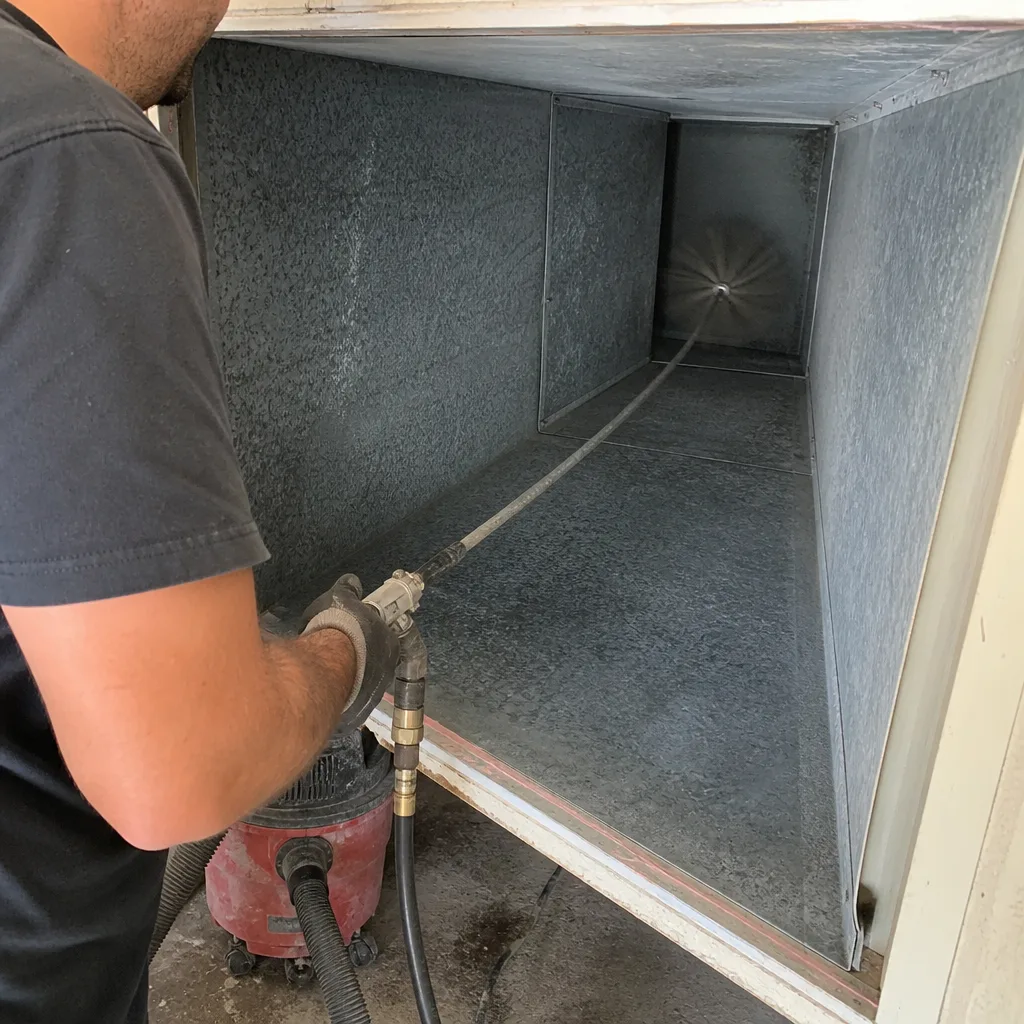
 Whole-home duct cleaning
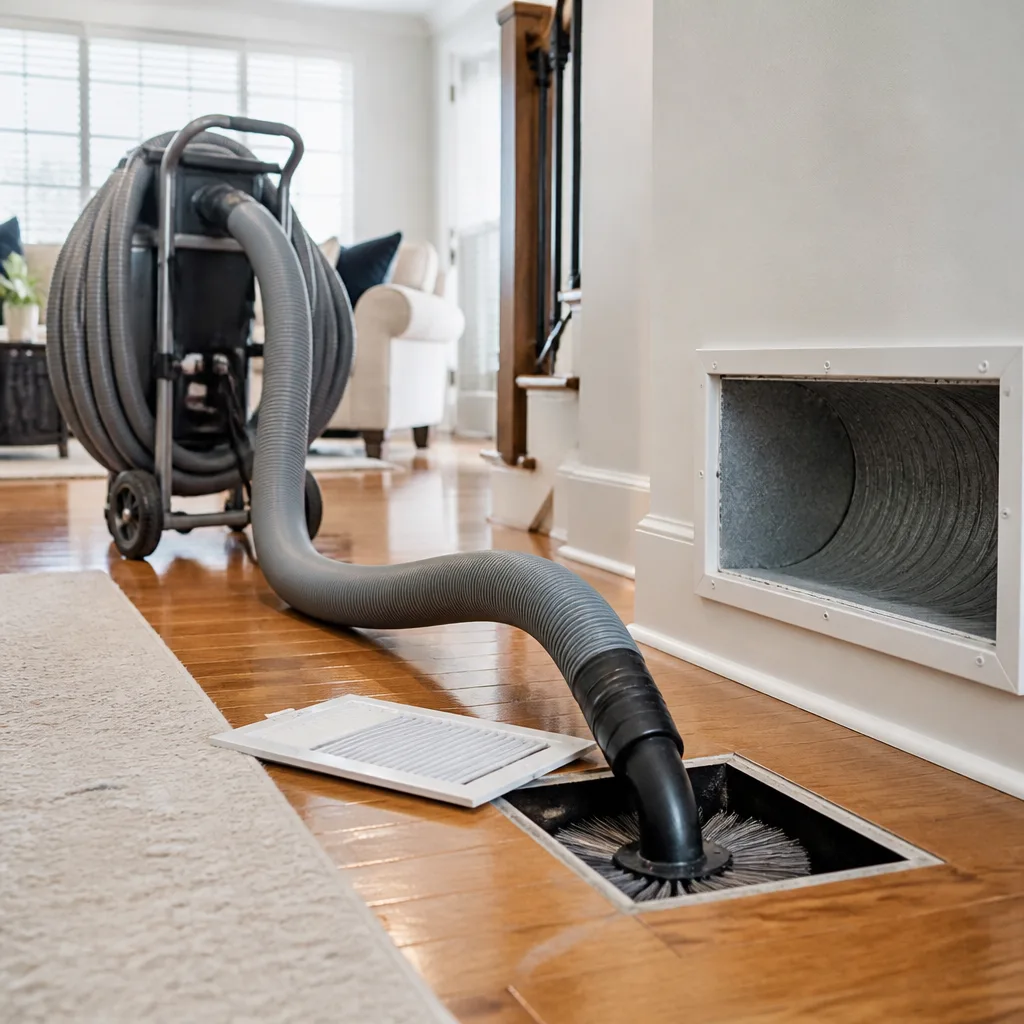
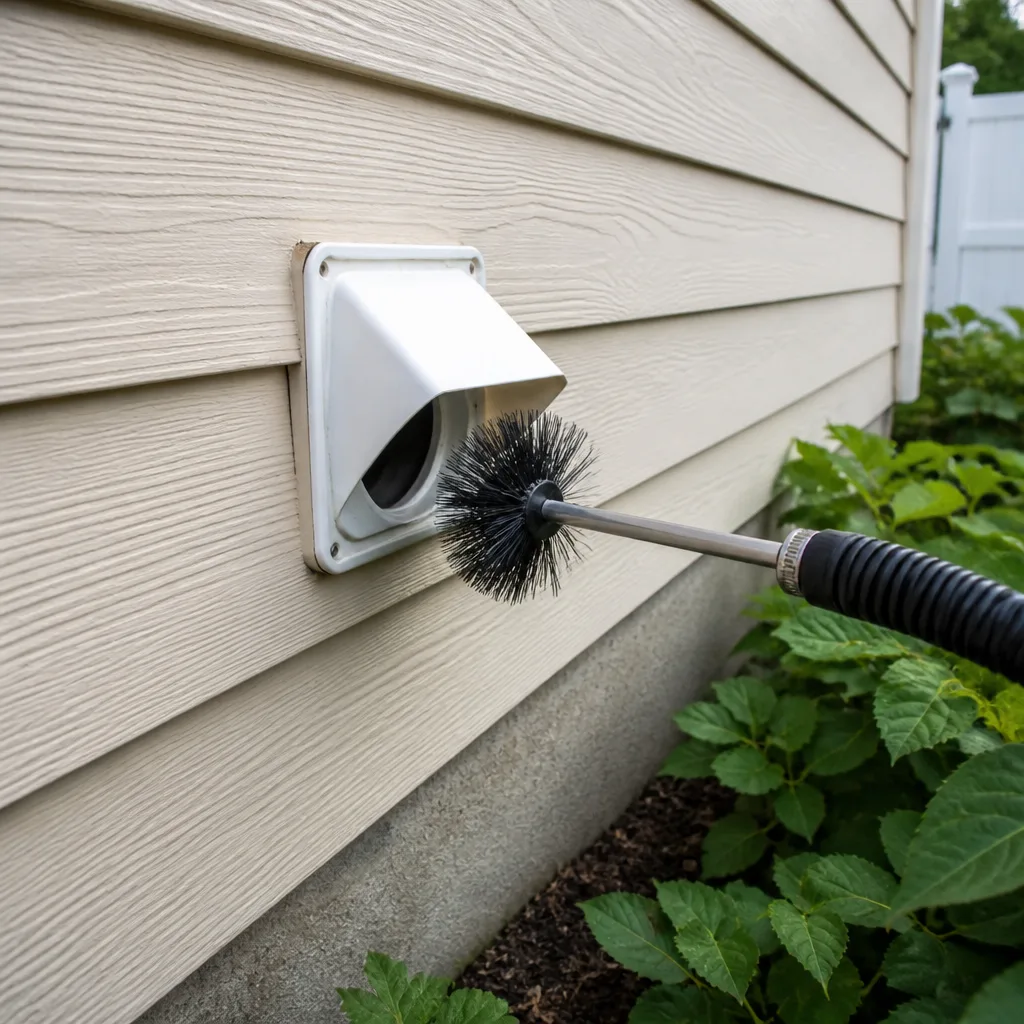 Dryer vent cleaning
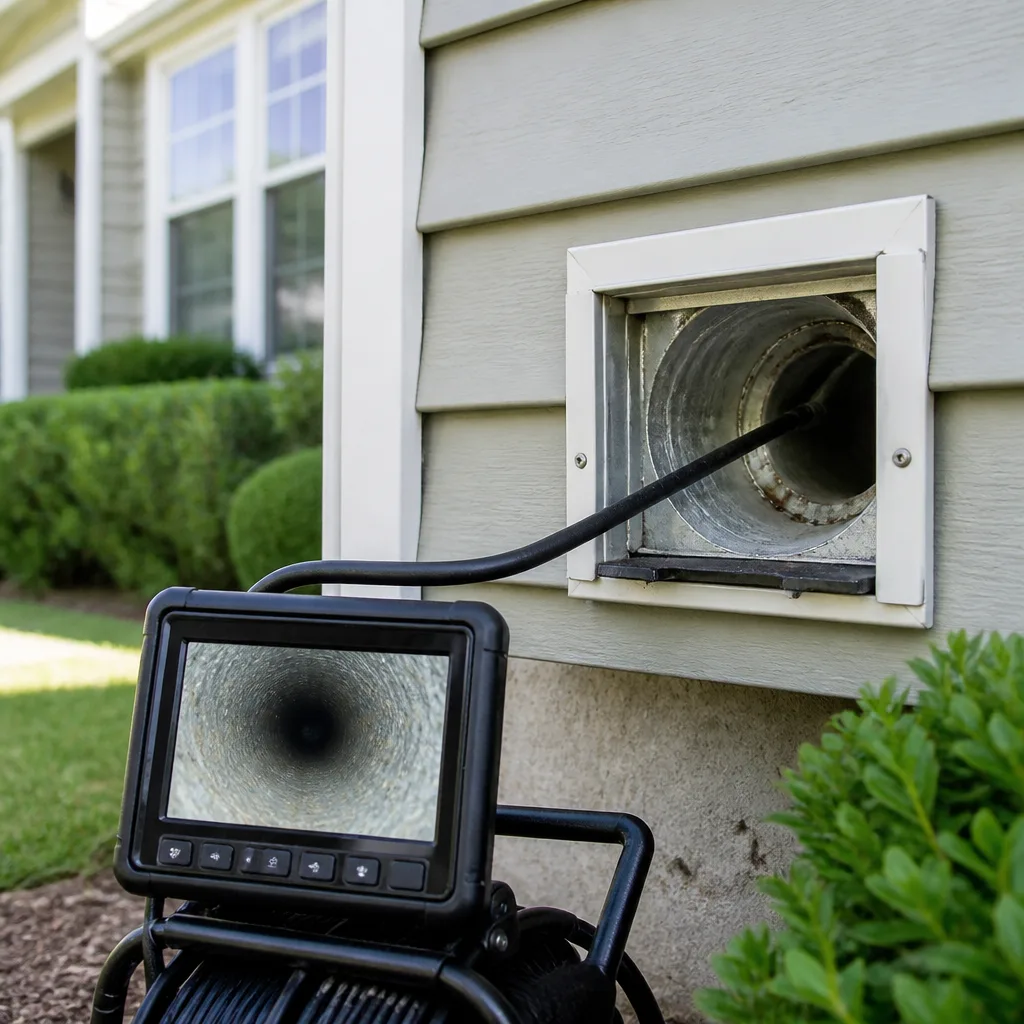 Camera inspection
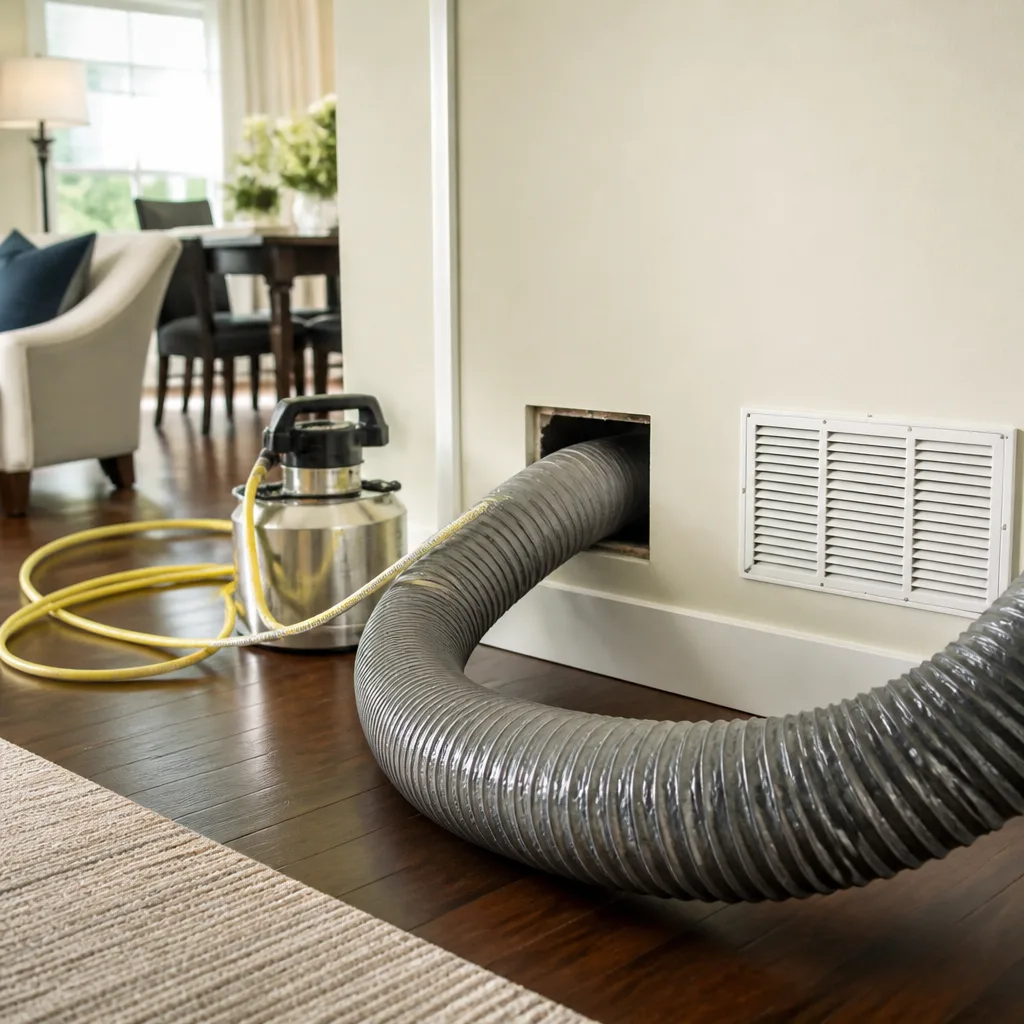 Sanitizing & deodorizing
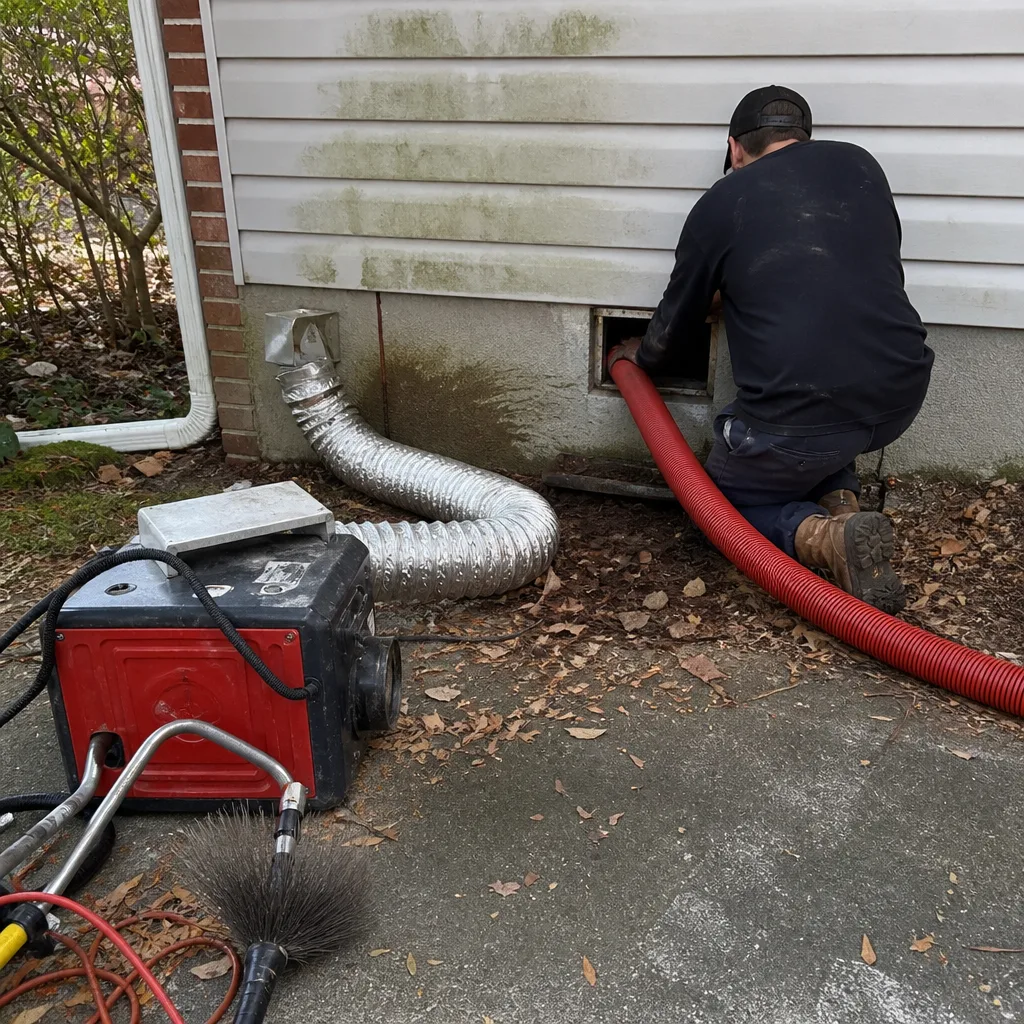
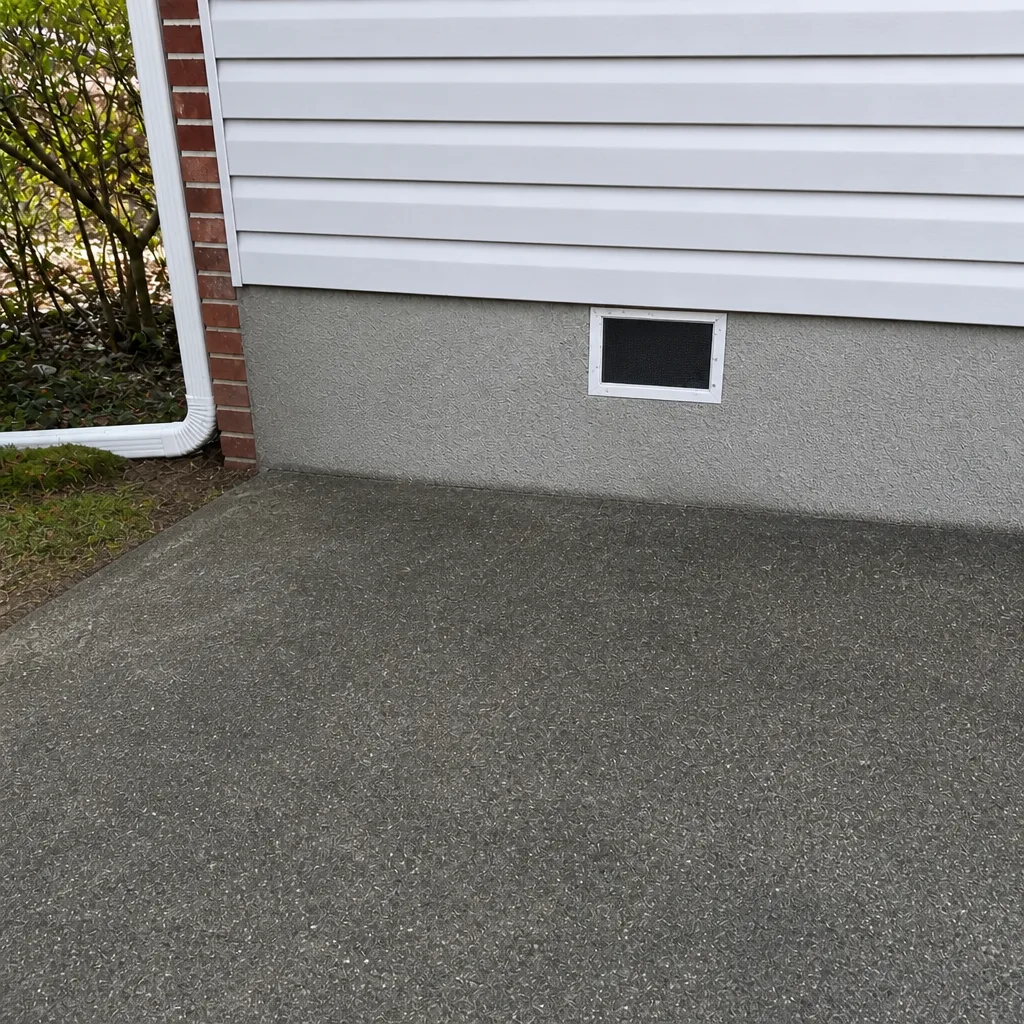
Whole-system duct and dryer vent check with before-and-after photos - you see exactly what came out of your vents
That "$99 whole-house special" is a bait ad - the real number appears once they are in your hallway, or the "clean" is a shop-vac at the register. We photograph the inside of your ducts before and after instead.
DIY vs Professional Air Duct Cleaning: The Cary Homeowner’s Decision Guide
Here’s the part most guides get wrong: DIY duct cleaning isn’t automatically a mistake. There are a few tasks around your registers and grilles you can genuinely handle yourself, and doing them well does help. What causes trouble is the belief that a consumer shop vac and a dryer-vent brush add up to real duct cleaning. That confusion is where most bad outcomes start. A vacuum that moves a fraction of the air a professional unit does can stir up more debris than it removes. In this guide we’ll draw a clear line between what you can actually maintain in your Cary home and the point where purpose-built equipment stops being optional.
Quick Answer
You can and should handle light surface maintenance yourself: cleaning register covers, vacuuming accessible grilles, and staying on top of filter changes. What you can’t do at home is the deep, whole-system cleaning that requires negative pressure and mechanical agitation, because a shop vac simply doesn’t move enough air volume to capture what gets loosened. For anything beyond surface upkeep, especially if you’re seeing debris blow out of vents or your family has allergies, professional equipment is the deciding factor, not effort.
Styles & brands we work with
- Whole-home duct cleaning
- Dryer vent cleaning
- Camera inspection
- Sanitizing & deodorizing
Table of Contents
- What a Homeowner Can Legitimately Maintain
- The Physics of Negative Pressure and Why DIY Can’t Match It
- When DIY Attempts Actively Make Things Worse
- The Cost-Benefit Analysis: DIY Savings vs HVAC Repair Bills
- How a Professional Cleaning Actually Works
- The One Honest Use Case for DIY
- Your Dryer Vent: The DIY Boundary Is Different
- Common Mistakes to Avoid
What a Homeowner Can Legitimately Maintain
We want to be honest with you: there’s real value in the small upkeep tasks, and no reputable specialist should tell you otherwise. The trick is doing them without pushing debris deeper into the system. Registers and grilles are the obvious starting point, but how you clean them matters more than whether you do.
Here’s what belongs in your own rotation:
- Register and grille covers: Pop off the covers and wash them in a sink or with a damp cloth. Loose dust collects on the face and edges and is easy to remove.
- Accessible grille vacuuming: With a brush attachment and the system fan off, vacuum gently around the visible opening. Keep the nozzle at the surface. Don’t push a crevice tool down the boot.
- Filter management: Check your filter monthly and replace it on the schedule your system’s manufacturer recommends. A clogged filter strains the blower and lets dust bypass into the ducts.
- Return-air tidiness: Keep furniture and boxes from blocking return grilles so airflow stays balanced across the house.
The technique rule that matters: always switch the system fan off before you clean a register. With the fan running you’re competing against suction pulling dust the other way, and a brush can knock loose material into the boot instead of capturing it. In Cary homes with a mix of flex and rigid ductwork, that difference is the gap between a tidy surface and a small mess inside the run.
The Physics of Negative Pressure and Why DIY Can’t Match It
A consumer shop vac moves roughly 100 cubic feet per minute of air. A professional Nikro negative-air unit moves well over 2,000. That gap isn’t a marketing number; it’s the whole reason professional cleaning works. When you agitate debris inside a duct, you’re liberating particles that will float into your living space unless something captures them at the source.
Professional cleaning creates a sustained pressure differential across the duct system. The vacuum pulls while rotary agitation loosens, so loosened material travels toward the capture point rather than into the room. We also deploy Abatement Technologies HEPA filtration on site to protect your indoor air during the work. That’s the same category of equipment used in indoor air quality remediation, and it isn’t something hardware-store gear can reproduce.
- Negative pressure is established across the duct run before cleaning begins.
- Rotary agitation via the Rotobrush system loosens material from the duct walls.
- Airflow carries the debris toward the capture point, not back into the registers.
- HEPA filtration scrubs the workspace air so fine particles don’t migrate through the house.
If you’ve watched DIY duct videos, you’ve seen brushes taped to a drill and shop vacs at a register. Those approaches ignore the capture side of the equation. In our experience the equipment matters less than the pressure differential it creates, and that’s why a stronger vacuum alone doesn’t fix the problem.
When DIY Attempts Actively Make Things Worse
Some DIY efforts don’t just underperform, they damage. The most common failure we see is agitating material that was stable and sending it airborne into the supply side, where it settles in rooms instead of being removed. That’s a comfort problem at minimum and an air-quality problem for anyone sensitive.
- Disturbing mold colonies: If moisture has fed microbial growth inside a duct, brushing it loose without containment spreads spores through the system. That needs controlled cleanup, not agitation.
- Dislodging flexible duct connections: Flex runs are joined with tape and ties. A homeowner pushing a brush or nozzle past the boot can pull a joint apart, and now you have a supply leak blowing into a wall cavity or attic.
- Pushing debris into the main trunk: A tool inserted at a register can shove debris past the accessible section into the trunk line, where you can’t reach it. That turns a small surface job into a full-system one.
- Wetting the interior: Spraying cleaner into a duct without proper capture can create damp conditions that feed mold growth, an issue in humid stretches of a Cary summer.
The pattern here is simple: any DIY task that stirs up material you can’t capture is a task for professional equipment. If you’re unsure whether a job crosses that line, that uncertainty is your answer.
The Cost-Benefit Analysis: DIY Savings vs HVAC Repair Bills
This is where the math gets uncomfortable for DIY. A rental vacuum or a consumer-grade duct kit looks cheap against a professional cleaning, but it saves only if it works. If it pushes debris into the trunk, pulls a flex joint apart, or spreads mold, the repair bill lands in a different category entirely. That’s before you count the energy cost of a blower working harder against a restricted system.
Professional cleaning pricing is set per job by a written estimate agreed before work starts, so you’re not guessing. You know the number before anyone touches your ductwork, and that flat price is exactly what you pay. Consumer kit rentals, by contrast, don’t come with any capability to actually clean the full run.
- What you save with DIY: the cost of a professional visit, minus what you spend on equipment and time.
- What you risk: repairs to duct connections, repeat visits after a partial job, and energy waste from a restricted system.
- What breaks the tie: whether your ducts are actually dirty in the first place. Surface dust at a register doesn’t mean the trunk is fouled. That distinction is worth a look before you spend anything.
If your airflow feels weak, your energy bills have climbed, or you’re seeing dust settle faster than usual, those are signs worth an inspection. For an honest read on what your system needs, start with air duct cleaning and get a scope before you reach for a vacuum.
How a Professional Cleaning Actually Works
Knowing the process is the best way to judge a quote. A real cleaning follows a sequence, and any provider who skips the containment step is cutting the part that matters most. We follow the same general sequence on every job, and we’re happy to explain exactly which equipment we’re bringing before we arrive.
- System assessment. We check registers, the air handler, and accessible duct runs to see what you actually have and what condition it’s in.
- Containment and filtration. Abatement Technologies negative-air and HEPA equipment goes into place to capture fine particles before anything gets loosened.
- Mechanical agitation. The Rotobrush rotary system works the duct walls to lift debris, with Nikro HEPA vacuuming capturing it as it loosens.
- Component check. Registers and accessible connections get inspected, and if we spot a damaged run we flag it for repair rather than leaving it.
- System-wide cleanup. The work finishes with capture still running so nothing settles back into the ductwork.
That’s professional-grade equipment at residential pricing, and it’s the same tooling used in commercial and remediation work. We cover three services, not a menu of extras: air duct cleaning, dryer vent clearing, and actual duct repair. When you compare quotes, ask which equipment the company brings. If the answer is vague, that’s your answer. You can see the full scope of what we do from duct cleaning Cary.
The One Honest Use Case for DIY
There is one place where a homeowner’s effort genuinely pays off: after a full professional cleaning. This is the point most guides skip. The best use of DIY is maintenance that extends the interval before your next full service, not a substitute for it.
Once your ducts are clean, keeping them that way is largely about airflow and filtration discipline:
- Stay disciplined on filters. Replace them on the manufacturer’s schedule and don’t stretch the interval to save a few dollars.
- Keep registers and returns clean. A quick wipe and gentle vacuum at the surface, fan off, prevents buildup from settling in.
- Watch humidity. In a Cary summer, indoor humidity that stays high can feed microbial growth in ducts, so keep your system’s dehumidification working and fix moisture problems promptly.
- Check your dryer vent screen. A quick lint-screen cleanup after each load is the one freely available maintenance step that prevents a genuine hazard.
That routine keeps your clean result intact and turns a full cleaning into a longer-interval purchase. We’re familiar with Honeywell and Aprilaire air quality components in Cary homes, and if you have a system like that, ask your technician to check it during the visit so it’s working as intended.
Your Dryer Vent: The DIY Boundary Is Different
The vent line behind your dryer is a separate system, and the DIY calculus is different there. You can and should clean the lint screen after every load. Beyond the screen, a clogged vent line restricts airflow and creates a fire hazard. We offer dryer vent cleaning as a standalone service because it’s a safety issue, not a convenience add-on, and it’s the cleaner you’ll want to look at even if your supply ducts are fine.
The length of your vent run decides whether DIY is reasonable. A short, straight, easily accessed run can often be brushed from the exterior termination with a proper kit. A long, elbow-heavy run, or one that travels through a wall, needs a powered brush and vacuum to clear it fully. If your dryer takes longer than it used to dry a load, or the exterior flap barely moves when the dryer runs, that’s a cue to have the line checked. Our technicians have up to 12 years of experience, and we’ll tell you plainly what we find in the line.
Common Mistakes to Avoid
- Using a shop vac as if it were a duct cleaner. It can’t create the capture you need, so loosened debris ends up in the room. Reserve it for grille surfaces, not the runs.
- Cleaning with the system fan running. Suction works against you and dust gets pulled further in. Always switch the fan off before touching a register.
- Pushing a brush past the boot. Flex connections are taped and tied, and a tool can pry one apart. If a tool needs force to go in, it shouldn’t go in.
- Spraying cleaner down a duct. Liquid without capture equipment creates damp conditions that feed mold, especially during a humid Cary summer. Dry mechanical removal is the safe path.
- Ignoring the dryer vent while focusing on supply ducts. Vent lint buildup is a fire risk on its own, and a duct-only service won’t touch it.
- Assuming visible register dust means your whole system is fouled. A quick look isn’t a diagnosis. Ask for an assessment rather than guessing.
- Hiring on price alone. A quote that doesn’t name equipment or explain containment is often a shop-vac job at a premium price. Ask what they’re bringing.
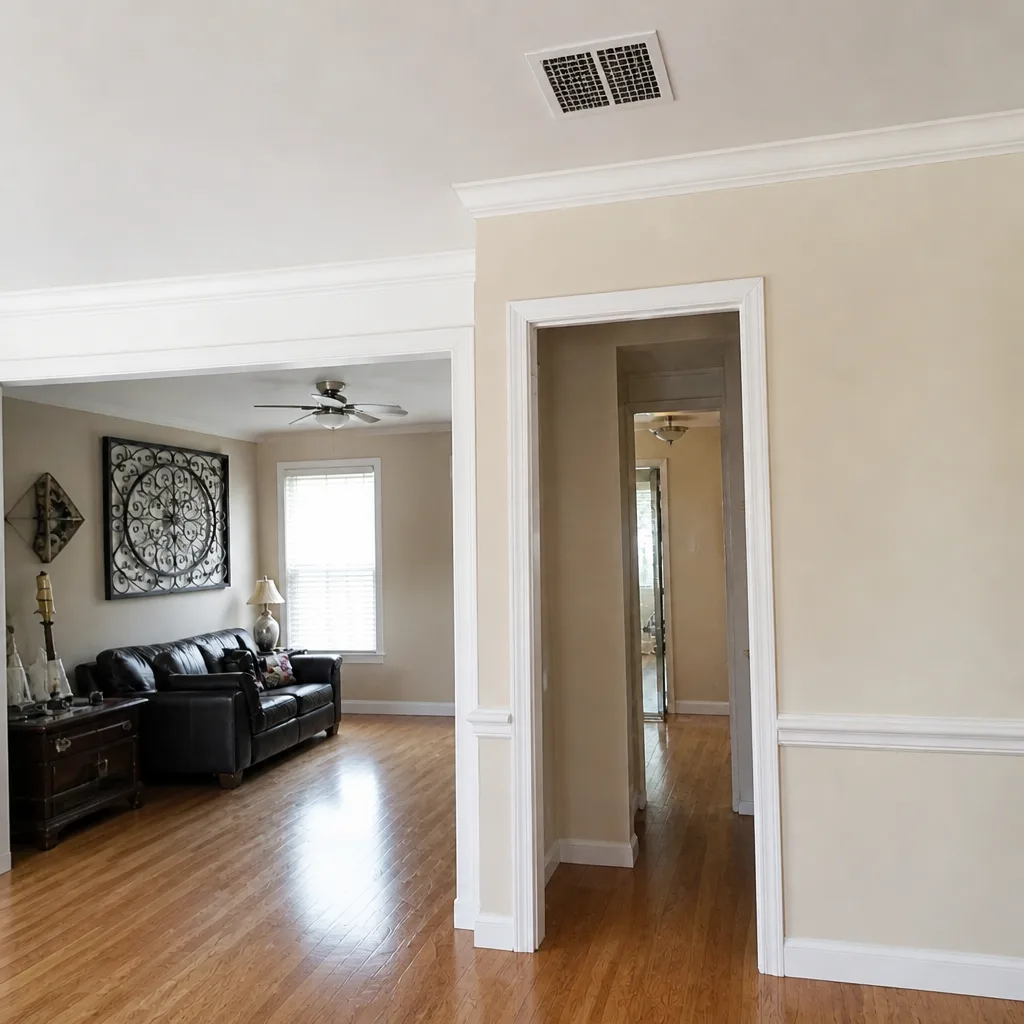
See the difference
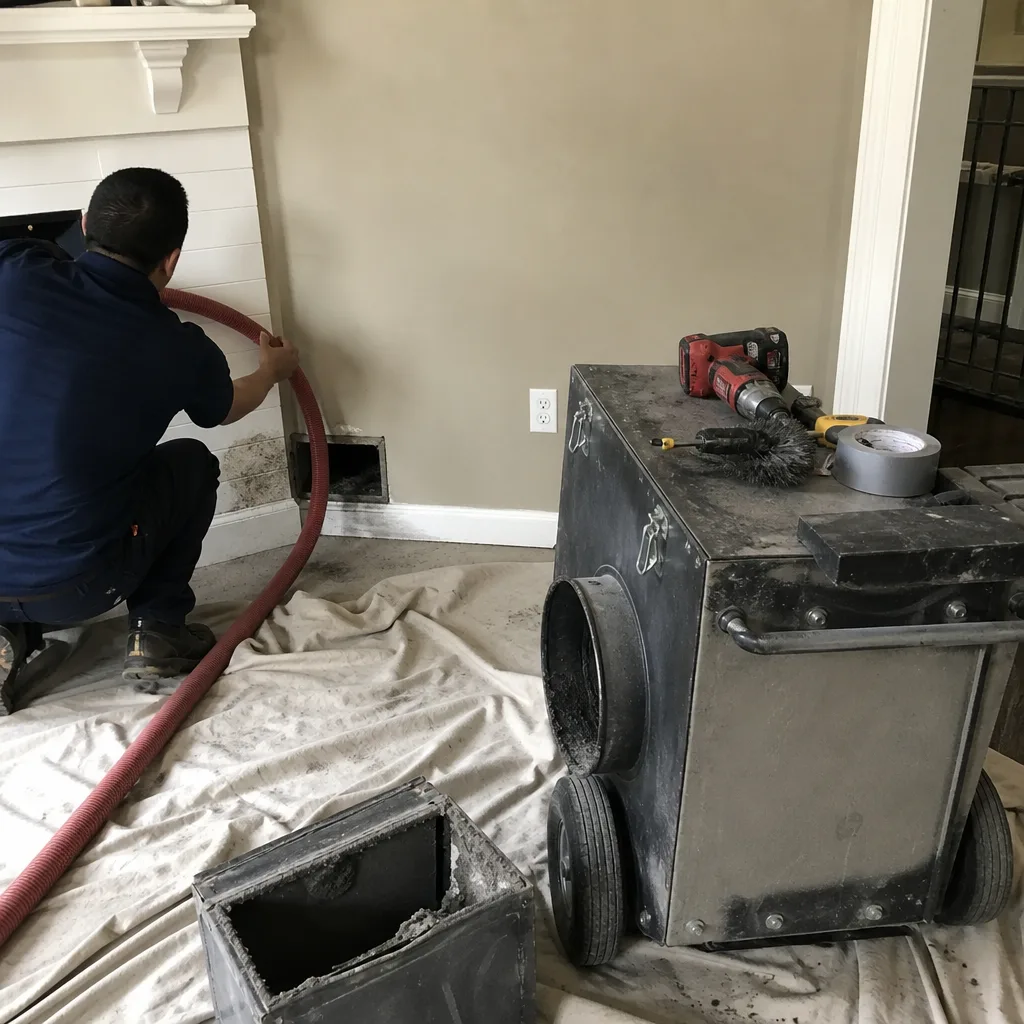 Before
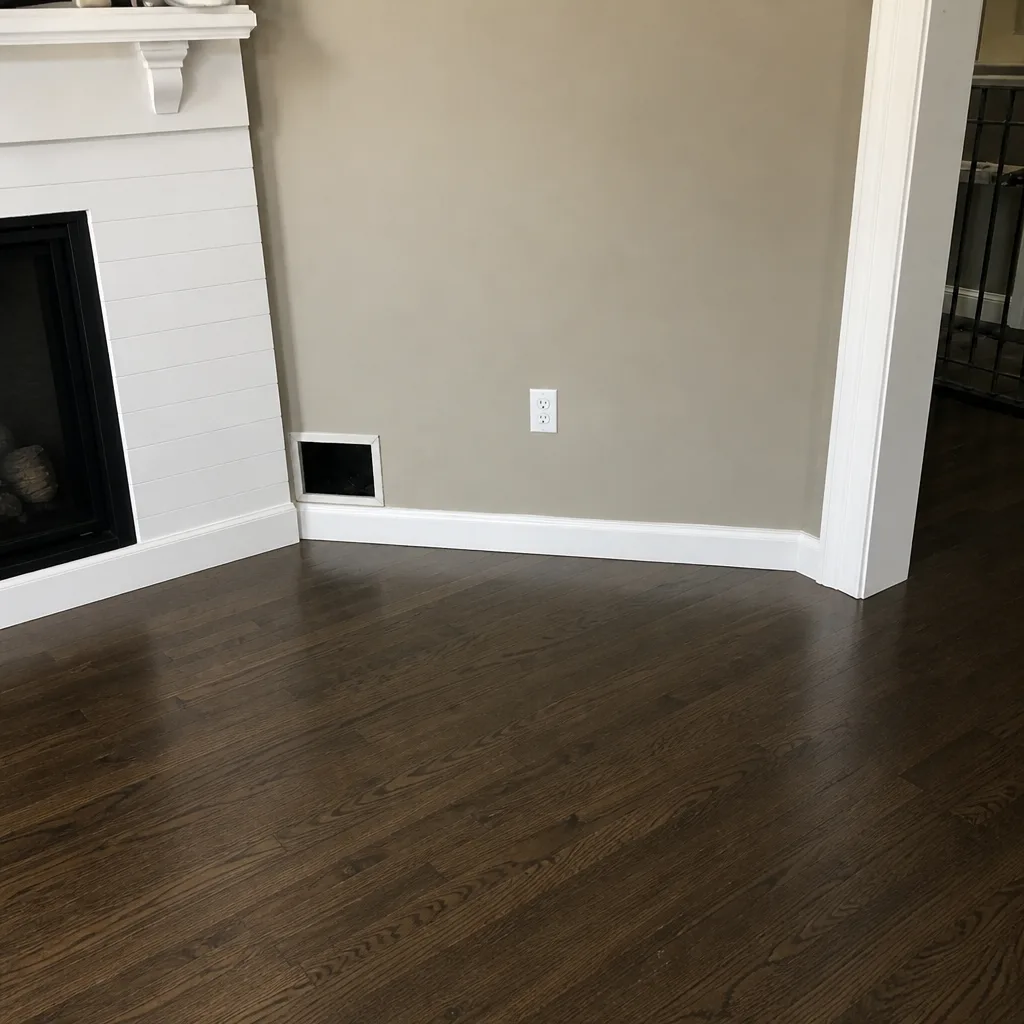 After
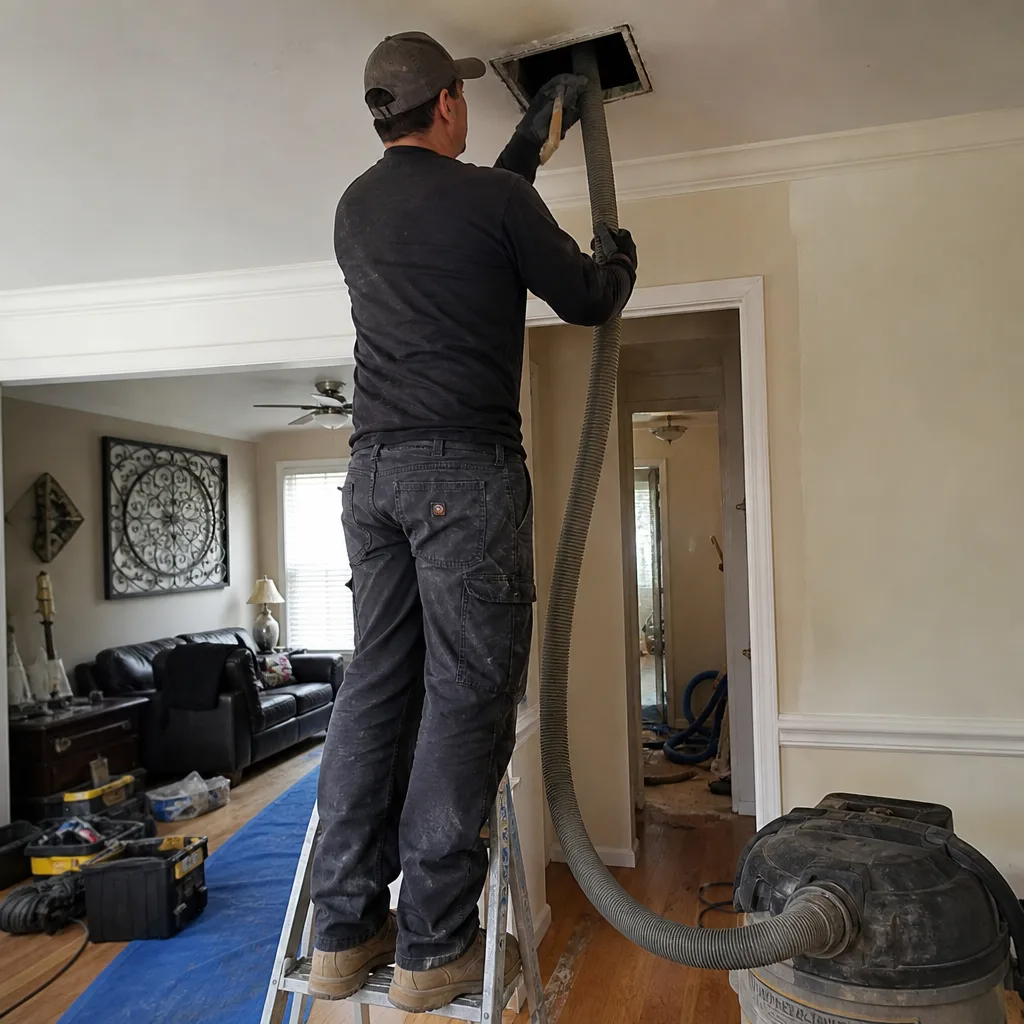 Before
 After
 Before
 After
When to Call a Professional
Call a professional if you’re seeing debris blow out of registers, if your family has allergy symptoms that seem tied to the HVAC system, if you’ve had water intrusion or a moisture problem in the ducts, or if your airflow or energy bills have shifted without an obvious cause. Call if a duct connection looks damaged, or if the last cleaning was long enough ago that you can’t remember it. And call if you’re simply unsure whether your system needs work. None of that requires DIY first. Duct Cleaning Cary offers free estimates in Cary: call (833) 608-1198. We answer 24/7, with fast dispatch from 7am to 7pm, Sunday through Friday. We’re also glad to talk through our process for the wider Cary area so you know what to expect.
Frequently Asked Questions
Pricing is set per job by a written estimate agreed before work starts, so the number depends on your system size and condition, not a per-vent rate. You get the figure in writing before anyone touches your ducts, and that’s the price. Call (833) 608-1198 for an exact quote; estimates are free.
No, not the duct runs themselves. A shop vac moves around 100 cubic feet per minute, while a professional Nikro negative-air unit moves over 2,000, and that pressure differential is what captures loosened debris. A shop vac is fine for register covers and surface grille vacuuming, with the fan off. Call (833) 608-1198 to ask what a full cleaning involves for your system.
It can. Pushing a brush or tool past the boot can dislodge flexible duct connections, and spraying liquid without capture equipment can create damp conditions that feed mold. Working with the system fan off and staying at the surface avoids most of the risk. If a run already looks damaged, call (833) 608-1198 rather than probing it further.
Cheap quotes usually reflect a shop-vac-and-brush job without containment, which looks similar on paper but does far less. Ask two questions before you hire: which equipment will be on site, and how will debris be captured during cleaning. If the answers are vague, that’s the reason for the price. Call (833) 608-1198 for a straight comparison.
You should see the equipment and get before-and-after photos of your own ducts, not a stock photo. A technician who brings professional-grade equipment and walks through containment before starting has nothing to hide. Call (833) 608-1198 and ask us what equipment we’re bringing; we’ll tell you exactly.
There’s no fixed calendar rule, and anyone who sells you an annual plan as a standard is overselling. Clean when conditions call for it: visible debris at registers, water intrusion, recent renovation dust, allergy concerns, or a system that hasn’t been touched in a long time. Call (833) 608-1198 and we’ll help you judge whether it’s time.
The Bottom Line
DIY air duct cleaning has a real but narrow role: register cleaning, accessible grille vacuuming, and disciplined filter and humidity management. It keeps a clean system clean. It can’t clean a dirty one, because that takes a pressure differential a shop vac can’t produce. The risk isn’t wasted effort; it’s debris pushed deeper, connections pulled apart, or mold spread instead of contained. Keep the light upkeep for yourself, and bring in professional-grade equipment when the job crosses into the ductwork or the dryer vent. Our technicians have up to 12 years of experience and use the same tooling found in commercial remediation, and we’ll tell you exactly what we’re bringing before we start. Call (833) 608-1198 for a free estimate. The price is set per job by the written estimate. We answer 24/7, with fast dispatch from 7am to 7pm, Sunday through Friday.
Written by the team at Duct Cleaning Cary.