
Last updated November 16, 2026
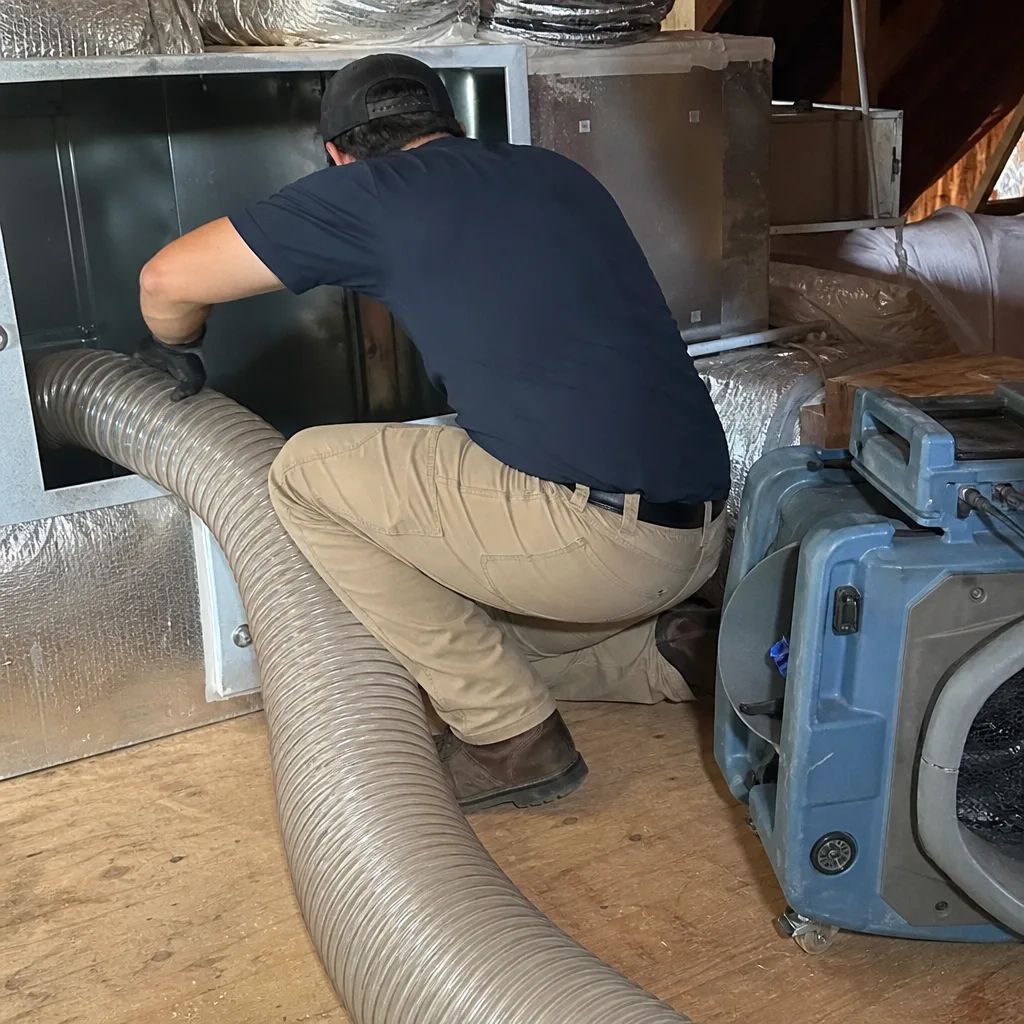
 Whole-home duct cleaning
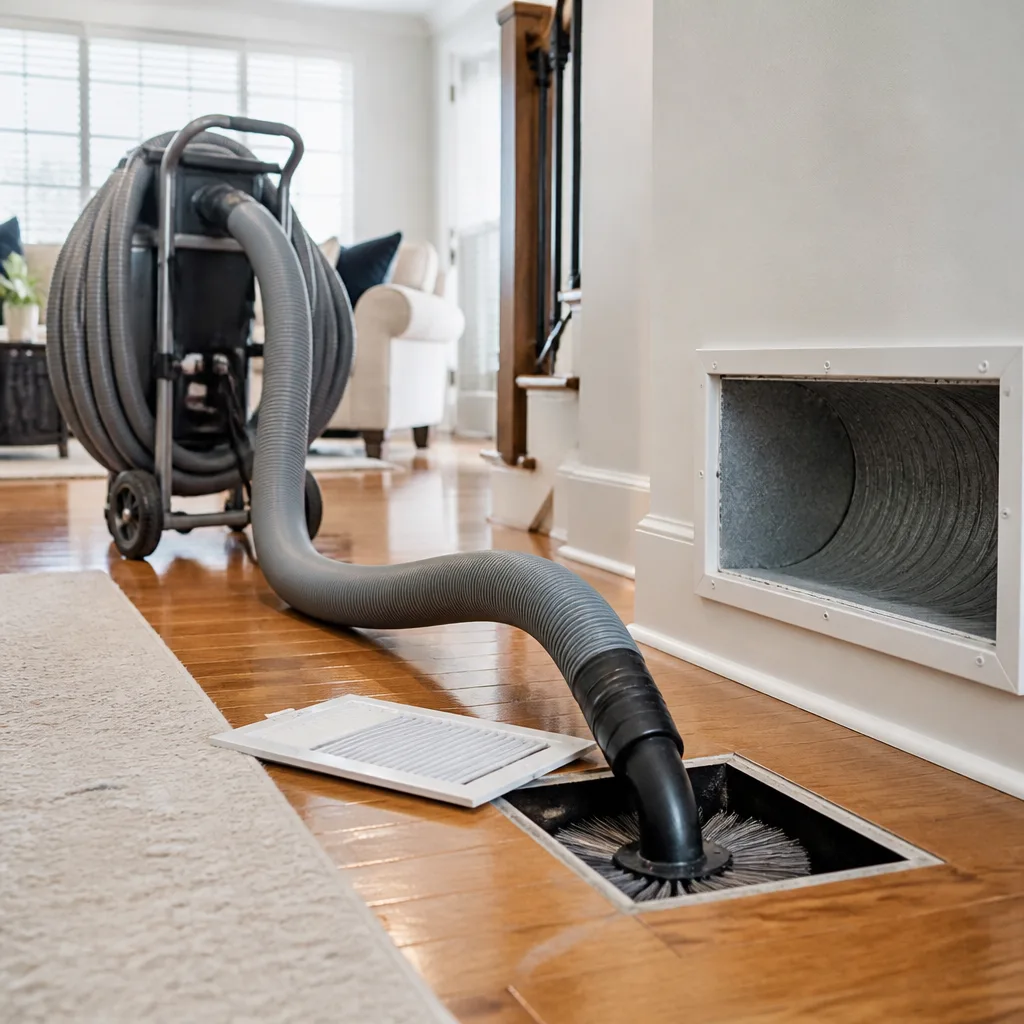
 Dryer vent cleaning
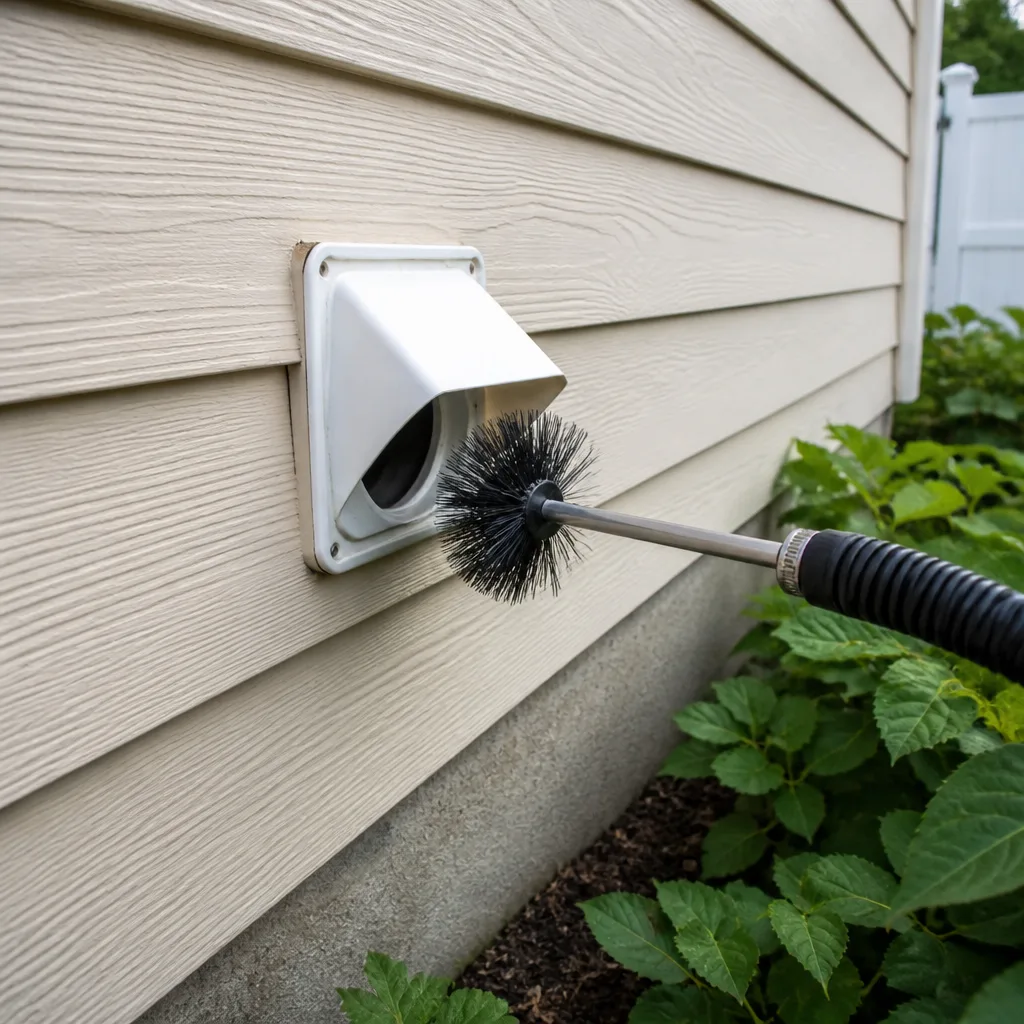
 Camera inspection
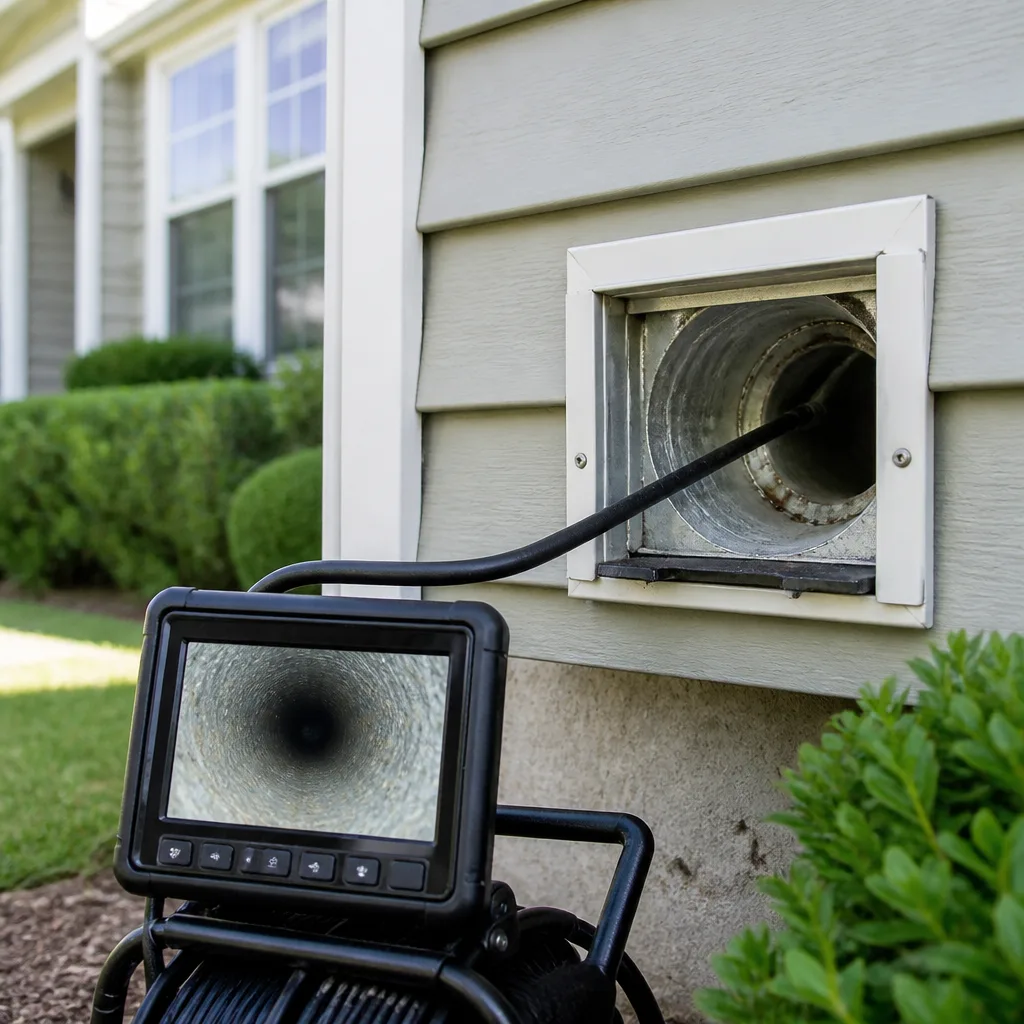
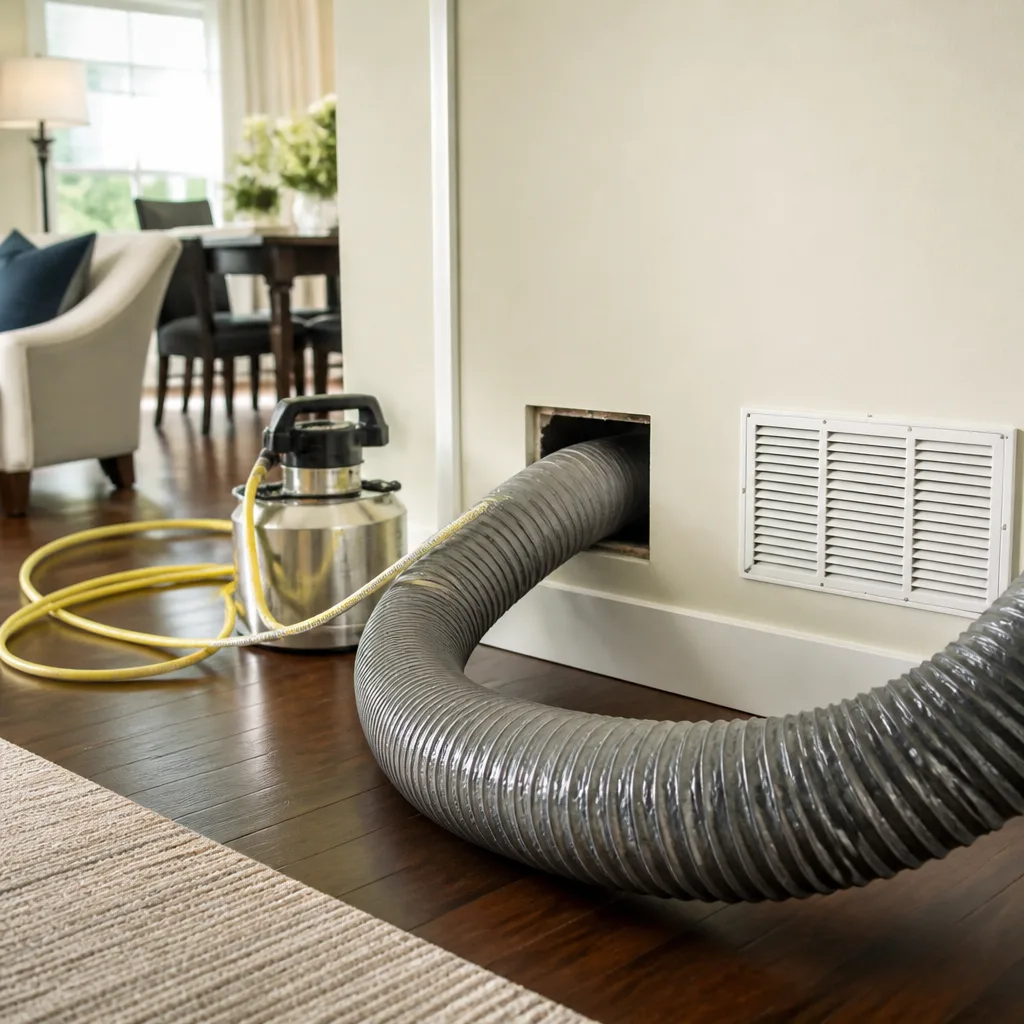 Sanitizing & deodorizing
Whole-system duct and dryer vent check with before-and-after photos - you see exactly what came out of your vents
That "$99 whole-house special" is a bait ad - the real number appears once they are in your hallway, or the "clean" is a shop-vac at the register. We photograph the inside of your ducts before and after instead.
How to Hire an Air Duct Cleaning Contractor in Cary: A Step-by-Step Guide
Most homeowners assume a duct cleaning company either has the right equipment or it doesn’t, and that the difference will be obvious when they show up. It rarely is. The barrier to entry in this trade is almost zero: a van, a shop vac, and a phone number is enough to print business cards and call yourself a contractor. NADCA, the trade body that sets the industry standard, estimates that most complaints about duct cleaning trace back to one thing: the company never achieved negative pressure inside the duct system, the single most important step in the whole process. This guide walks through the questions to ask, the equipment names worth recognizing, and the on-site signs that tell you whether a job in Cary is being done properly or just performed.
Quick Answer
To hire an air duct cleaning contractor in Cary, ask five questions before you book: what vacuum system they use and its CFM rating, how they create and verify negative pressure, whether they use rotary mechanical agitation, what filtration protects your indoor air during the job, and what insurance they carry beyond general liability. A credible answer names real equipment, explains the pressure step without hesitation, and gives you a whole-system price rather than a per-vent number.
Styles & brands we work with
- Whole-home duct cleaning
- Dryer vent cleaning
- Camera inspection
- Sanitizing & deodorizing
Table of Contents
- Why Vetting Matters More in Duct Cleaning Than Most Home Services
- The Five Questions to Ask Before You Book
- Why Equipment Brand Names Tell You Something Real
- How to Read a Duct Cleaning Quote
- Insurance and Liability: What You Should Actually Ask For
- What to Watch During the Job
- Cary-Specific Things That Affect the Hiring Decision
- What Duct Cleaning Costs and Why Quotes Vary So Much
Why Vetting Matters More in Duct Cleaning Than Most Home Services
Plumbing and electrical work have external checkpoints. A permit gets pulled, an inspector signs off, and a failed job is usually visible fast: water on the floor, a breaker that trips. Duct cleaning has none of that. The work happens inside a sealed system, the results aren’t immediately observable, and a poor job can leave your ducts in worse condition than before the technician arrived. If a crew brushes debris loose without capturing it, that material ends up distributed through the rest of the system and pushed into your living space the next time the air handler runs.
That’s why the hiring decision carries more weight here. You’re not just buying labor. You’re buying a process, and the process either protects your home or it doesn’t.
In our experience, the companies that do this work properly are easy to spot once you know what to listen for. They volunteer the equipment details before you ask. They explain pressure and filtration in plain language. And they quote a whole-system price instead of a per-vent figure designed to sound small on the phone and grow on the invoice.
Cary has a lot of newer construction and a steady churn of HVAC replacements, which means a lot of households are actively thinking about their duct systems. That’s good. It also means the market attracts operators who see an opportunity rather than a trade.
What “professional-grade” actually means
There’s a real gap between consumer equipment and the systems used in commercial and remediation work. A shop vac has limited airflow and no way to maintain negative pressure across a whole duct system. Professional equipment does two things simultaneously: it agitates debris mechanically inside the ducts, and it pulls that debris into a sealed collection system so it never enters your living space. Both halves matter. Agitation without capture just moves the problem.
The Five Questions to Ask Before You Book
Ask these on the phone, before anyone comes out. A professional will answer them without friction. If a company gets defensive, changes the subject, or gives a vague answer to any of them, that’s your answer.
- What vacuum system do you use, and what’s its CFM rating? CFM means cubic feet per minute, the measure of airflow the vacuum can sustain. A real duct cleaning vacuum runs in a completely different range than a wet/dry shop vac. If the person on the phone doesn’t know the number, they don’t know their equipment.
- How do you create negative pressure, and how do you verify it? This is the heart of the process. The vacuum connects to the duct system so that air is being pulled inward at every opening. If pressure isn’t negative, debris escapes into the house as soon as it’s disturbed. A credible company explains exactly where they connect and how they confirm the seal.
- Do you use rotary mechanical agitation, or just a brush and hose? Rotary systems spin a whip or brush head through the duct to break debris loose from the walls. Hand brushing doesn’t reach the full run. Ask specifically whether they use a rotary system, and which one.
- What filtration are you running during the job? Negative pressure is the first layer of protection. Air filtration is the second. Serious operators deploy HEPA filtration and, on larger jobs, negative-air equipment to keep indoor air clean while the work is happening.
- What insurance do you carry, and can you send documentation? The next section covers this in detail, but the short version is that general liability alone doesn’t fully answer the question for work inside a home.
Answers that should disqualify a bidder immediately
- “We don’t need negative pressure, we just clean each vent.” This is the single biggest red flag in the trade.
- A per-vent price quoted over the phone before anyone has looked at the system.
- Inability to name the vacuum brand or model.
- No mention of filtration of any kind.
- Pressure to book before you’ve had a chance to compare.
- Reluctance to put anything in writing.
When you call Duct Cleaning Cary, the equipment question gets a straight answer. Ask what we’re bringing and we’ll tell you exactly, because the process is the product.
Why Equipment Brand Names Tell You Something Real
Brand names aren’t a marketing trick in this trade. They’re a proxy for capital investment, and capital investment is a proxy for how seriously a company takes the work. A rotary duct cleaning system is a meaningful purchase. A commercial HEPA vacuum is another. Negative-air filtration equipment used in indoor air quality remediation is another. Operators who skip these aren’t making a stylistic choice; they’ve decided the equipment cost isn’t worth it, which tells you something about the job you’re about to get.
Rotobrush
Rotobrush builds rotary cleaning systems purpose-made for duct interiors. The rotary head spins inside the duct and scrubs the walls mechanically rather than relying on airflow alone. Companies using Rotobrush equipment have committed to the agitation half of the process. If you hear “Rotobrush,” you’re hearing a company that bought a real tool instead of a hose attachment.
Nikro
Nikro is known for HEPA vacuum systems and dust control equipment. In duct cleaning, the Nikro name typically signals serious capture capability, which matters for fine particulates that a standard vacuum would exhaust straight back into the room. HEPA capture plus negative pressure is the combination that keeps your indoor air clean during the job rather than fouling it.
Abatement Technologies
Abatement Technologies builds negative-air machines and HEPA filtration deployed in indoor air quality remediation and commercial work. Seeing this equipment in a residential job tells you the operator is applying remediation-grade thinking to a house. It’s the same category of equipment used when air quality matters most.
We work with Rotobrush and Nikro systems and deploy Abatement Technologies filtration on-site during service. The same tools used in commercial remediation, in your home. That’s the standard we hold to, and it’s the standard you should hold any contractor to before you book a job in Cary.
Familiarity with brands like Honeywell and Aprilaire also matters, not because you’ll need it during a cleaning but because it tells you the company understands the broader HVAC and indoor air quality picture. A company fluent in filtration and humidification systems sees your ducts as part of a system, not an isolated part.
How to Read a Duct Cleaning Quote
A good duct cleaning quote is boring: it describes the whole system, states the price for that system, and itemizes anything additional. A bad quote is confusing on purpose. Here’s how to tell the difference.
Line items that should be there
- The scope: how many supply runs, how many returns, and whether the air handler is included.
- The equipment being used and the filtration deployed.
- Whether any duct repair is needed and, if so, exactly what.
- Whether dryer vent cleaning is included or separate.
- A flat, total price for the system described.
Upsells that are almost always unnecessary
Some add-ons are legitimate. Many aren’t. Be wary of fogging treatments, chemical sanitizers, and “anti-microbial coatings” sold as defaults rather than based on something specific found in the system. Be equally wary of pressure to buy filters or air quality products on the spot. If a technician is pushing products hard, the cleaning may be the loss leader.
Pricing structures that signal a bait-and-switch
Per-vent pricing is the classic red flag. It sounds cheap because the base number is small: “$49 per vent.” Then the count comes in higher than expected, add-ons appear, and the invoice is a multiple of the quoted figure. One flat price per system, agreed before the work starts, is the structure that protects you.
Duct cleaning in Cary typically falls in honest whole-system ranges rather than per-vent teasers. The written estimate sets the final price, and it should never move after the fact.
Insurance and Liability: What You Should Actually Ask For
Most homeowners ask one question: “Are you insured?” The answer is almost always yes. The more useful question is: “What coverage reaches work inside my home, and can you send a certificate?” General liability is necessary but incomplete on its own. It covers third-party claims, but a residential duct cleaning job involves specific exposures that warrant additional coverage.
Ask for:
- General liability certificate, naming the coverage limits and effective dates.
- Workers’ compensation coverage or proof that the company’s technicians are covered. This matters because a worker injured in your home could become your problem without it.
- Auto coverage for the vehicle that arrives on your property.
- Written confirmation that you’ll be notified before any work begins if the coverage changes.
A legitimate contractor sends this documentation without hesitation. If you get pushback or a promise to “send it later,” treat that as information.
Liability matters in a duct system specifically because damage inside ducts can go unnoticed for a while. A torn flex connection, a crumpled liner, or a damaged evaporator coil can degrade comfort and air quality long after the truck leaves. The insurance question isn’t about distrust. It’s about making sure somebody responsible is on the hook if something unexpected happens.
What to Watch During the Job
Even a company that sounded credible on the phone can reveal short cuts on site. Here’s what to watch for. None of these require you to hover or inspect equipment. They’re observable from a hallway.
- The connection to the duct system. The vacuum should connect through a single sealed point, typically at the air handler or a main trunk. If you see the technician moving a portable vacuum from vent to vent instead, negative pressure isn’t being created for the whole system.
- Filtration setup before the work begins. Filtration and negative-air equipment should be in place before any debris is disturbed, not pulled out afterward. If dust is visibly escaping into rooms during the job, the capture step is failing.
- Rotary agitation at the registers. A rotary system produces a distinct sound as the brush head moves through each run. A technician spending very little time at each register isn’t getting through the full run.
- Covered floors and protected openings. Vents and open registers should be covered or blocked when not being actively cleaned. If they’re open while the vacuum is running elsewhere, debris can backflow.
- Visible debris afterward. Dust, shavings, or debris left in rooms near registers suggests the process didn’t capture materials properly.
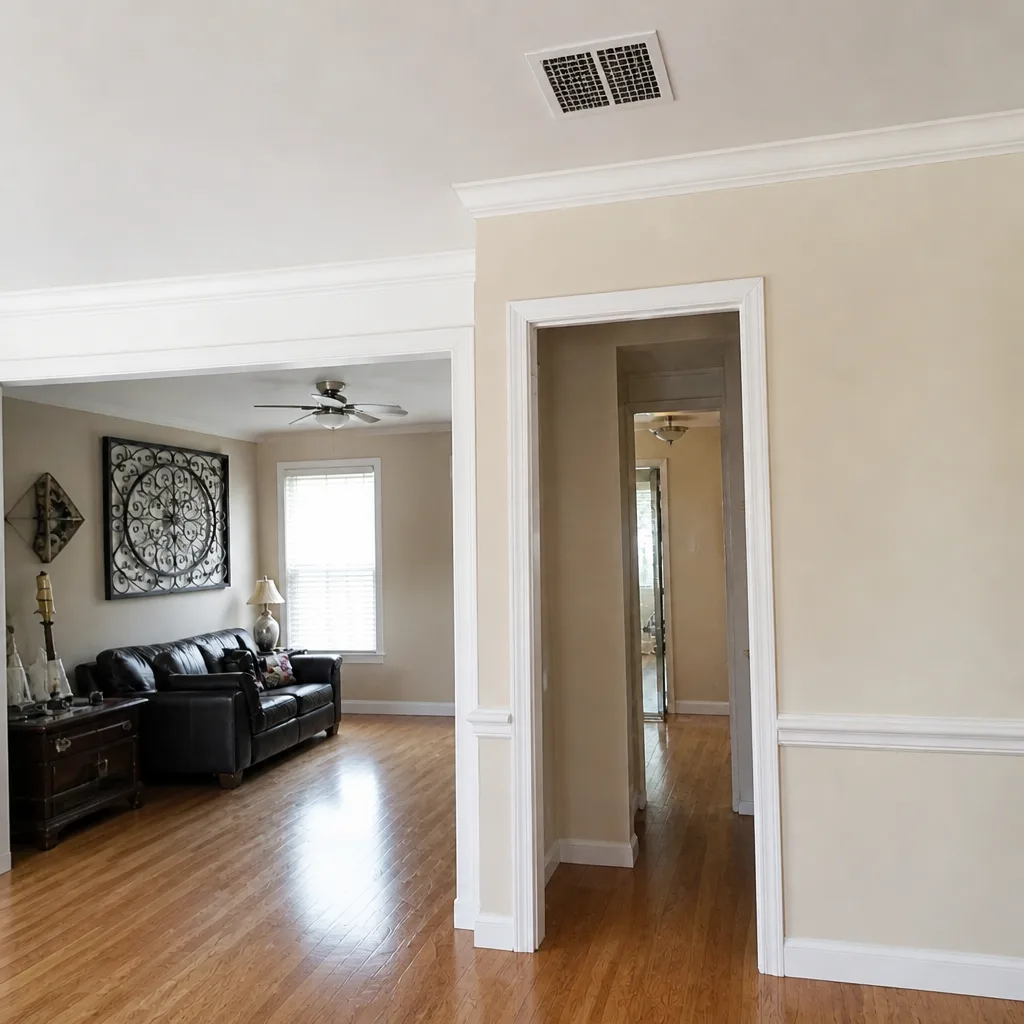
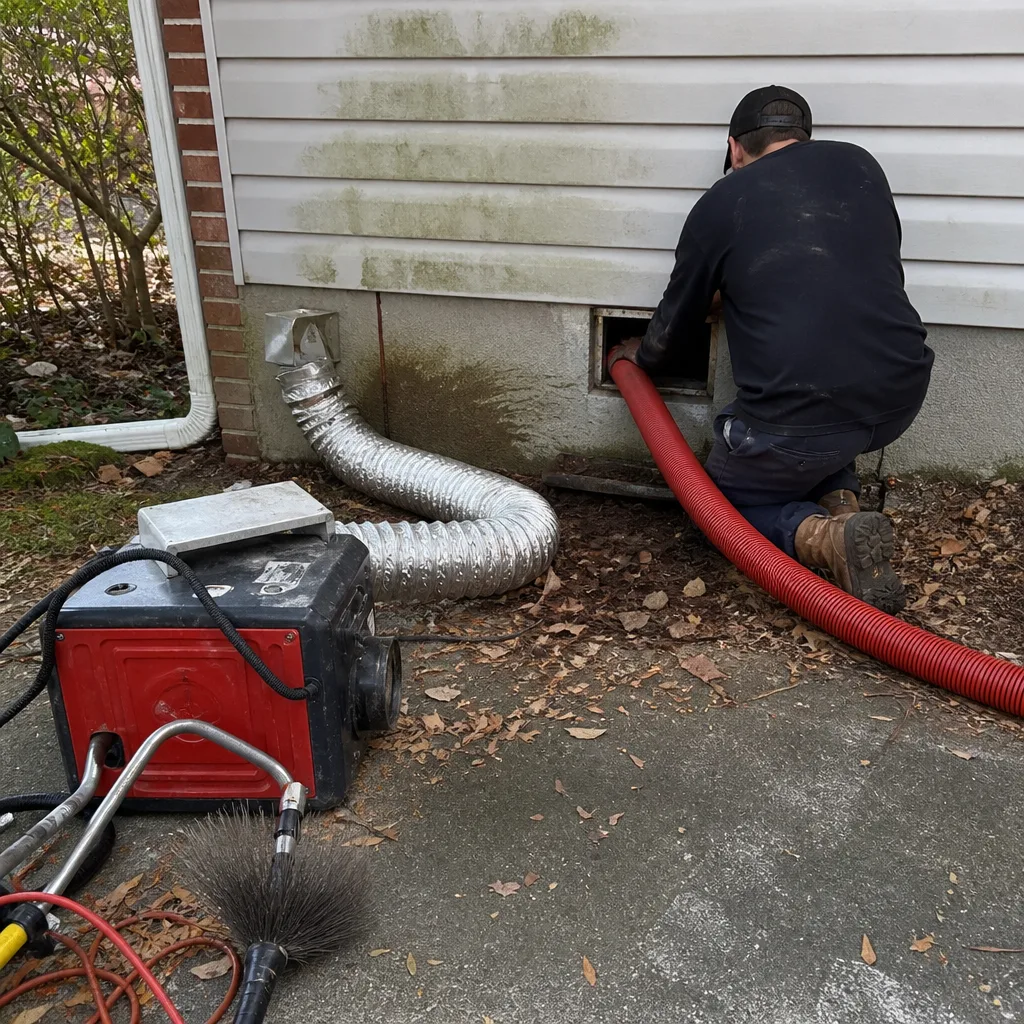
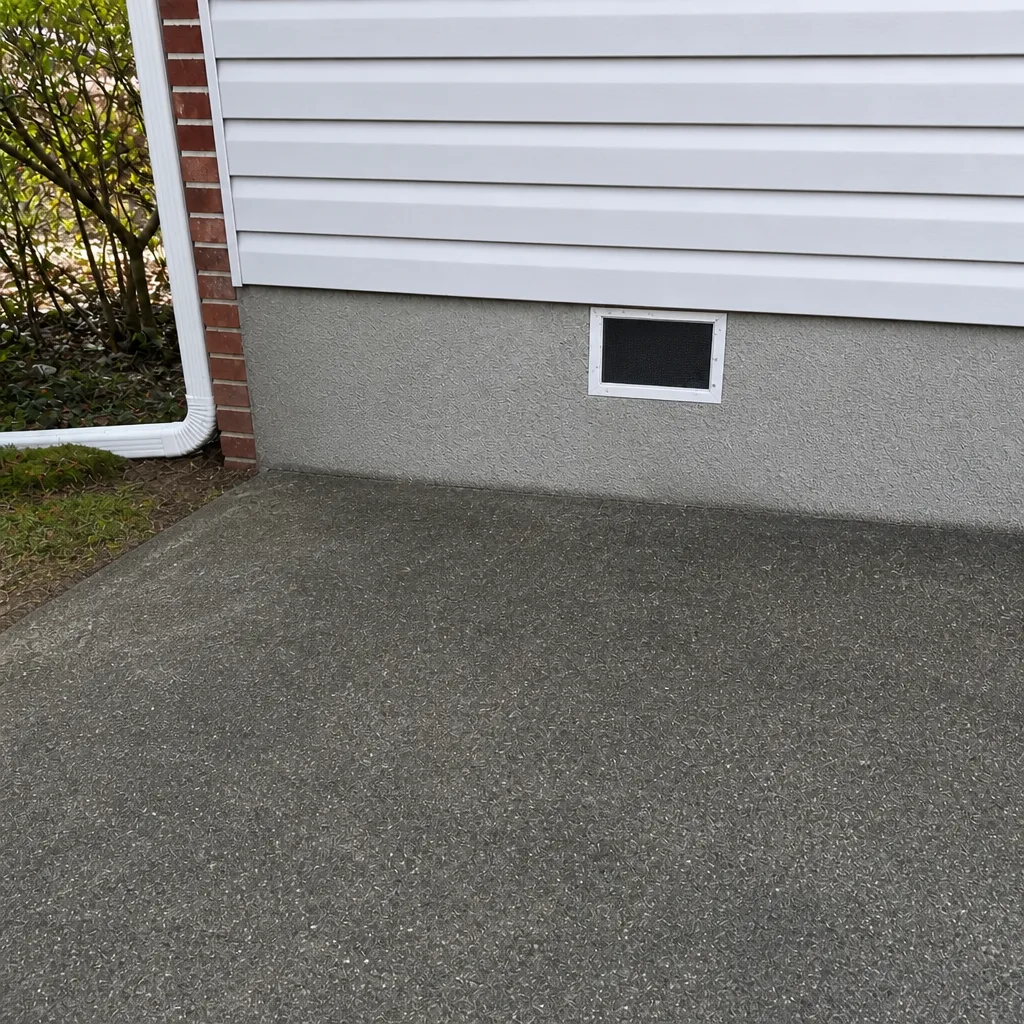
- Before-and-after photos or video. A serious operator offers visual proof of their own ducts, not stock images. Ask to see the inside of your ductwork after cleaning, and check that the images look like your system.
If any of these go wrong, you can stop the job. A company that’s invested in the process won’t argue with a reasonable stop.
Cary-Specific Things That Affect the Hiring Decision
Cary doesn’t have the salt-air complications that affect duct systems along the coast, and it doesn’t see hail damage the way the middle of the country does. What Cary does have is humid summers, a lot of pollen from the pines and hardwoods, and a steady volume of newer construction with decades of flexible duct and central HVAC in it. That combination affects the hiring decision in ways that aren’t obvious.
Humidity and duct interior conditions
Long, humid summers are hard on duct interiors. Condensation in poorly sealed runs creates conditions that invite biological growth, and that growth becomes airborne when the system runs. A proper cleaning followed by a repair pass on any compromised seals addresses this. Cleaning alone without the repair step leaves the same problem in place.
Pollen load
Cary’s pollen season sends a lot of fine particulate into homes, especially through return registers. Households with allergy concerns benefit from a full-system cleaning followed by a filter strategy that matches the load. This is where familiarity with filtration systems helps: a contractor who knows how to work with existing air quality controls will make better recommendations than one who only cleans.
Newer construction
Newer Cary homes often have flexible duct runs and more complex zone layouts. Those systems benefit from rotary cleaning that actually reaches the full run rather than just the last few feet before each register. Ask specifically how the contractor handles long or branching runs. In our experience, vague answers here signal a limited toolset.
Dryer vents are part of the picture
Dryer vent cleaning is a separate safety matter that many duct-only operators skip. In our experience, that’s a mistake, because a blocked dryer vent is a leading cause of residential fires. Ask any contractor whether they offer dryer vent cleaning as a standalone service and whether they inspect the full vent run. If the answer is no, you’re hiring someone with a narrow view of the system.
If you’re comparing contractors around Cary, factor in whether they cover the full duct ecosystem: cleaning, dryer vent clearing, and actual repair. An operator who does only one of those will send you to somebody else the moment anything else needs attention.
What Duct Cleaning Costs and Why Quotes Vary So Much
Duct cleaning quotes in Cary have wide ranges because the scope varies so much, and because some quotes are designed to grow. A whole-system cleaning priced as a single number reflects the actual work. A per-vent quote is a low teaser that never reflects the final cost. The difference isn’t subtle once you’re looking at quotes side by side.
- Whole-system cleaning: a single price agreed before work starts, covering all supply and return runs, typically with the air handler included.
- Dryer vent cleaning: a separate, standalone service priced on its own.
- Duct repair: priced per the specific repair, once the contractor has identified what’s failed.
The estimate is free, the price is set per job by the written estimate, and the written estimate should never move once the work is underway. That structure is the best sign of an honest operator.
When quotes come in wildly different, ask each one to explain what’s included. If one is dramatically cheaper, something is missing from the scope. That might be filtration, might be rotary agitation, might be the pressure step entirely. Ask directly. You’re not being difficult; you’re doing exactly what the guide above tells you to do.
If you want to understand what a properly scoped air duct cleaning includes, we’re happy to walk you through it over the phone before anyone comes out. Estimates are free.
Common Mistakes to Avoid
- Accepting a per-vent price over the phone. Any quote given without describing the system is a marketing number, not an estimate. The real cost shows up later in the day.
- Skipping the pressure question. Negative pressure is the whole reason professional duct cleaning works. A company that can’t explain it clearly is not doing it correctly.
- Choosing on price alone. The cheapest quote in Cary is often the one that shows up with consumer equipment. The difference in outcome is huge; the difference in invoice is often small once the upcharges are counted.
- Ignoring the dryer vent. A contractor who only cleans ducts and never clears dryer vents is leaving a real safety hazard in your home untouched. Ask specifically.
- Not asking for insurance documentation up front. Verbal confirmation of coverage is easy. A certificate is verification.
- Assuming the job is finished without a visual check. Before-and-after photos of your own ducts are the only proof that matters. If a contractor doesn’t offer them, ask.
- Skipping the repair step. Cleaning a duct system with leaks or failed seams doesn’t fix the leaks. It just removes dust that will collect again behind the same failing joints.
See the difference
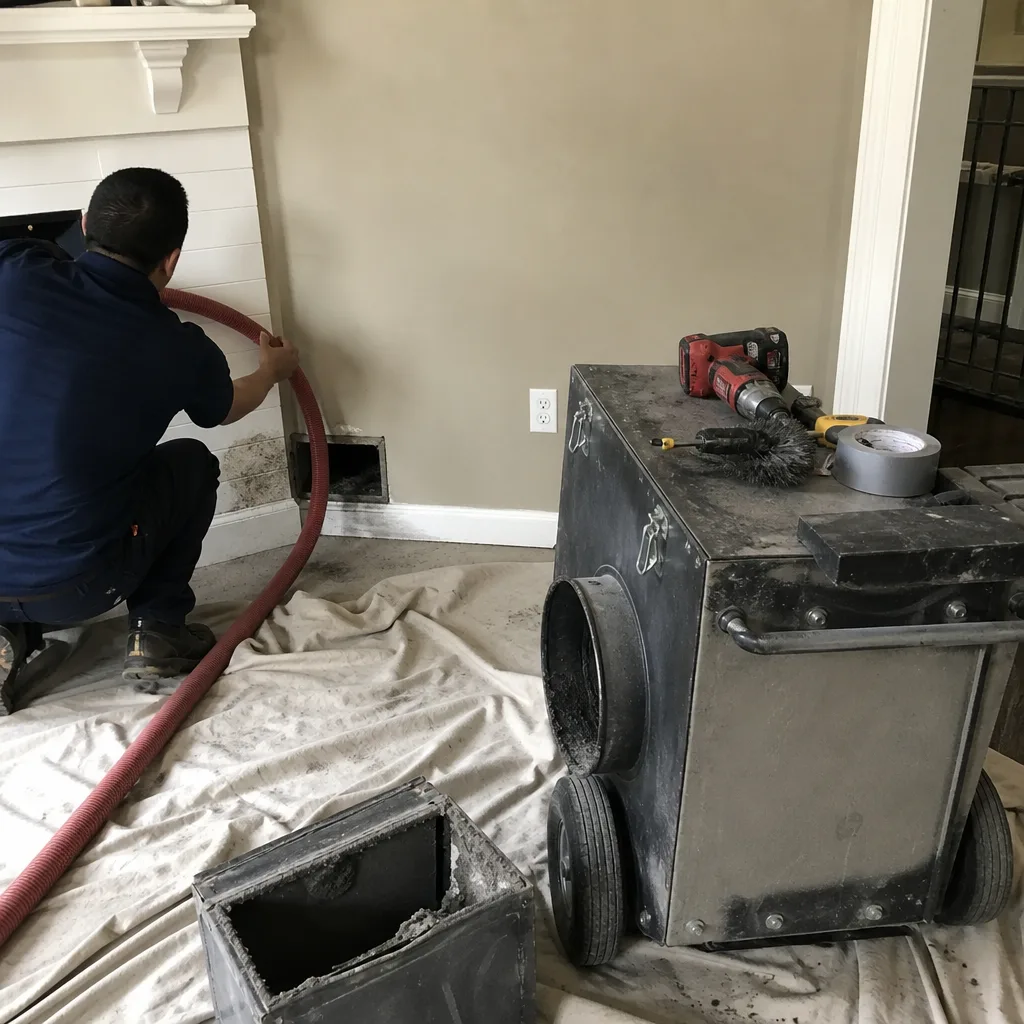 Before
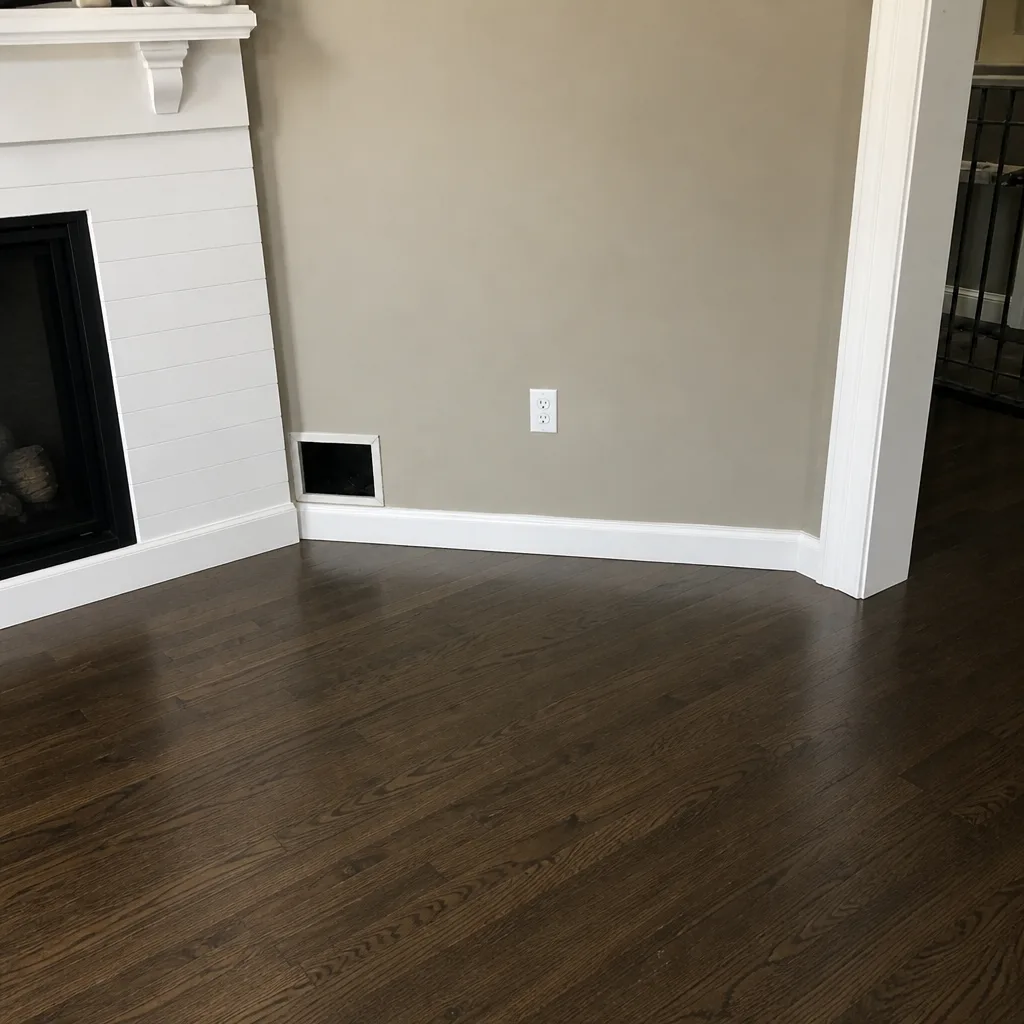 After
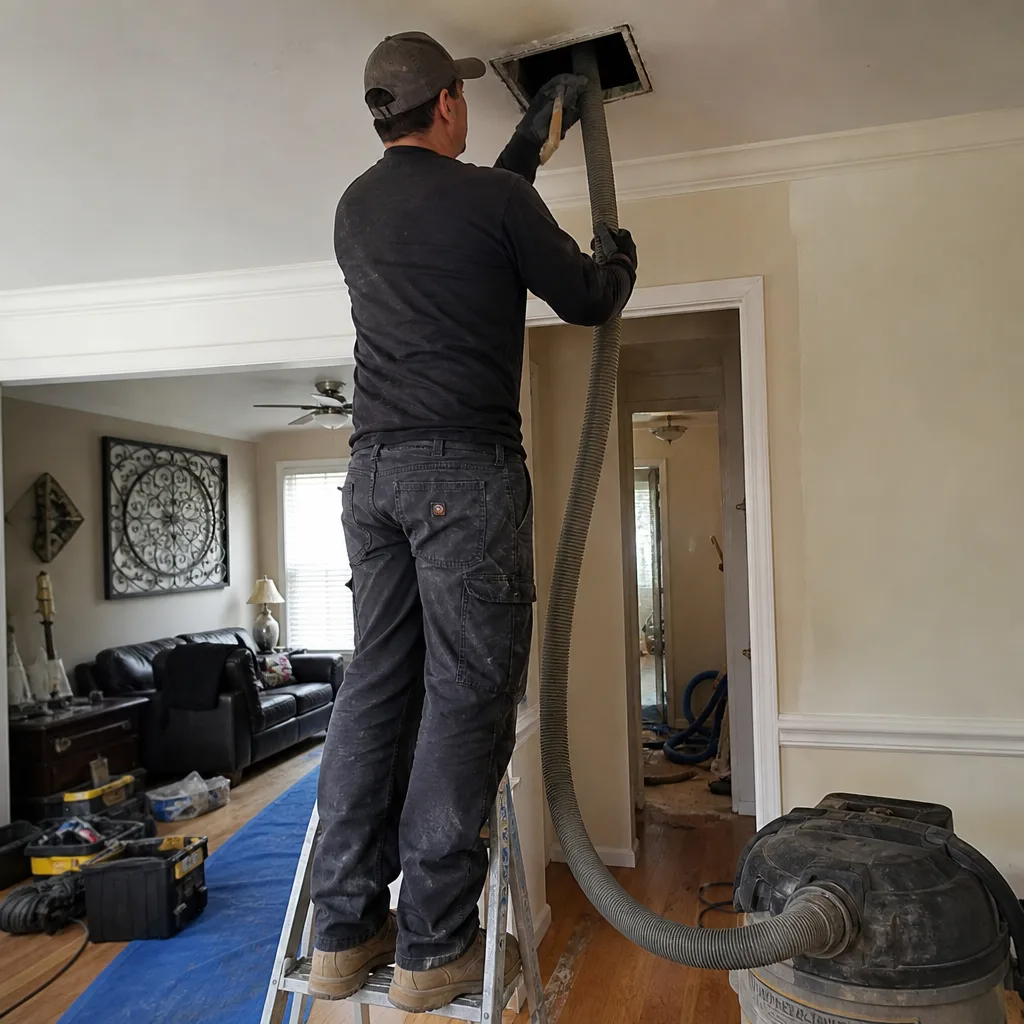 Before
 After
 Before
 After
When to Call a Professional
You need to call a professional when you notice visible dust blowing from registers right after a filter change, when odors persist in rooms after the HVAC has been running, when you’ve recently bought a home and don’t know the duct history, or when anyone in the household has allergy or asthma symptoms that get worse indoors. Anyone with a documented fire hazard from a blocked dryer vent should call immediately, regardless of whether they were planning to clean ducts this year. Duct Cleaning Cary offers free estimates in Cary – call (833) 608-1198. We answer 24/7. Fast dispatch from 7am to 7pm, Sunday through Friday.
Our technicians have up to 12 years of experience, and they’ll walk you through the equipment and process before any work begins. One flat price per system, agreed before work starts. Before-and-after photos of your own ducts, every job.
Frequently Asked Questions
Duct cleaning in Cary is priced as a whole-system job, not per vent, and the written estimate sets the final price. The estimate is free and it shouldn’t move once you’ve agreed to it. If you’re comparing quotes, ask each one to explain what’s included before comparing numbers. Call (833) 608-1198 for an exact quote – estimates are free.
Cheap quotes usually leave out the pressure step, the rotary agitation, or the filtration – which is most of what duct cleaning is actually for. A per-vent price quoted before anyone has looked at your system is the clearest signal. Ask each contractor which equipment they bring and what filtration they run. Call (833) 608-1198 for an exact quote – estimates are free.
Ask for before-and-after photos or video of your own ductwork, not stock images. A serious operator will offer them without being asked, and the images should look like your system – same register positions, same visible duct features. Our team provides this on every job. Call (833) 608-1198 for an exact quote – estimates are free.
Most homes don’t need it every year. Many do well with a full cleaning every few years, though homes with pets, allergy concerns, recent renovations, or a recent move-in often benefit from an earlier visit. The honest answer depends on your system and your household. A quick phone conversation can help you figure out whether you’re due. Call (833) 608-1198 for an exact quote – estimates are free.
Yes, most renovations generate drywall dust and fine particulate that ends up in the duct system even with plastic sheeting in place. Cleaning after the renovation is finished and the last of the dust has settled makes sense. If you’ve just had work done and the HVAC is running, ask a professional to take a look before the next pollen season. Call (833) 608-1198 for an exact quote – estimates are free.
It’s necessary. A blocked dryer vent is a leading cause of residential fires, and the buildup happens gradually enough that most homeowners don’t notice until air flow drops or the dryer starts running hot. We treat it as its own service, and we recommend it on its own timeline, separate from duct cleaning. Call (833) 608-1198 for an exact quote – estimates are free.
The Bottom Line
Duct cleaning has almost no barrier to entry, which means the hiring decision is most of the work. Ask five questions before you book: CFM rating, negative pressure method, rotary agitation, filtration, and insurance documentation. If any of the five triggers a vague answer, move on. Recognizable equipment names like Rotobrush, Nikro, and Abatement Technologies are useful shorthand for a company that has put real capital into the process. Watch for per-vent pricing, pressure to buy add-ons, and anything that sounds like a teaser number. One flat price per system, agreed before work starts, with before-and-after photos of your own ducts, is the standard to hold any contractor to in Cary.
If you’d like to bring that same standard to your home, call Duct Cleaning Cary at (833) 608-1198 for a free estimate. We answer 24/7. Fast dispatch from 7am to 7pm, Sunday through Friday. Professional-grade equipment, residential pricing, and the full duct picture covered: cleaning, dryer vent clearing, and repair.
Written by the team at Duct Cleaning Cary.