
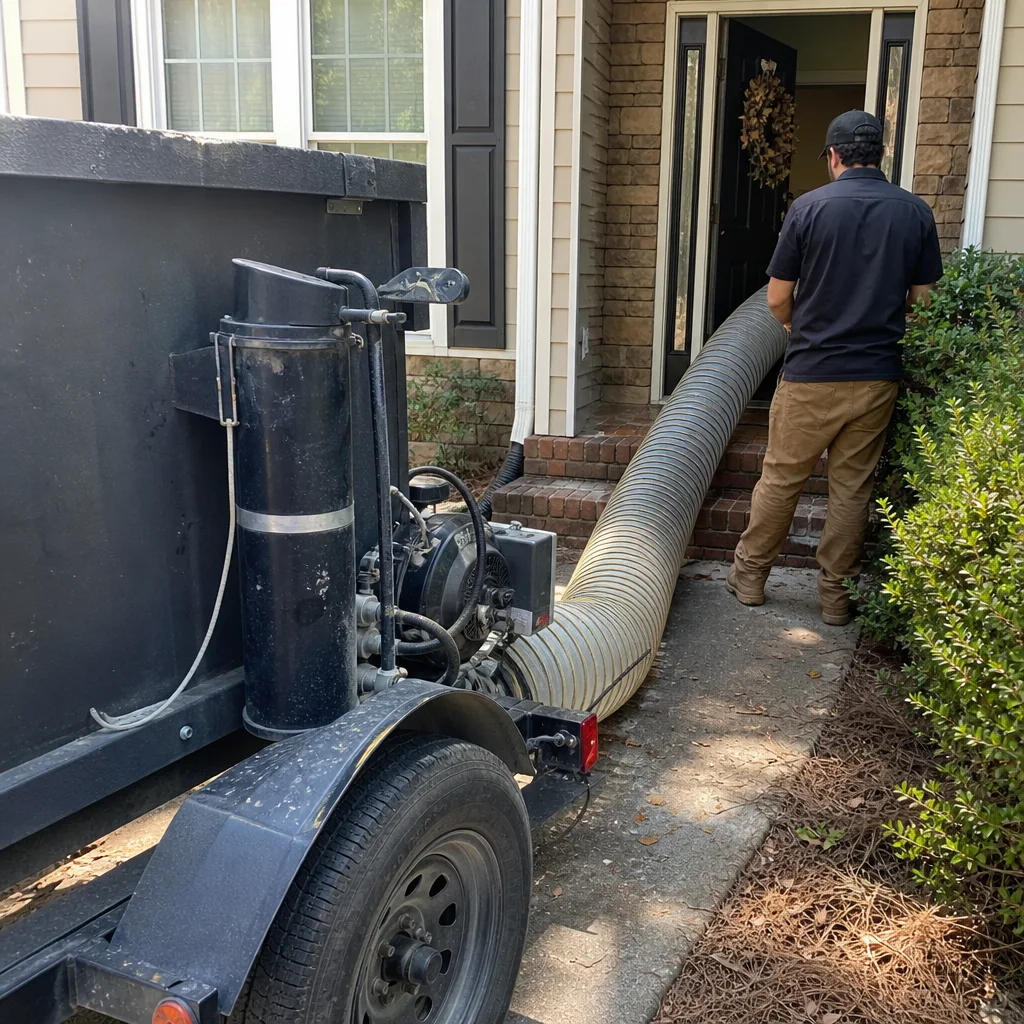
Last updated November 16, 2026
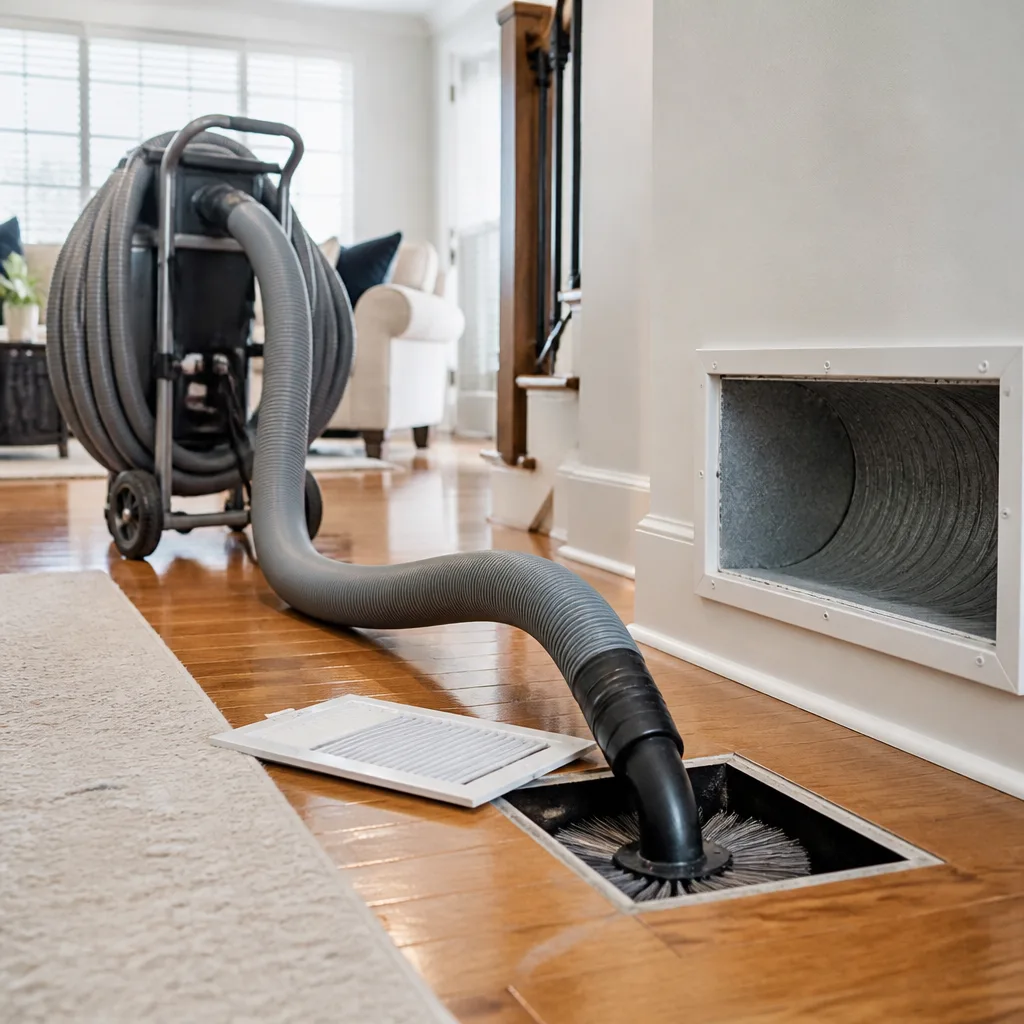 Whole-home duct cleaning
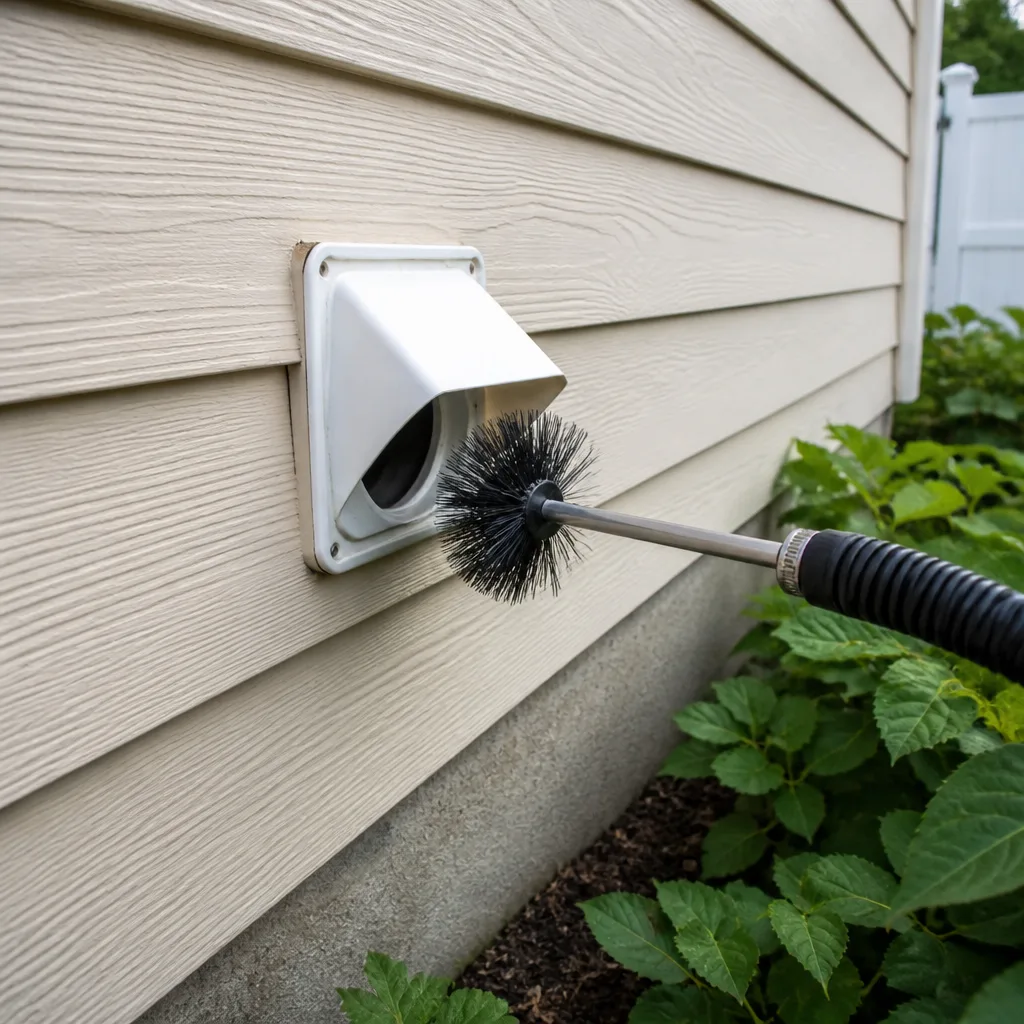 Dryer vent cleaning
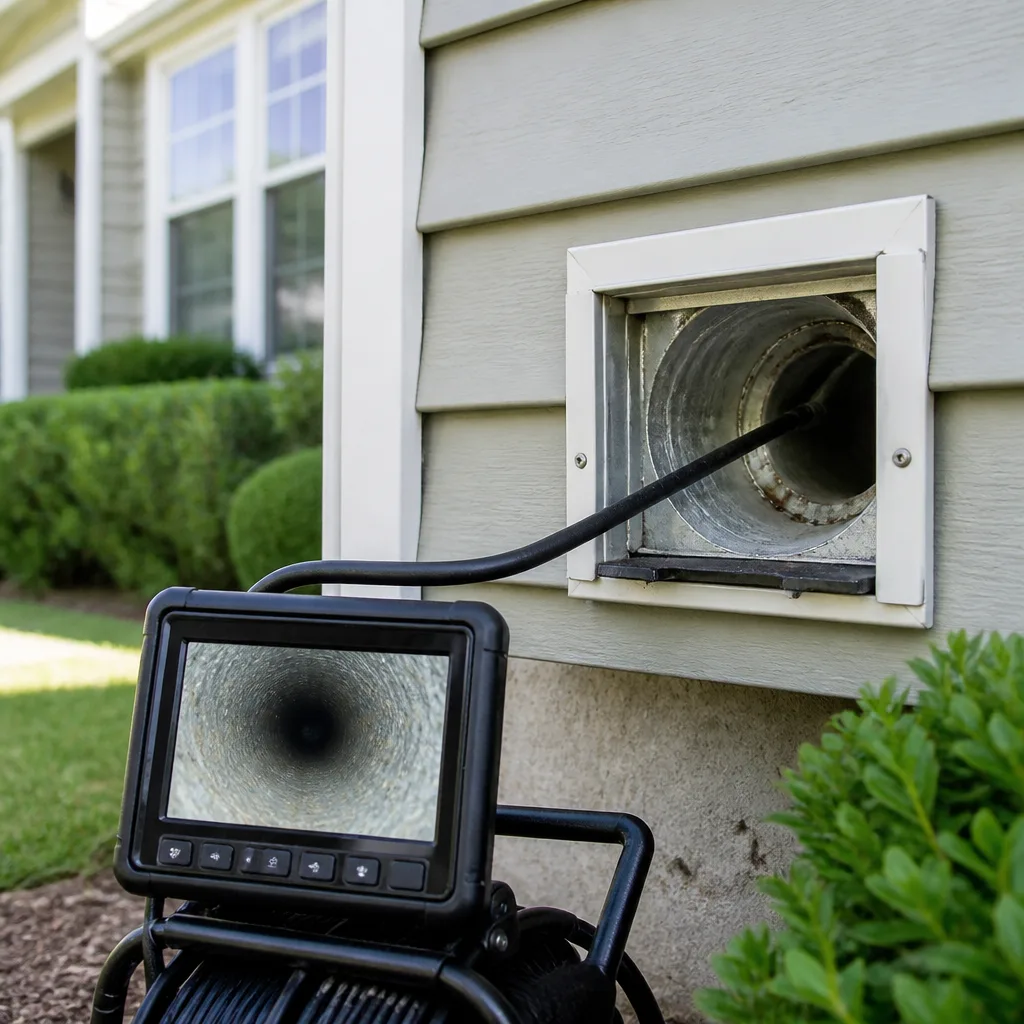 Camera inspection
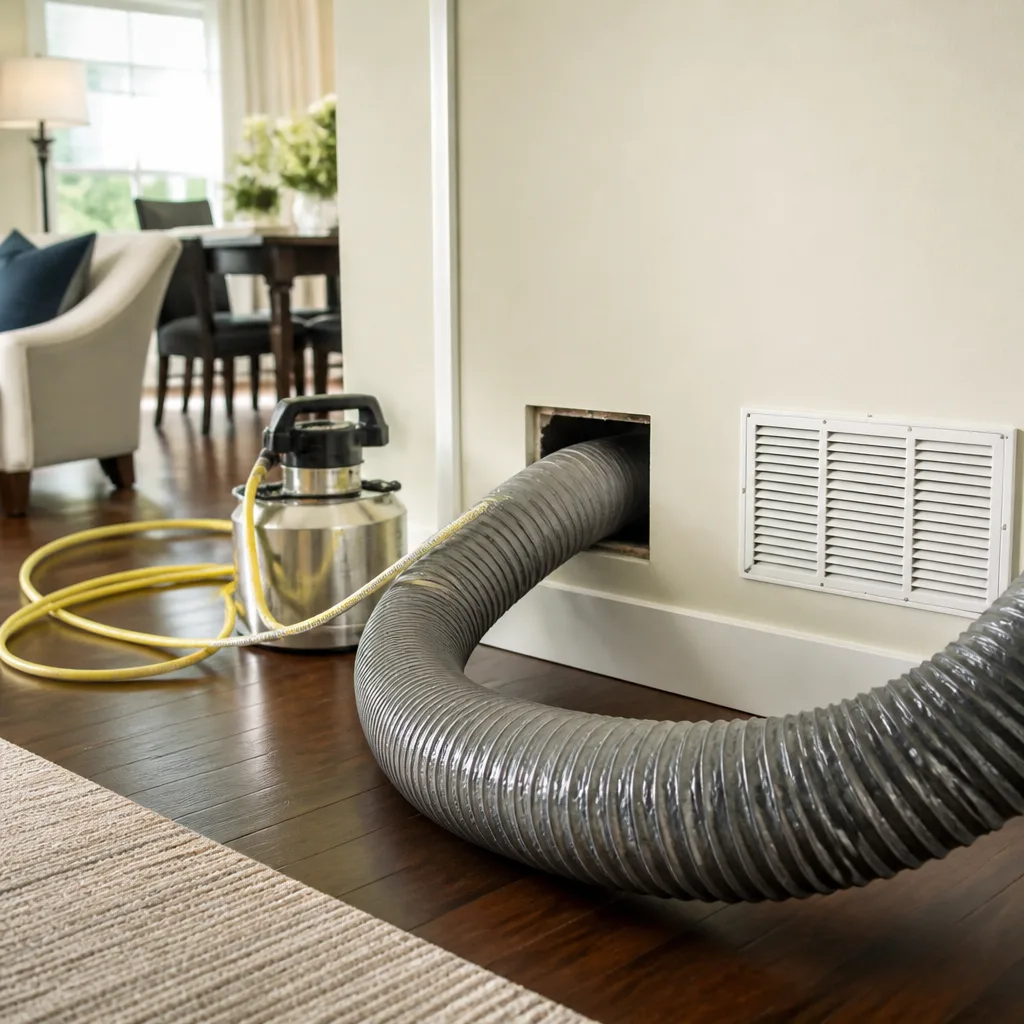 Sanitizing & deodorizing
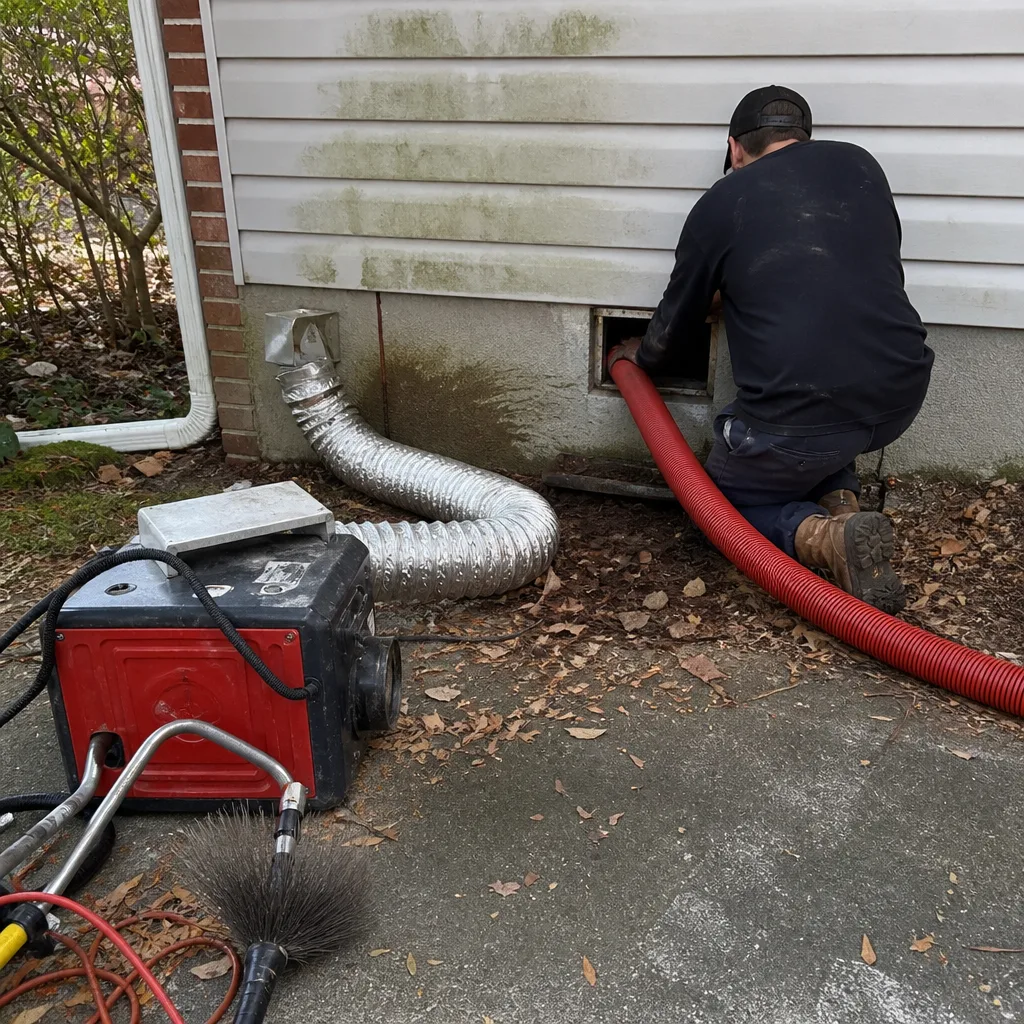
Whole-system duct and dryer vent check with before-and-after photos - you see exactly what came out of your vents
That "$99 whole-house special" is a bait ad - the real number appears once they are in your hallway, or the "clean" is a shop-vac at the register. We photograph the inside of your ducts before and after instead.
Air Duct Cleaning Troubleshooting in Cary: Common Problems and How to Fix Them
If your airflow felt weaker after a duct cleaning than before it, the technician probably didn’t do the job wrong. They uncovered a pressure problem that was already there. That’s the thing most homeowners miss about duct cleaning in Cary: the cleaning itself is mechanical and fairly predictable, but what the cleaning reveals about your duct system can be surprising. A collapsed flex run, a crushed transition at the air handler, a disconnected branch in the attic, or a return that’s pulling unfiltered air through a leaky plenum – these show up the moment the ducts are clean and the system is asked to move air properly. This guide teaches you to read those symptoms the way a technician does, using airflow and temperature checks at each register, so you can tell a genuine post-cleaning problem from a pre-existing duct defect that needs repair, not another cleaning.
Quick Answer
Most air duct cleaning problems in Cary come down to one of three things: a cleaning that didn’t address a real duct defect (collapsed flex duct, disconnected runs, crushed transitions), an air-quality problem with a source outside the ducts (coil, drain pan, or wet insulation), or a pressure imbalance in the system that no amount of cleaning will fix. Before you book a re-clean, run the airflow and temperature checks in this guide. If they point to a system defect, the fix is duct repair or rebalancing, not more vacuuming.
Styles & brands we work with
- Whole-home duct cleaning
- Dryer vent cleaning
- Camera inspection
- Sanitizing & deodorizing
Table of Contents
- Was it a bad cleaning job or a duct defect?
- How to check airflow and temperature at each register
- Why musty odors persist after cleaning
- Is your HVAC pulling unfiltered air?
- Negative pressure symptoms in two-story Cary homes
- The post-cleaning inspection checklist you can run yourself
- Repair, re-clean, or rebalance: which fix applies
- What makes Cary duct systems act the way they do
Was it a bad cleaning job or a duct defect?
A bad cleaning job and a pre-existing duct defect can produce the same complaint: “the air doesn’t feel right.” The way to tell them apart is timing and location. If airflow dropped evenly across every register right after the cleaning, the odds tilt toward debris disturbed and left in place, a filter clogged during the work, or a register damper knocked partly closed. If the drop is uneven – one or two rooms weak, others fine – you’re almost certainly looking at a duct defect that was there before the cleaning. Clean ducts just made it visible.
In our experience across Cary, the uneven pattern is the more common story. A lot of local housing stock has flex duct runs in unconditioned attic space, and flex duct is the part of a system most likely to sag, kink, or get crushed. When a technician cleans, they remove the layer of dust that was partly masking how the system actually moved air. The ducts aren’t worse. The symptom is just clearer.
A few quick distinctions to keep in mind:
- Bad cleaning: airflow weak everywhere, dust visible at registers immediately after, filter loaded with debris the crew should have caught.
- Duct defect: one or two rooms weak, whistling at a register, temperature difference between rooms of several degrees, or a return that pulls hard while a nearby supply barely moves air.
- Filter problem: airflow weak on the whole system, filter visibly dirty or the wrong MERV rating for the equipment.
If you can’t tell which one you’re looking at, the air duct cleaning crew can usually diagnose it in one visit – but run the checks below first, because the answers will save you time.
How to check airflow and temperature at each register
You don’t need a diagnostic license to read airflow. You need a register-by-register comparison and a thermometer. The steps below give you a picture of where the system is moving air well and where it isn’t.
- Set the system to fan-only mode. This removes the heating or cooling cycle as a variable and lets you feel raw airflow at each register.
- Walk every register and feel the airflow. Use your hand at a consistent distance – about an inch from the grille – so the comparison is fair. Note which registers feel strong, weak, or stalled.
- Measure temperature at each supply register. A simple infrared thermometer or an instant-read kitchen thermometer works. Run the AC for a few minutes first, then read each supply and each return.
- Compare supply to return temperature. A healthy system shows a temperature drop between return and supply in the range your equipment is designed for. If one room’s supply is noticeably warmer than the others in cooling mode, that’s a sign of a restricted or disconnected run.
- Check the filter pressure drop. A loaded or overly restrictive filter strangles the whole system. Swap it and re-run the airflow check before drawing conclusions.
- Write it down. A simple table of register location, airflow feel, and temperature is the most valuable thing you can hand a technician.
Once you have the data, the pattern tells the story. Even airflow everywhere with a warm supply in one room points to a damaged branch. Uneven airflow with normal temperatures points to balancing or pressure problems. Weak airflow everywhere points to the filter, the blower, or a crushed main trunk.
Why musty odors persist after cleaning
If your ducts smell musty after a professional cleaning, the smell is almost certainly coming from a source the cleaning didn’t touch. That’s the first thing to understand. Duct cleaning removes dust, debris, and settled particulate – it doesn’t remove mold growth from a wet evaporator coil, a drain pan that’s been holding standing water, or insulation that’s gotten damp. Those are source problems, and they live inside the air handler or the plenum, not in the branch ducts themselves.
The most common culprits we find in Cary homes:
- A dirty evaporator coil. The coil is where condensation collects. If it’s growing biological material, every air pass picks up the odor no matter how clean the ducts are.
- A drain pan that isn’t draining. A partially clogged condensate line or a pan with a broken slope holds water, and standing water in a dark enclosed cabinet is a smell factory.
- Duct insulation with moisture in it. Especially in attic runs where the vapor barrier has been damaged. No amount of surface cleaning fixes wet insulation – it has to be repaired or replaced.
- A return plenum with a gap to attic space. If air is being pulled from a humid attic into the return, you’ll smell the attic every time the system runs.
What to do next: get eyes on the air handler cabinet and the coil. If either looks dirty, wet, or coated in organic growth, that’s the fix. The ducts are fine. In Cary’s humid summers, this pattern shows up again and again because the cooling season runs long and the coil stays wet for months at a time. Keeping the condensate line clear and the filter changed on schedule is the strongest prevention you have.
Is your HVAC pulling unfiltered air?
Unfiltered air entering your system is one of the most overlooked duct problems – and it’s especially common in older Cary townhomes. The pattern is a return plenum or air handler cabinet built into an attic or chase that has gaps at penetrations, seams, or where the filter frame meets the cabinet. Every one of those gaps is a path for attic air, garage air, or crawl space air to get pulled into the airstream without ever passing through the filter. That air brings dust, humidity, and whatever else is in the space next door.
How to spot bypass air:
- Look at the filter frame. A filter that sits loosely in a slot, with visible gaps around the edges, is bypassing. A filter that seals against the frame on all four sides is not.
- Check the air handler cabinet seams. Foil tape that’s peeling, mastic that’s cracked, or seams that were never sealed at all are all candidates.
- Look at attic and chase penetrations. Any pipe, wire, or duct running through the cabinet or plenum leaves a hole. Holes that aren’t sealed pull air from the surrounding space.
- Look at the return plenum connection. Where the return duct meets the air handler, a loose or unsealed connection pulls attic air straight into the system.
- Smell test during the cooling season. If the air smells earthy, dusty, or faintly like attic when the system starts, bypass is a strong suspect.
The fix is sealing – mastic, proper foil tape, and a filter frame sized and gasketed to the equipment. This is genuinely one of the highest-value repairs in duct work, because it protects the coil, cuts dust load, and takes pressure off the blower. It’s also a repair our duct cleaning Cary team handles as part of a normal service call, since a cleaning that leaves bypass in place will just get undone by the next summer.
Negative pressure symptoms in two-story Cary homes
Negative pressure is what happens when your system pulls more air out of a room or a floor than it puts back in. In a two-story Cary home, the classic pattern is a strong central return on the first floor and undersized returns on the second. The upstairs bedrooms lose air to the return chase, the doors close tight, and the rooms feel stuffy even though the system is running. It’s not a cleaning problem. It’s a pressure balance problem.
The symptoms to watch for:
- Doors that are hard to close or pull themselves shut when the system kicks on. That’s air pressure pushing the door.
- Whistling at door gaps or undercut. The gap under a closed door is acting as a return path.
- Upstairs rooms that are warm in summer and cool in winter even when the downstairs is comfortable.
- A dusty return grille that reloads fast after cleaning, because it’s doing more work than it was sized for.
- Poor airflow in second-floor bedrooms that gets better when the bedroom doors are left open.
Sometimes the fix is a simple balancing adjustment at the dampers. Sometimes it’s adding a return in the room that’s starved for air – especially in a closed-door bedroom – or upsizing an existing one. Occasionally the fix is a jump duct or a transfer grille. What doesn’t work is re-cleaning the ducts. If the ducts are clean and the pressure problem remains, the ducts weren’t the problem. This is where “the cleaning didn’t help” almost always traces back to. It’s the reason we tell Cary homeowners to run the register checks above before booking a second cleaning: a balancing issue and a cleaning issue both look like “the air doesn’t feel right,” but the fix is completely different.
The post-cleaning inspection checklist you can run yourself
You don’t need to be a technician to sanity-check a duct cleaning. You need 15 minutes, a flashlight, and this list. Run it the day after the service, not weeks later, so any problem is still clearly connected to the work.
- Physically open each access panel the crew cut or used. Look inside with a flashlight. You should see clean surfaces and no loose debris sitting in the bottom of the duct.
- Check every register face and grille. Wipe a white paper towel across the inside of a grille. A light dust deposit is normal. A heavy coat of loose debris suggests the register face was missed.
- Look at your filter. It should be clean, seated properly in the frame, and the right size. A filter knocked loose during the work is a real problem – and a common one.
- Run the fan-only test and check airflow at every register. Compare to your pre-cleaning notes if you have them. Even airflow is a good sign. Uneven airflow points to a duct issue.
- Check temperature at each supply. Differences of more than a few degrees between rooms in the same mode point to a damaged branch or a disconnected run.
- Smell the air during the first full cooling cycle. Clean ducts should smell neutral. A musty smell points to the coil or drain pan, not the ducts.
- Look for new gaps or unsealed cuts. Any access panel the crew opened should be sealed back on. An access door left off or a cut left unsealed pulls attic or chase air straight into the system.
If you got professional-grade work – the kind of cleaning that uses a negative-air setup with HEPA filtration – the panels should be sealed and the register faces clean. That’s the standard. If you don’t see it, ask the crew why, and ask what equipment they used. Any reputable outfit will tell you exactly.
Repair, re-clean, or rebalance: which fix applies
Once you’ve run the checks, the fix usually falls into one of three buckets. Matching the symptom to the bucket is what saves you money.
- Re-clean: rare, and appropriate only when there’s clear visible debris left inside the ducts or on register faces. If airflow is fine and dust is fine, a re-clean is not the answer.
- Repair: the fix when a flex duct has collapsed, a transition has crushed, a run is disconnected in the attic, or a plenum has an open bypass. These are physical defects. They need sealed connections, replacement of the damaged section, and a system check after the repair.
- Rebalance: the fix when airflow is restricted by pressure imbalance – especially in two-story homes with closed bedroom doors and undersized returns. Dampers, additional returns, or transfer grilles are the tools here.
In our experience in Cary, the majority of “the cleaning didn’t fix it” calls are repair or rebalance jobs, not cleaning jobs. That’s why we carry the equipment for duct repair on the same truck as the cleaning gear. It doesn’t do any good to clean a system and leave the collapsed run in place. The Cary housing mix – plenty of townhomes, plenty of attic flex duct, plenty of homes built with first-floor returns and second-floor closed-door bedrooms – produces all three problems regularly. Walking through the symptoms with a technician is the fastest way to know which one you’re actually dealing with.
For moisture problems, dryer vent blockages, and general air quality, the same walkthrough logic applies. A dryer vent is a separate system with its own pressure issue – lint accumulation restricts airflow long before it becomes a visible problem. More on that in our dryer vent cleaning guide, because the fire risk is different from the comfort issue and deserves its own answer.
What makes Cary duct systems act the way they do
Cary’s duct problems aren’t unique, but the local mix of housing, climate, and construction timing shapes which problems show up most. A few patterns worth knowing.
Long, humid cooling seasons. Summer in the Piedmont holds moisture in the air for months. That keeps the evaporator coil wet nearly all season, which is why musty odors and damp drain pans show up here more than they would in a drier climate. The ducts are rarely the smell source. The coil cabinet usually is.
A lot of attic flex duct. Much of the region’s residential construction uses flex duct in unconditioned attic space. Flex is convenient, but it sags, kinks at elbows, and gets crushed when someone steps on it during other work. After a cleaning, those defects become the visible airflow problem. A collapsed flex run doesn’t un-collapse just because the ducts are clean.
Townhomes sharing walls and chases. Cary townhomes often have return plenums built into shared chases or tight attic penetrations. Those are prime spots for unfiltered air to get pulled in, and prime spots for pressure problems when the neighboring unit’s system also runs. If a homeowner in a townhome smells attic air when the AC kicks on, bypass at the chase is the first thing to investigate.
A mix of air quality equipment. A fair number of Cary homes run Honeywell or Aprilaire filtration and humidification systems. Those systems change how the duct work behaves – a higher-MERV filter increases static pressure, and a whole-home humidifier introduces moisture that a bypass setup can throw off. If your home has one, mention it when you book the visit. The equipment changes the diagnostic path.
Newer HVAC installs on older duct work. When a system is replaced but the ducts aren’t, the new unit often moves more air than the old ducts were sized for. That’s a recipe for pressure problems, whistling registers, and airflow complaints. A cleaning that coincides with a new system is a good time to also have the ducts inspected for sizing.
Common Mistakes to Avoid
- Booking a re-clean before running the register checks. A second cleaning rarely fixes a duct defect, and it wastes money you could spend on the actual repair.
- Blaming the cleaning crew for a pre-existing duct problem. If airflow was already uneven before the service – just masked by dust – the crew uncovered a problem, not caused one.
- Ignoring a musty smell and re-cleaning the ducts. In Cary’s humid climate, musty air almost always traces to the coil or drain pan. Clean ducts don’t smell.
- Skipping the filter check before calling anyone. A loaded or oversized filter chokes airflow across the whole system. Ten minutes and a fresh filter solves more “weak airflow” complaints than any cleaning.
- Leaving bypass gaps at the air handler and plenum. Unsealed penetrations pull attic and chase air straight into the system. No cleaning gets ahead of an open bypass.
- Treating closed bedroom doors as a comfort quirk. In a two-story Cary home, closed doors create pressure problems that no amount of cleaning will fix. The answer is a return or a transfer grille, not another cleaning.
- Assuming a cleaning and a repair are the same visit. A cleaning removes debris. A repair fixes damaged duct. When the problem is a crushed flex run or a disconnected branch, the fix is repair. Ask which one the crew does before they arrive.
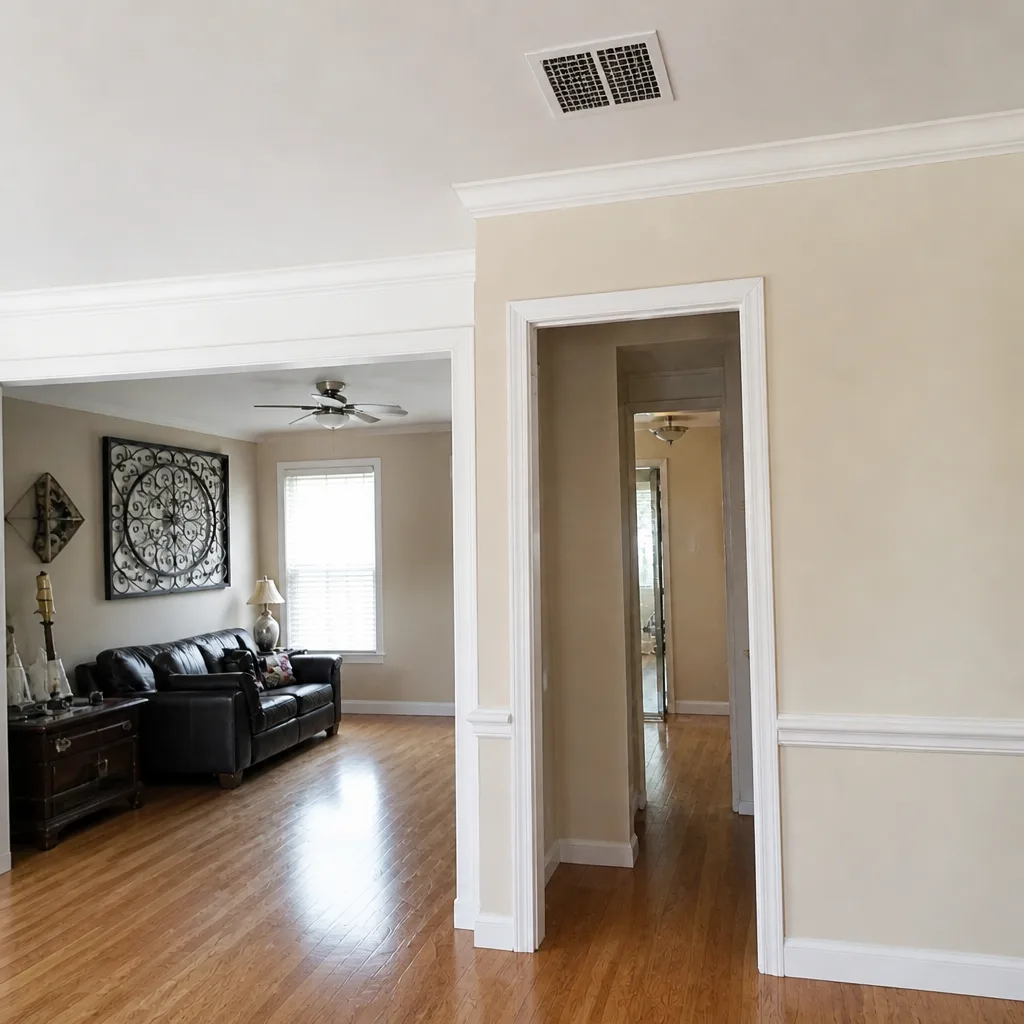
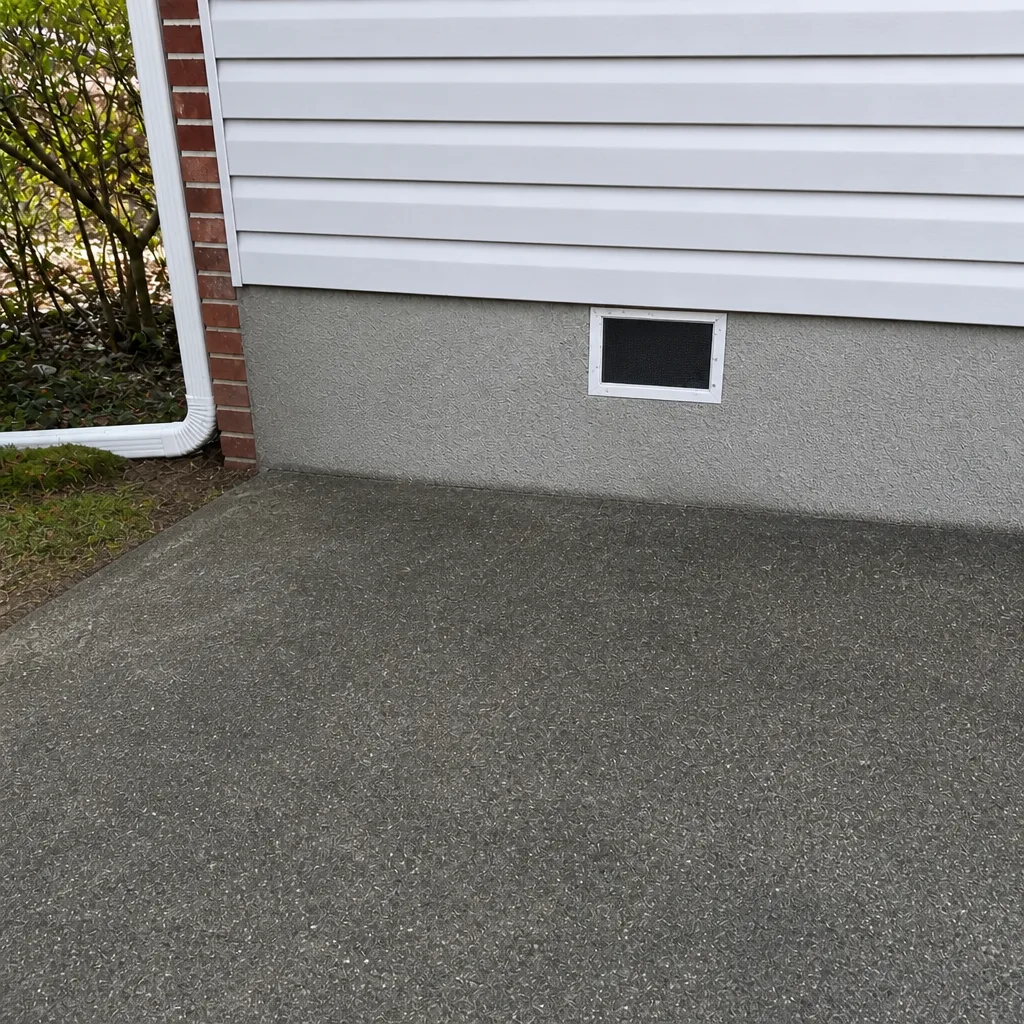
See the difference
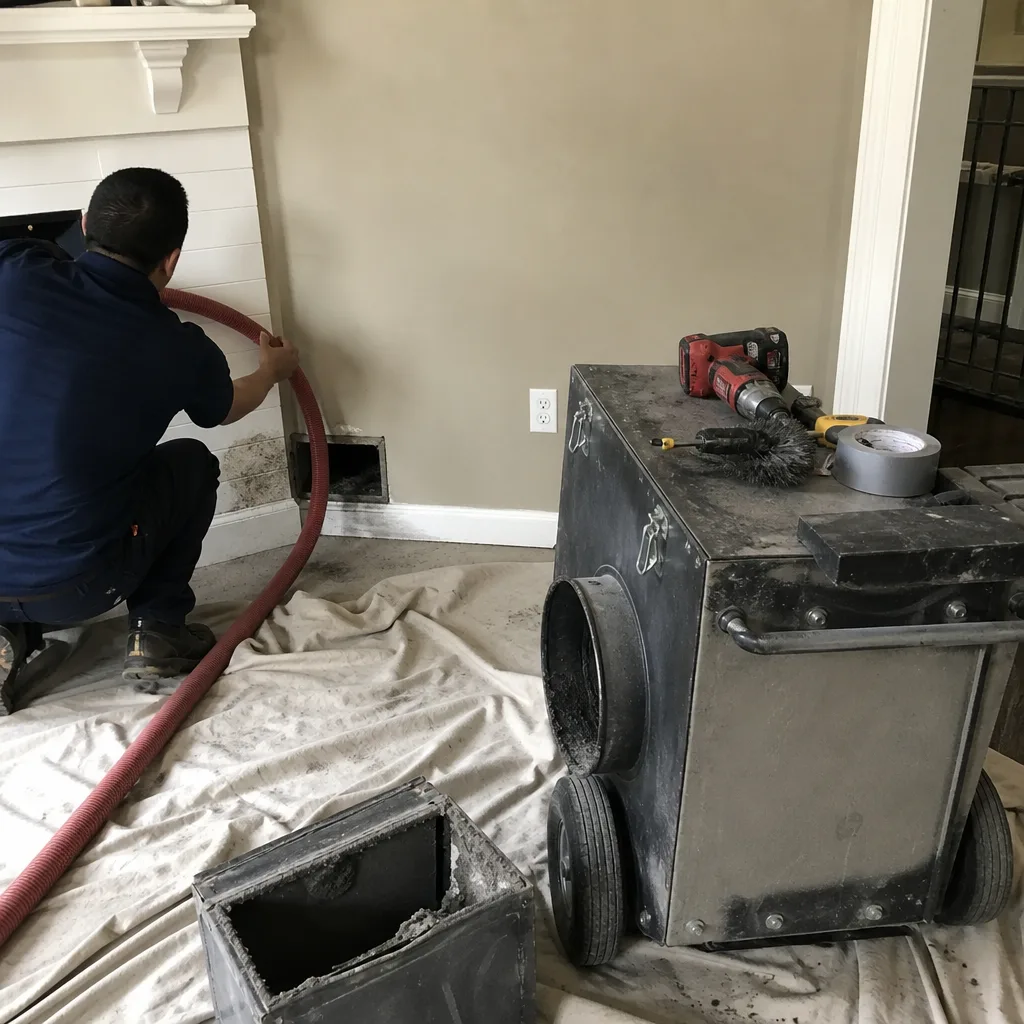 Before
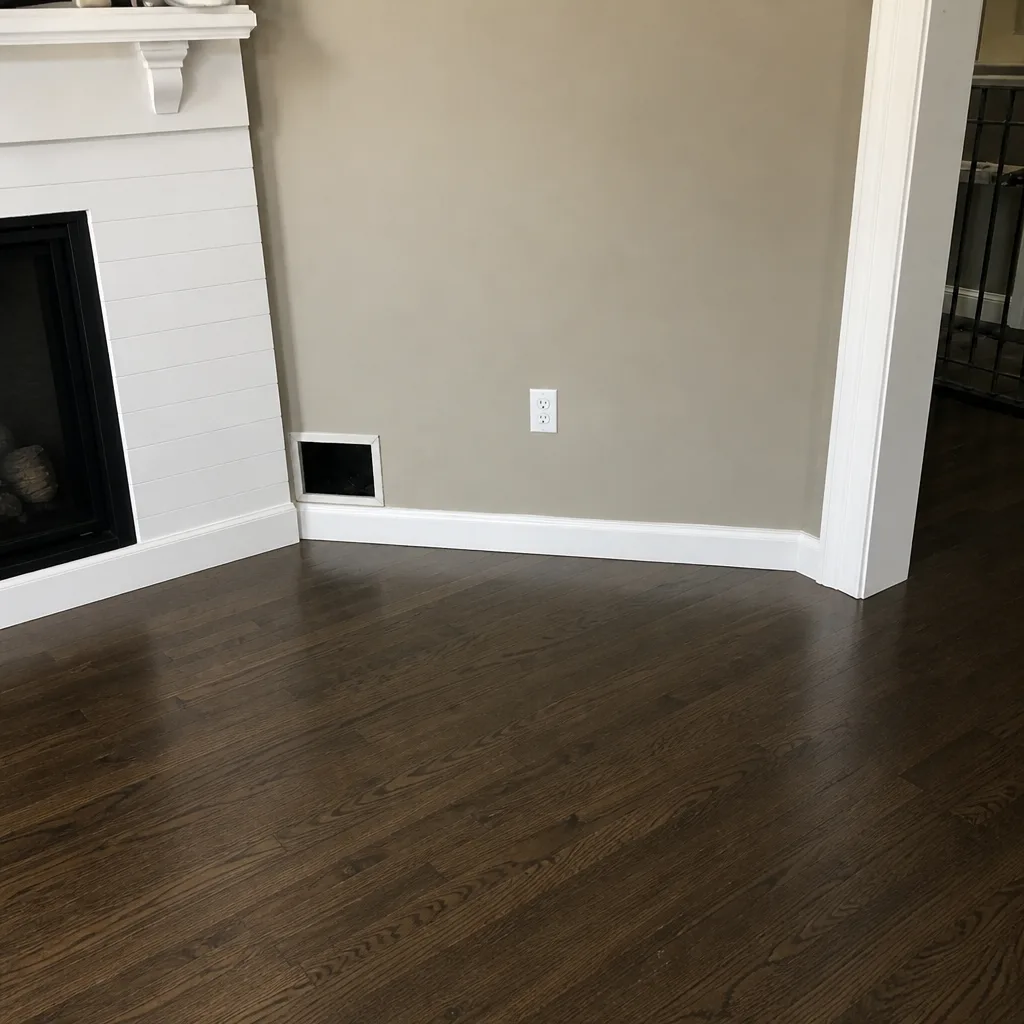 After
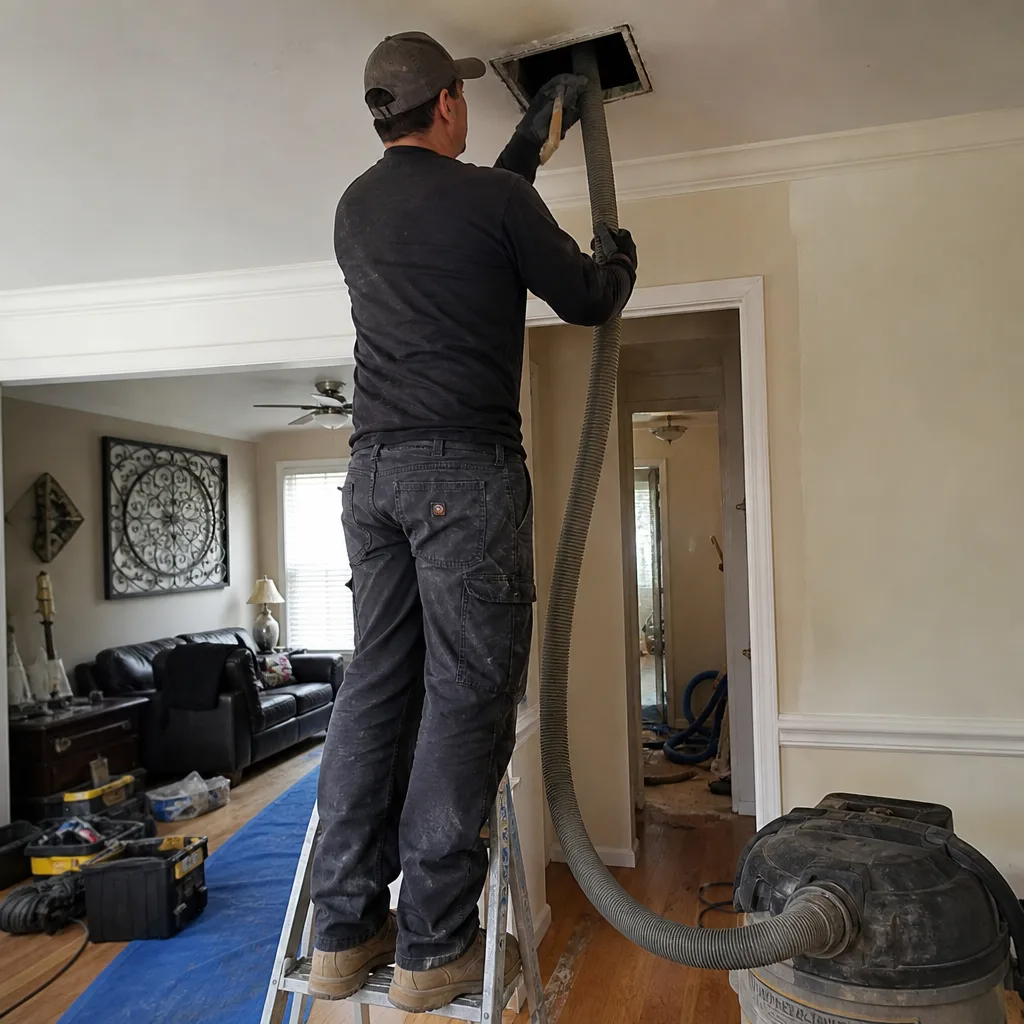 Before
 After
 Before
 After
When to Call a Professional
Call a professional when you’ve run the register checks and airflow is uneven, one room is measurably warmer than the rest, or you find dust or debris still sitting inside the ducts after a cleaning. Call when you smell musty air during the cooling season – that’s a coil or drain pan job. Call when your attic or chase has visible gaps at the air handler cabinet or return plenum, because bypass air is a repair, not a cleaning. Call when a two-story home has closed-door bedrooms that stay uncomfortable no matter how many times the ducts were cleaned. Our technicians have up to 12 years of experience and use professional-grade equipment, including Abatement Technologies filtration for the cleaning work itself. We clean, clear, and repair – cleaning, dryer vent service, and actual duct repair are all in scope. Duct Cleaning Cary offers free estimates in Cary – call (833) 608-1198. We answer 24/7. Fast dispatch from 7am to 7pm, Sunday through Friday.
Frequently Asked Questions
In most cases the cleaning revealed a duct defect that was already there – a collapsed flex run, a crushed transition, or a disconnected branch. It also possible the cleaning crew knocked a register damper partly closed or left the filter loose. Run the register-by-register airflow and temperature checks in this guide before booking a re-clean, because the pattern will tell you which. Call (833) 608-1198 for an exact estimate – estimates are free.
The smell is almost certainly coming from the evaporator coil, the drain pan, or damp duct insulation, not from residue in the ducts themselves. Cleaning removes dust, not biological growth on a wet coil. In Cary’s humid cooling season the coil stays wet for months, which is why this pattern is so common locally. Have a technician inspect the coil and drain pan, then decide on the fix. Call (833) 608-1198 for an exact estimate – estimates are free.
Whole-system pricing is quoted per home based on the number of systems, register count, and the scope of work involved, with the written estimate setting the final price. We don’t quote per-vent prices or teaser coupon figures, because those numbers shift the moment the crew is on site – the flat price is agreed before work starts, and you get before-and-after photos of your own ducts so you can see what was done. Call (833) 608-1198 for an exact estimate – estimates are free.
Cheap quotes usually reflect a shop-vac-and-brush approach rather than professional duct cleaning equipment, and they often skip the repair and sealing work that actually fixes a duct problem. A low number that turns into a much larger invoice once the technician arrives is a pattern to walk away from. Ask what equipment the crew is bringing – Rotobrush and Nikro systems are the industry standard for a reason, and any reputable outfit will tell you exactly. Call (833) 608-1198 for an exact estimate – estimates are free.
Two ways: run the post-cleaning inspection checklist in this guide (open the access panels, wipe a paper towel across each register face, check the filter, and re-check airflow at every register), and ask for before-and-after photos of your own ducts. A crew that uses a negative-air HEPA setup – Abatement Technologies equipment is the benchmark – can show you the clean interior because the process captures what it loosens. If the panel is sealed and the registers are clean, the work was done. Call (833) 608-1198 for an exact estimate – estimates are free.
Most homes don’t need a strict schedule – the answer depends on the home, the filter, pets, recent renovation, and how the system is behaving. In Cary, the more useful question is whether the symptoms call for it: uneven airflow, visible dust at registers, musty air, or a recent HVAC replacement. If a cleaning doesn’t fix a symptom, the answer is a diagnostic – not another cleaning. Call (833) 608-1198 for an exact estimate – estimates are free.
The Bottom Line
Most “duct cleaning didn’t work” complaints in Cary are not cleaning problems. They’re duct defects, pressure imbalances, or air quality sources the cleaning was never designed to fix. Run the register airflow and temperature checks. Run the access panel and filter inspection. Match the symptom to the fix: repair for a collapsed or disconnected run, rebalance for negative pressure, source repair for musty odors, and re-clean only when debris is genuinely left behind. Professional-grade cleaning with Rotobrush and Nikro equipment, Abatement Technologies filtration, and repair built into the same visit is how a cleaning delivers what you actually wanted. If your system’s symptoms point to a repair, call (833) 608-1198 for a free estimate. We answer 24/7. Fast dispatch from 7am to 7pm, Sunday through Friday.
Written by the team at Duct Cleaning Cary.