
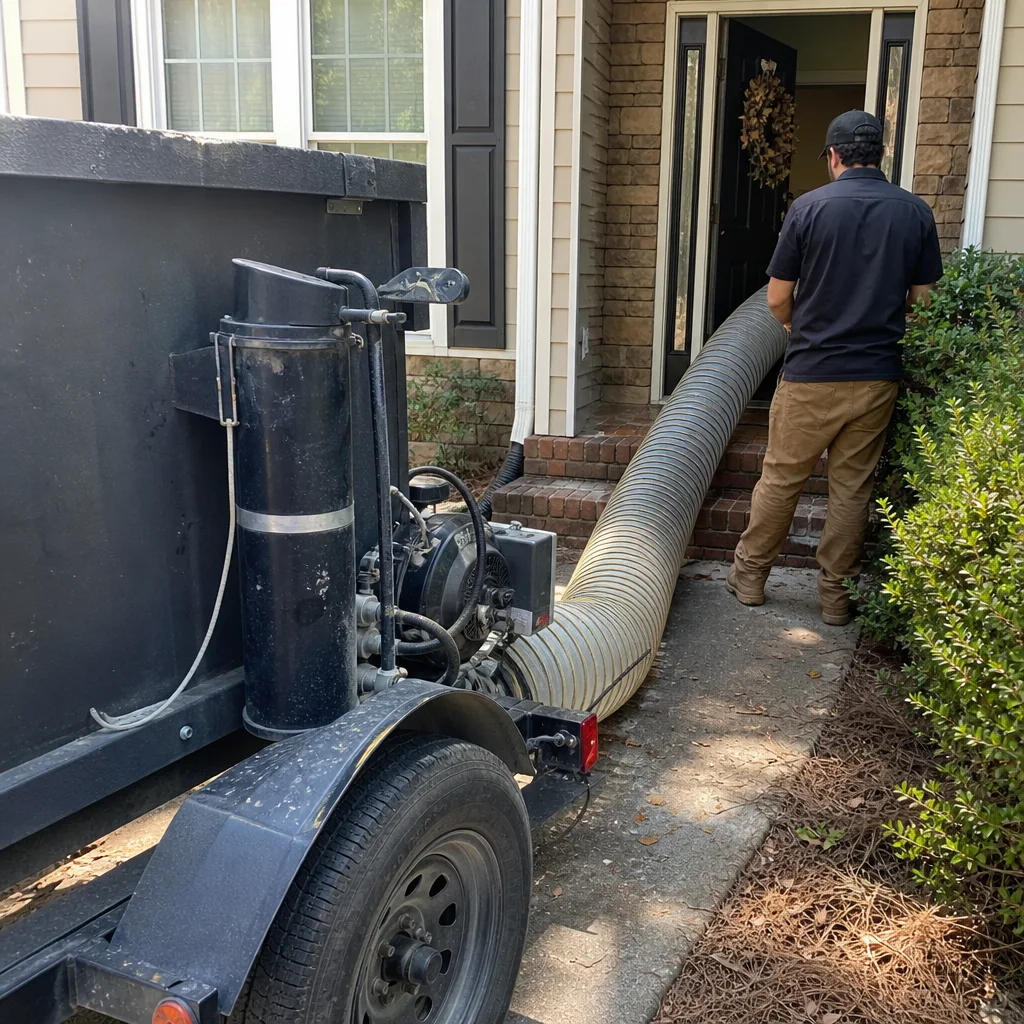
Last updated November 16, 2026
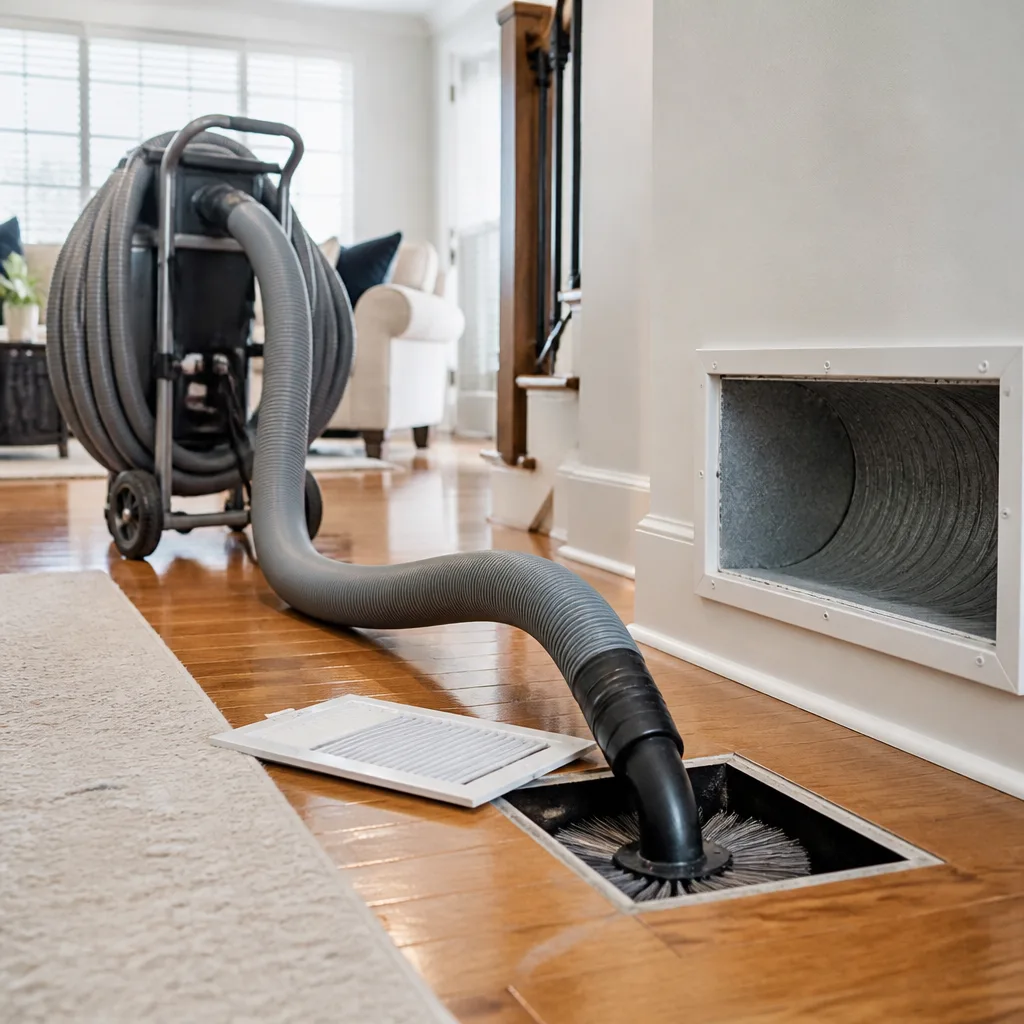 Whole-home duct cleaning
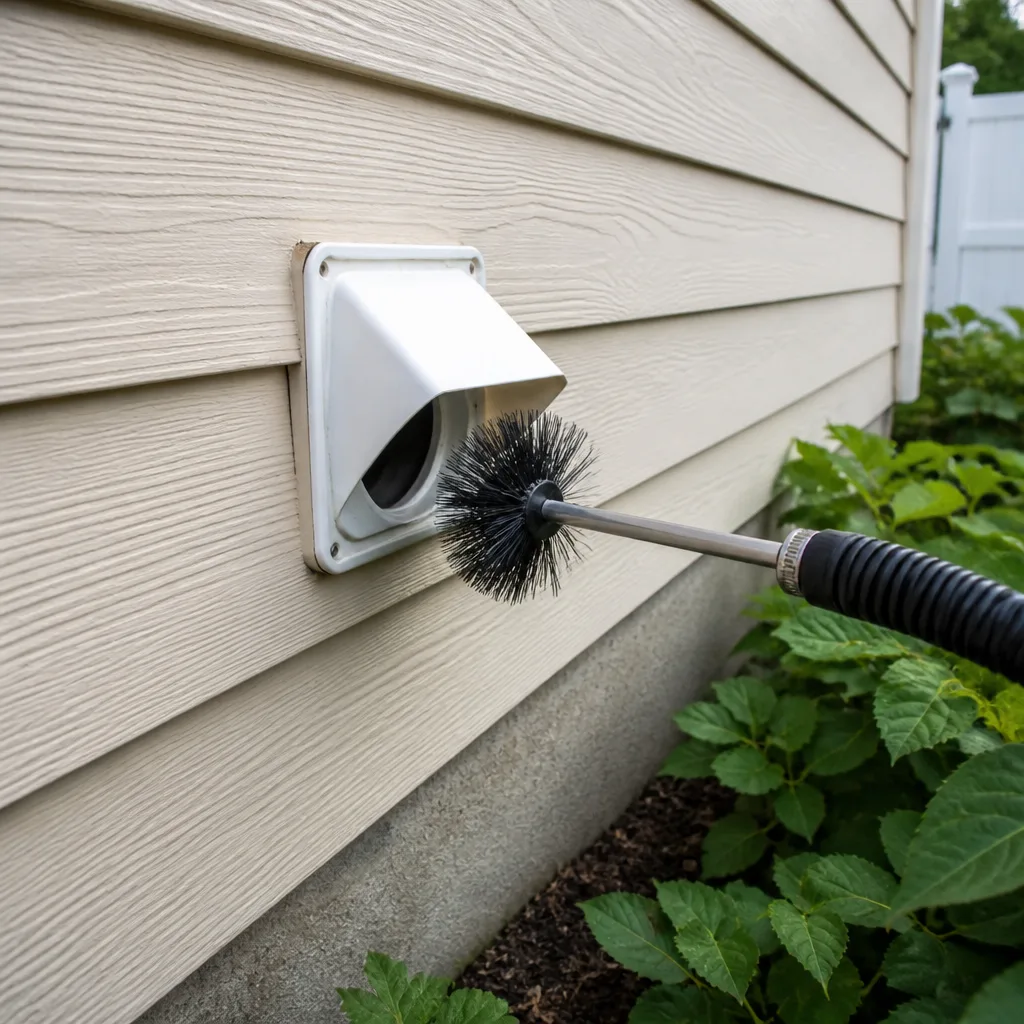 Dryer vent cleaning
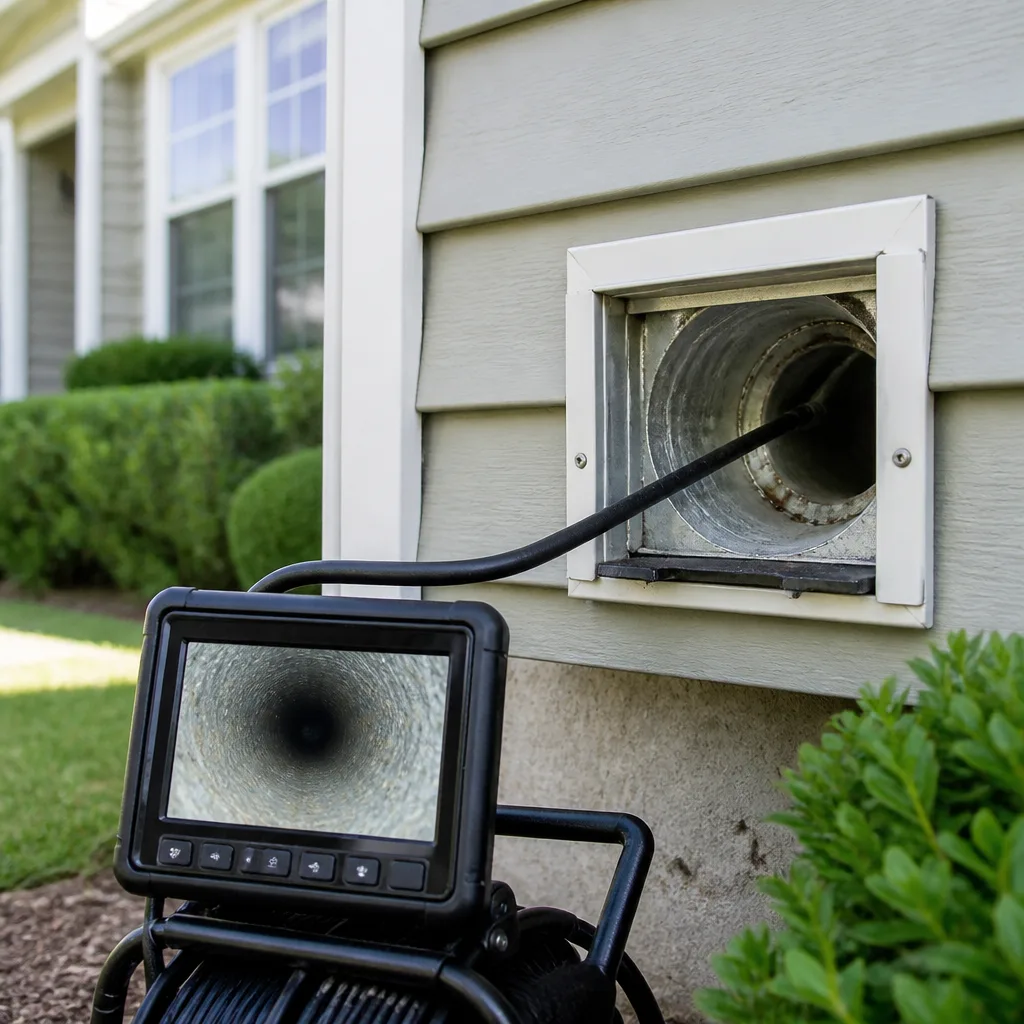 Camera inspection
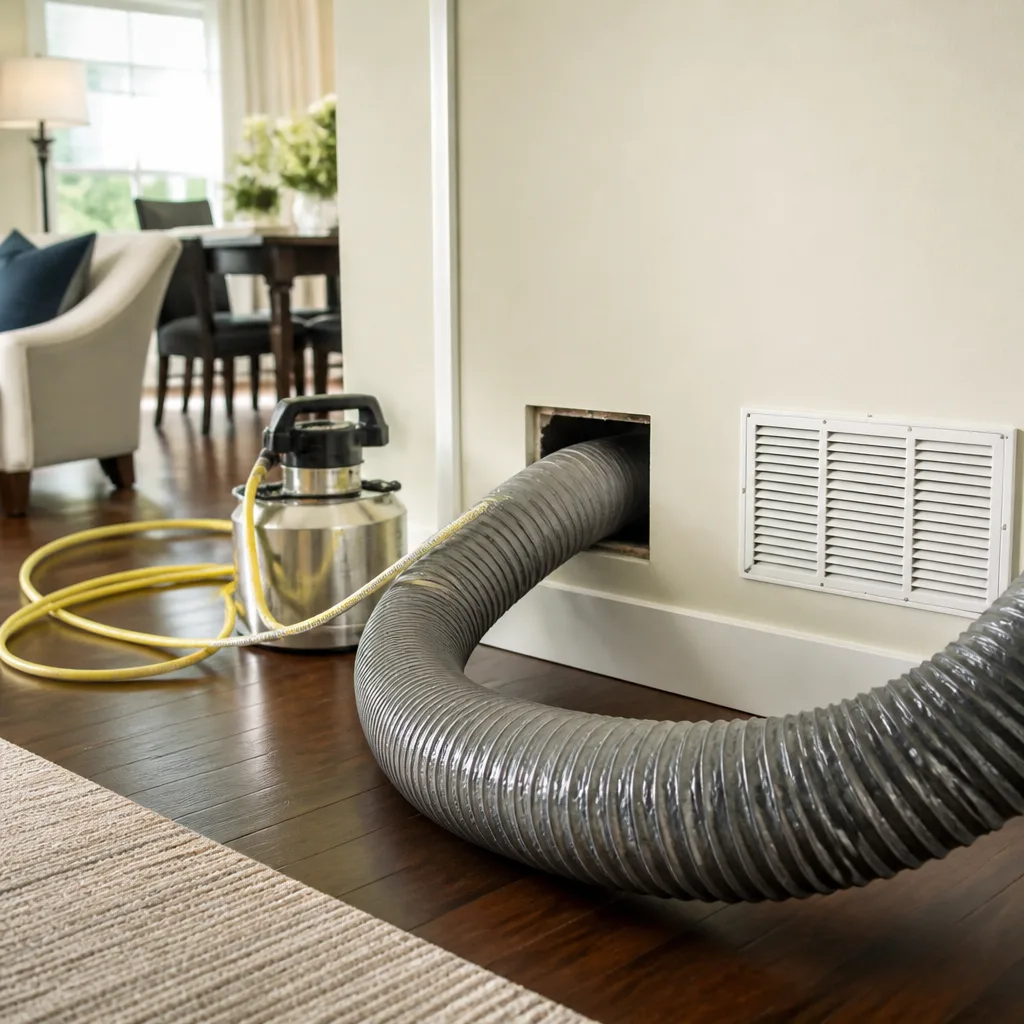 Sanitizing & deodorizing
Whole-system duct and dryer vent check with before-and-after photos - you see exactly what came out of your vents
That "$99 whole-house special" is a bait ad - the real number appears once they are in your hallway, or the "clean" is a shop-vac at the register. We photograph the inside of your ducts before and after instead.
Air Duct Cleaning Maintenance Schedule: What to Do and When
Most homeowners treat duct cleaning as a single chore to tick off a list, then forget about it for five years. That approach assumes a fixed calendar can fit every home. It can’t. The federal guideline everyone cites was written before thick media filters, sealed duct systems, and the tightly built homes of the 2000s became normal. If your house in Cary has a 2-inch filter and a spray-foam envelope, a generic “clean every three to five years” rule tells you almost nothing. This guide builds a real maintenance calendar instead: month by month, tied to pine pollen season, summer humidity, heating season, and the way your particular system actually runs.
Quick Answer
There is no single correct interval. A well-sealed home with a 2-inch or thicker filter and regular filter changes can often go five to seven years between professional cleanings, while a home with a thin 1-inch filter, leaky return plenums, or pets may need it every two to three years. Inspect your accessible registers and returns twice a year, change or check filters every one to three months depending on filter thickness, and schedule a professional cleaning when you see visible buildup, after major renovations, or whenever airflow and comfort change for no clear reason.
Styles & brands we work with
- Whole-home duct cleaning
- Dryer vent cleaning
- Camera inspection
- Sanitizing & deodorizing
Table of Contents
- Why the Standard Cleaning Guideline Misses Your Home
- Your Month-by-Month Cary Maintenance Calendar
- Filter Cycles vs. Duct Cleaning Cycles
- Specific Triggers That Override Any Fixed Schedule
- The 10-Minute DIY Visual Inspection
- Newer Cary Developments vs. 1990s Construction
- What a Professional Cleaning Actually Involves
- Common Mistakes to Avoid
- When to Call a Professional
- Frequently Asked Questions
Why the Standard Cleaning Guideline Misses Your Home
You’ve probably read that ducts should be cleaned every three to five years. That number gets repeated everywhere, but it was never meant to be a universal rule. It predates the broad adoption of high-MERV media filtration, and it says nothing about how well your duct system is sealed or how often you change filters. Two homes on the same Cary street can have wildly different needs based on those two variables alone.
Here’s the mental model that actually works. Duct cleaning frequency depends on how much debris gets into the system and how well the system keeps it out. Filtration controls what enters. Sealing controls whether unfiltered air leaks in through gaps in the return plenum or attic ductwork. A home with strong filtration and tight ducts accumulates far less than a home running thin filters and a leaky return.
- Thin 1-inch filters catch less and load up fast, so more debris reaches the ducts.
- 2-inch and 4-inch media filters capture more, last longer, and reduce how often the ducts need attention.
- Sealed duct systems keep attic dust, insulation fibers, and outside air out of the stream.
- Leaky return plenums pull dust from unconditioned spaces straight into the air you breathe.
So before you schedule anything, find out which filter type you have and whether your ducts are sealed. That answer reshapes your whole schedule. When we assess a home, we start there rather than with a fixed number, and we’ll tell you plainly whether you’re a two-year house or a seven-year house.
Your Month-by-Month Cary Maintenance Calendar
Cary has a climate pattern that drives duct maintenance more than most people realize. Spring brings a heavy pine pollen load that coats every outdoor surface and finds its way indoors. Summer humidity runs high, which stresses cooling coils and can feed moisture problems in the system. Winter flips to heating season, which changes airflow and can stir settled dust. A good schedule works around those three pressures rather than ignoring them.
Build your year like this:
- February: Upgrade or replace your filter before pollen season. This is the highest-value filter change of the year, because a fresh filter catches the pollen surge instead of letting it load the ducts. Check that the filter sits flush in its frame.
- March through May: Keep windows closed on high-pollen days and change the filter again if it loads quickly. Pine pollen is fine and sticky, and it clogs thin filters fast.
- June through September: Watch for condensation around the air handler and any musty smell near returns. High summer humidity in Cary is the main driver of moisture-related duct problems.
- October: Do a post-summer humidity inspection. Look for damp spots, moldy odors, or standing water in the drain pan, and check that the coil area looks dry going into fall.
- November: Heating season prep. Replace the filter, walk your accessible runs, and note any new dust at the registers when the heat first kicks on.
- December through January: Mid-heating check. If you see dust puffing from registers at startup, that’s a sign of buildup worth investigating.
This calendar is a starting point, not a cage. The point is that your maintenance attention lands before the pressures arrive, not after. A homeowner in Cary who changes filters in February and again in October often gets years more out of each professional cleaning.
Filter Cycles vs. Duct Cleaning Cycles
Two different clocks run in your system, and confusing them is the most common scheduling mistake. The filter clock is short and frequent. The duct cleaning clock is long and event-driven. Treat them as the same thing and you’ll either change filters too rarely or pay for cleanings you don’t need.
Filter maintenance runs on a tight cycle:
- 1-inch filters: check every month, replace every one to three months.
- 2-inch media filters: check every two to three months, replace roughly every three to six months.
- 4-inch and thicker media filters: replace once or twice a year in most homes.
- Homes with pets or high occupancy: shorten every interval above.
Duct cleaning runs on a much longer cycle, and upgrading your filtration is the single best way to stretch it. If your duct system is properly sealed and you move from a thin filter to a thicker media filter, you can often extend your cleaning interval by two or more years. That’s because a better filter catches debris before it settles, and sealed ducts stop unfiltered air from infiltrating. The filter does the daily work so the ducts stay cleaner longer.
Our technicians have up to 12 years of experience, and the pattern holds across nearly every home we assess: filtration quality and duct sealing predict the cleaning interval far better than any calendar rule. If you run a Honeywell or Aprilaire media cabinet, you already have a filtration setup that rewards regular filter changes with longer duct intervals. Keep that cabinet stocked and your ducts stay cleaner between visits.
Specific Triggers That Override Any Fixed Schedule
Some events reset your clock entirely. When one of these happens, don’t wait for your scheduled interval; assess the ducts and clean if the evidence points that way.
- Renovation or remodeling: Drywall dust, sawdust, and construction debris get pulled into returns. Clean after the work wraps, not before.
- Water intrusion: A leak, overflow, or storm intrusion that reaches the system can leave moisture and biological growth inside ducts. This needs prompt attention.
- New pet: Added dander and hair load changes the filtration math. Reassess filter frequency and watch register dust.
- Occupant with a respiratory condition: Allergy-conscious households often benefit from a stricter cleaning cadence and stronger filtration.
- HVAC system replacement: A new system deserves clean ducts so the new equipment isn’t pushing air through a dirty distribution network from day one.
- Moving into a resale home: You don’t know the prior owner’s maintenance habits, so a baseline cleaning and inspection makes sense.
Water intrusion is the one that deserves real caution. Moisture inside a duct system can support mold growth that ordinary dust doesn’t. If you smell a persistent musty odor or see visible growth, treat it as a sign to bring in professional filtration and HEPA equipment rather than a shop vac. This is where the right tools matter, and it’s why we deploy Abatement Technologies air filtration on-site, the same negative-air and HEPA equipment used in serious indoor air quality work.
The 10-Minute DIY Visual Inspection
You don’t need a professional to check the basics, and a quick look twice a year tells you a lot. This is a visual inspection, not a cleaning. Never reach tools into ductwork beyond the register opening; the lining and joints are easy to damage, and you can’t see what you’re doing.
Here’s the routine:
- Shine a light into each accessible register. Look for visible dust coating, debris, or anything that looks like biological growth.
- Remove a return grille and check the plenum. Dust buildup and a dark film on the metal are signs worth noting.
- Wipe a white cloth along the inside of one register boot. Light dust is normal; a thick smear that comes away grey or brown is a flag.
- Check the filter. Confirm it’s the right size, seated flush, and not loaded. A collapsed or bypassing filter lets debris through.
- Sniff around returns. A musty or stale smell suggests moisture somewhere in the system.
- Watch registers when the system starts. A puff of dust at startup often means buildup in the runs.
- Note airflow at each register. Weak airflow at one or two vents can mean a blockage or a damper issue.
Write down what you find and compare it next time. Trends tell you more than a single snapshot. If your inspection turns up heavy buildup, growth, or a persistent odor, that’s your signal to call for a professional assessment. For a deeper walkthrough of the service itself, see our air duct cleaning page.
Newer Cary Developments vs. 1990s Construction
Homes built after 2010 in Cary’s newer subdivisions tend to have tighter envelopes, often with spray-foam insulation and better-sealed framing. That’s good for energy efficiency, but it changes duct maintenance in ways a generic schedule misses. Tighter homes trap indoor air longer, so whatever debris and moisture load sits in the system stays in the breathing zone instead of leaking out through gaps.
Homes from the 1990s and earlier often have the opposite situation. Leaky return plenums pull unconditioned attic or crawlspace air into the system, which drags in more dust and insulation fibers over time. Those homes tend to need cleaning more often, not less, because the system is effectively inhaling from places it shouldn’t.
- Post-2010 spray-foam homes: focus on filtration quality and keeping moisture out; the envelope is tight, so internal air quality depends heavily on the system.
- 1990s construction: inspect return plenums and accessible duct joints for leaks; sealing can dramatically reduce debris intake.
- Any home with a finished basement or addition: new duct runs can change airflow and introduce new debris sources.
Age matters less than construction style, but the two often travel together in Cary. A newer tight home deserves a maintenance plan built around filtration; an older home with leaky returns deserves one built around sealing and inspection. Knowing which house you live in tells you where to spend your maintenance attention.
What a Professional Cleaning Actually Involves
A real cleaning isn’t a shop vac and a hand brush. It’s a controlled process with equipment built for the job, and understanding the steps helps you judge whether a quote is serious. The goal is to loosen debris mechanically, capture it with strong suction, and protect your indoor air while it happens.
Here’s how a proper cleaning typically runs:
- Assessment and protection. We map the system, identify the runs, and set up filtration to protect your indoor air during the work.
- Rotobrush rotary cleaning. A professional rotary brush system loosens debris from duct walls through the runs. It’s the industry standard for mechanical removal, and it reaches where a brush alone can’t.
- Nikro HEPA vacuuming. High-efficiency vacuum equipment captures fine particulates as they’re disturbed, so dust doesn’t just move into your living space.
- Abatement Technologies air filtration. Negative-air and HEPA equipment keeps the work zone contained, the same approach used in serious remediation work.
- Component cleaning. Registers, grilles, and accessible plenum surfaces get attention too, because debris collects there as well.
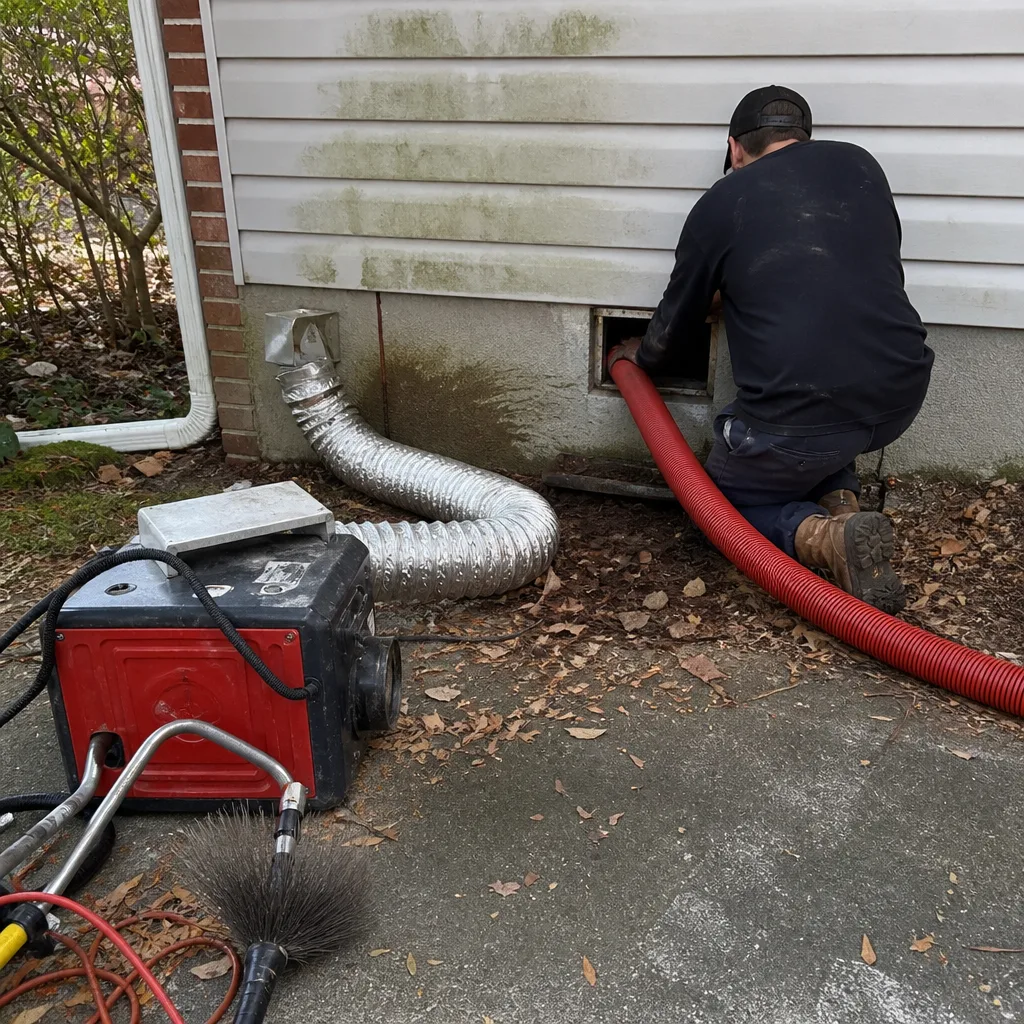
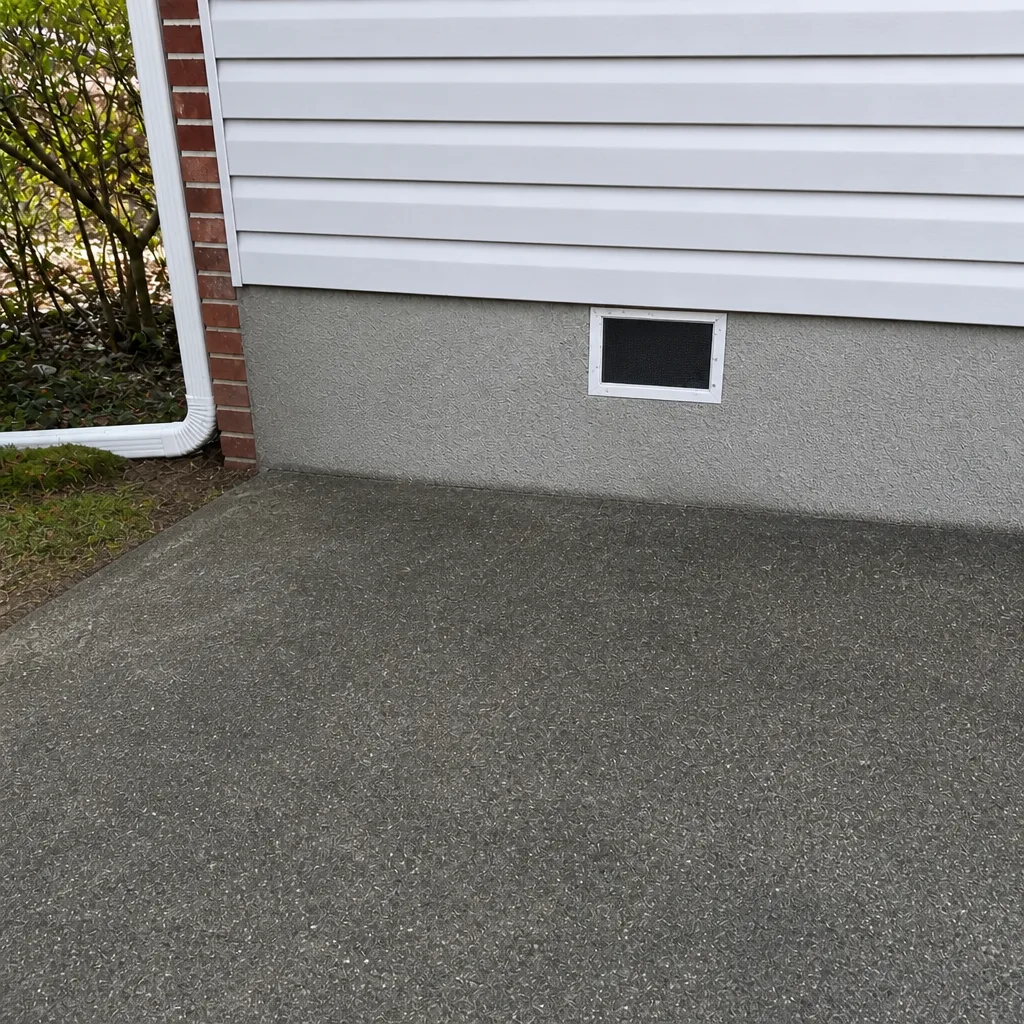
- Verification. We show before-and-after photos of your own ducts so you can see what changed.
We clean, clear, and repair the full duct picture. Beyond cleaning, we handle dryer vent cleaning as a standalone service, because a clogged dryer vent is a leading cause of residential fires and many duct-only companies skip it. We also do actual duct repair, so a leaky return or a damaged run gets fixed rather than cleaned around. Ask us what equipment we’re bringing and we’ll tell you exactly. For a full picture of who we are and how we work across Cary, start with our main page at Duct Cleaning Cary.
Common Mistakes to Avoid
- Treating the three-to-five-year rule as gospel. Your filter type and duct sealing matter far more than a generic number. Build the interval around your actual system.
- Ignoring filter changes between cleanings. A fresh professional cleaning won’t stay fresh if you run a loaded filter. Change filters on schedule or the cleaning underperforms.
- Skipping dryer vent cleaning because the ducts were done. These are different systems with different risks. A clean air duct system says nothing about your dryer vent.
- Assuming a spray-foam home needs less maintenance. Tighter envelopes trap debris and moisture indoors, so filtration quality and moisture control matter more, not less.
- Waiting for a visible problem before inspecting. By the time dust puffs from registers or airflow drops noticeably, buildup has been accumulating for a while. The twice-a-year visual check catches it earlier.
- Hiring on price alone without asking about equipment. A shop vac and a brush can’t capture fine particulates the way HEPA and negative-air equipment can. Ask what equipment the company brings before you book.
- Letting a musty odor go unaddressed. Persistent smells point to moisture, and moisture is a bigger issue than dust. Get it professionally assessed rather than masked.
When to Call a Professional
Call when you see visible buildup beyond light dust in the runs, when a musty odor persists around returns, or when airflow drops at multiple registers with no obvious cause. Call after a renovation that produced heavy dust, after any water intrusion that reached the system, or when you move into a resale home with unknown maintenance history. Call if a household member with a respiratory condition notices the air feels worse indoors. And call if you’re unsure; a professional assessment costs nothing to ask for, and it’s better to know than guess.
We offer free estimates in Cary. Call (833) 608-1198. We answer 24/7. Fast dispatch from 7am to 7pm, Sunday through Friday.
Frequently Asked Questions
Most homes in Cary fall between three and seven years, and the right interval depends on your filter type, whether your ducts are sealed, and pets or occupancy. A tight home with a 2-inch or thicker filter often goes five to seven years, while a home with thin filters and leaky returns may need it every two to three years. Inspect twice a year and clean when the evidence points that way. Call (833) 608-1198 for an exact assessment.
Yes, often by two or more years if your ducts are properly sealed. A thicker media filter captures more debris before it reaches the ducts, and sealed ducts stop unfiltered air from infiltrating. The two together reduce how fast the system loads up. Our technicians have up to 12 years of experience, and filtration quality plus duct sealing is the strongest predictor of cleaning interval we see.
Late spring and early fall work well, after pine pollen season settles and before heating season starts. That timing lets you go into summer and winter with a clean system and fresh filtration. Any month works if a trigger like a renovation or water intrusion forces the issue. Call (833) 608-1198 and we’ll find a time that fits.
No, a shop vac and a hand brush can’t do the job safely or thoroughly. They can’t reach deep into the runs, and they don’t capture fine particulates, so they stir dust into your air instead of removing it. Professional rotary cleaning with HEPA and negative-air equipment captures debris rather than redistributing it. This is where equipment matters, and it’s why we use Rotobrush, Nikro, and Abatement Technologies systems. Call (833) 608-1198 for a quote.
The equipment and the scope are usually the difference. A low price often means a shop vac, a quick pass, and no real capture of fine particulates. Ask what equipment a company brings and whether they inspect the whole system or just the accessible vents. We agree one flat price per system before work starts, and we show before-and-after photos so you can see what was done. Call (833) 608-1198 for a free estimate.
Not less; different. Newer spray-foam homes are tighter, so debris and moisture stay in the breathing zone longer, which raises the value of strong filtration and moisture control. Older 1990s homes with leaky return plenums tend to pull in more dust from unconditioned spaces and often need cleaning more often. The maintenance plan should match the construction style.
The Bottom Line
A duct maintenance schedule is three clocks, not one: frequent filter changes, twice-a-year visual inspections, and event-driven professional cleanings. Build your year around Cary’s pine pollen in spring, humidity in summer, and heating season in winter. Match the schedule to your construction style; tight post-2010 homes lean on filtration, while older homes with leaky returns lean on sealing and inspection. Let triggers like renovations, water intrusion, and system replacements reset the clock when they happen. Skip the generic three-to-five-year rule and follow what your actual system shows. When you’re ready for a professional look, we’re here. Call (833) 608-1198 for a free estimate.
Written by the team at Duct Cleaning Cary.
See the difference
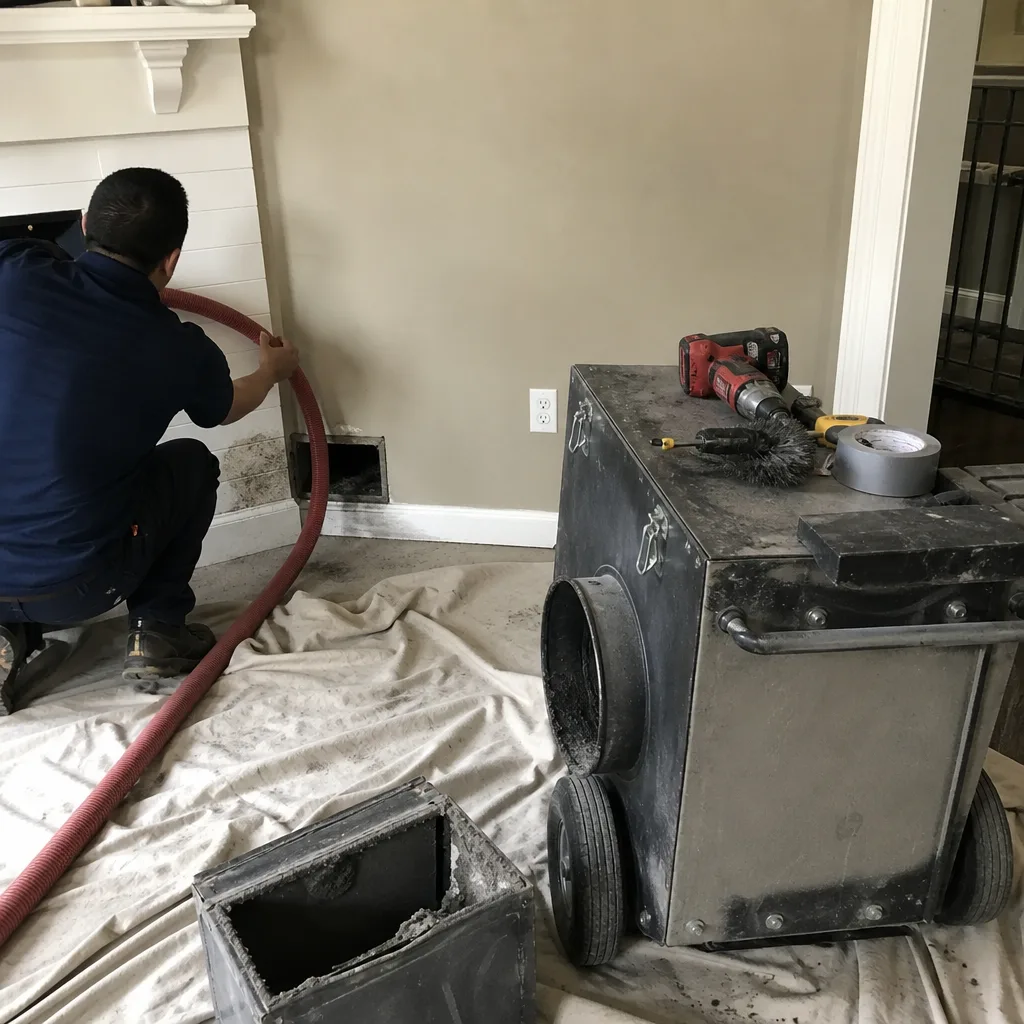 Before
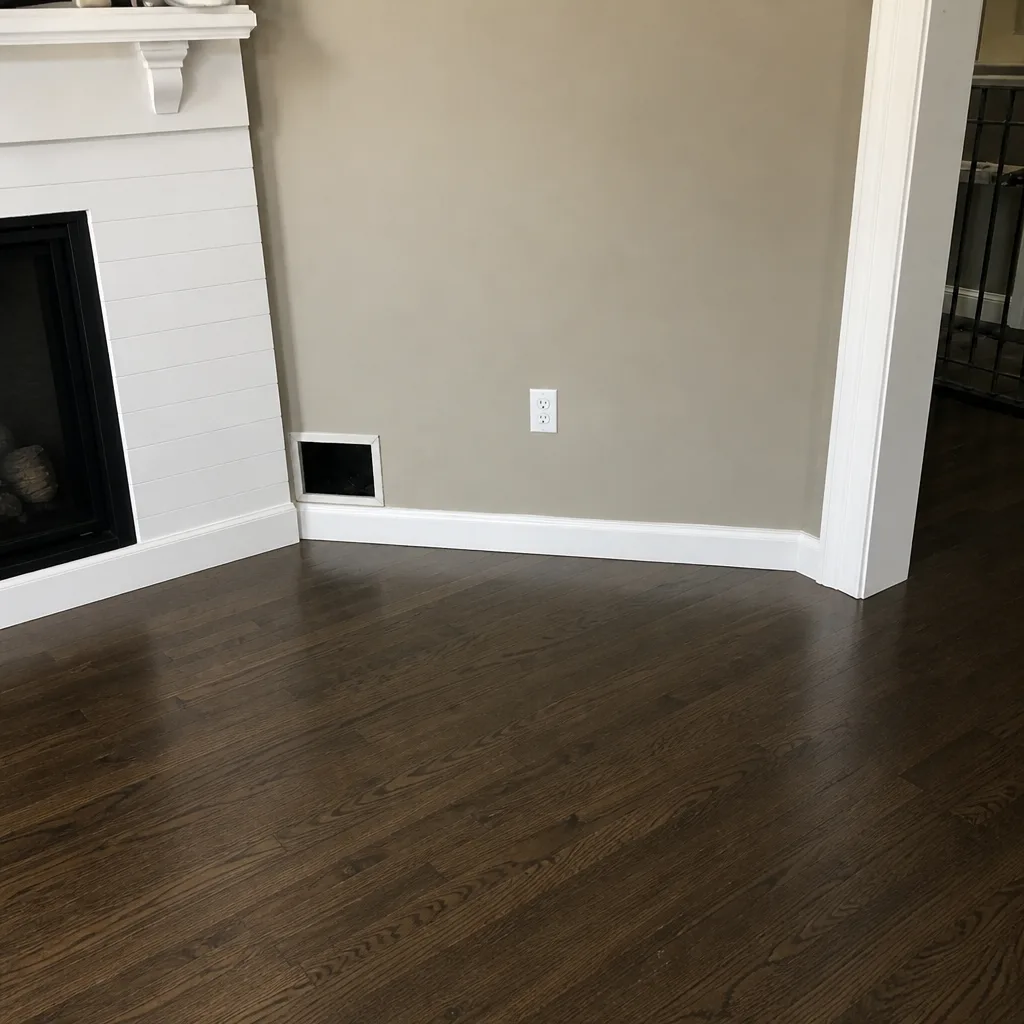 After
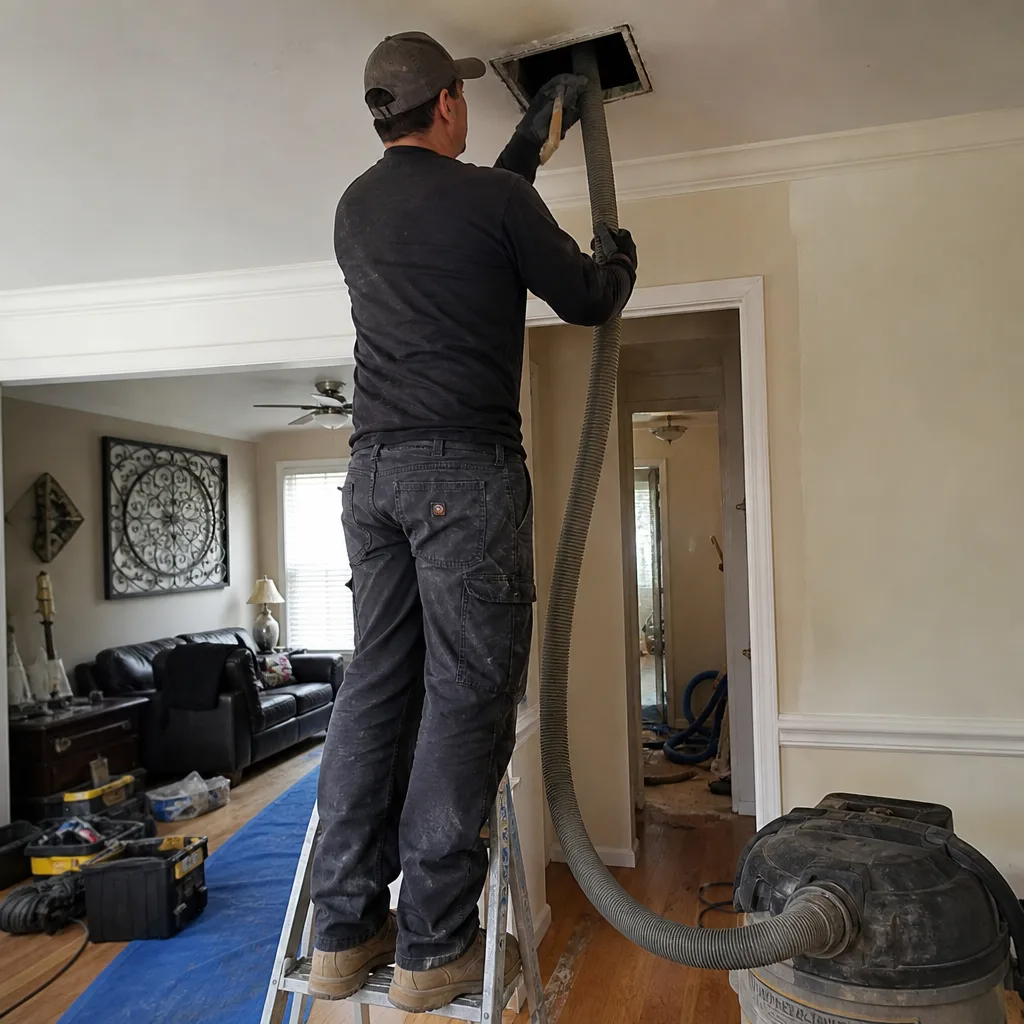 Before
 After
 Before
 After