
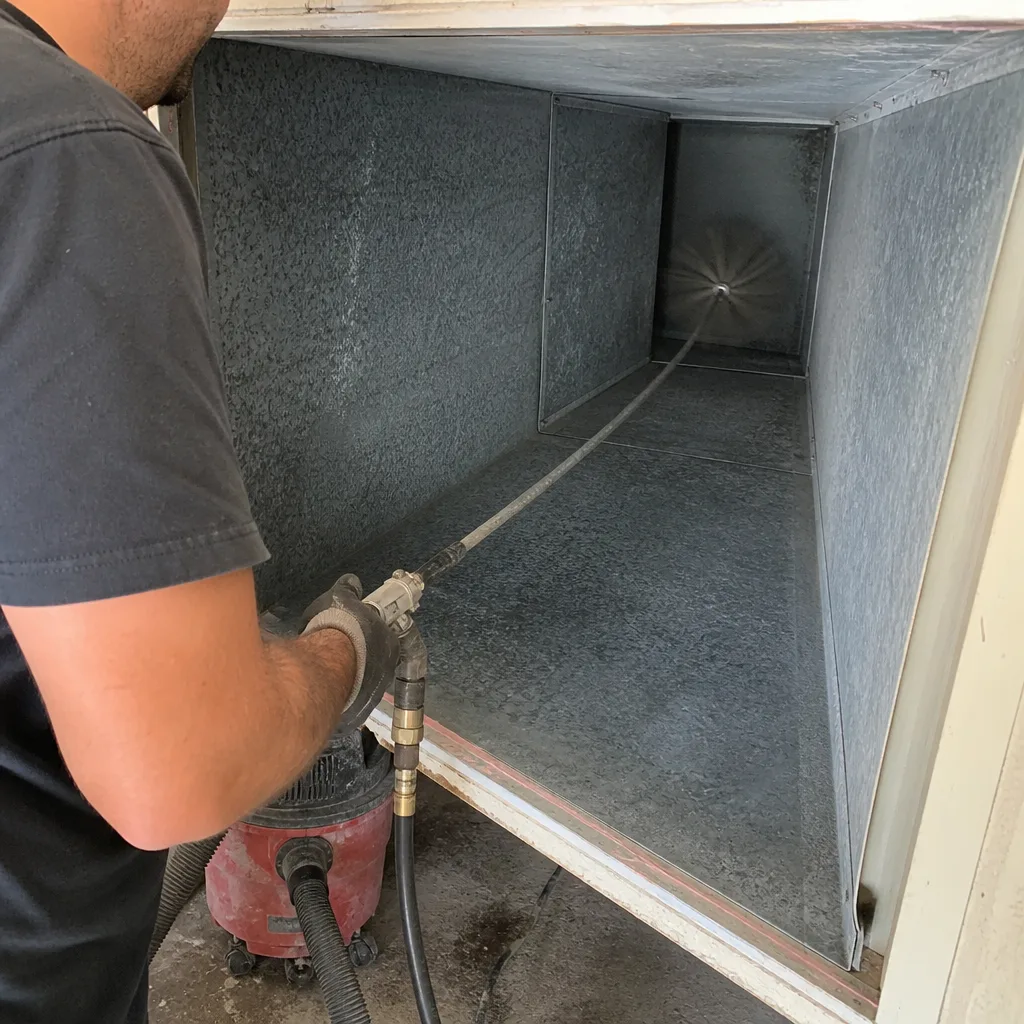
Last updated November 16, 2026
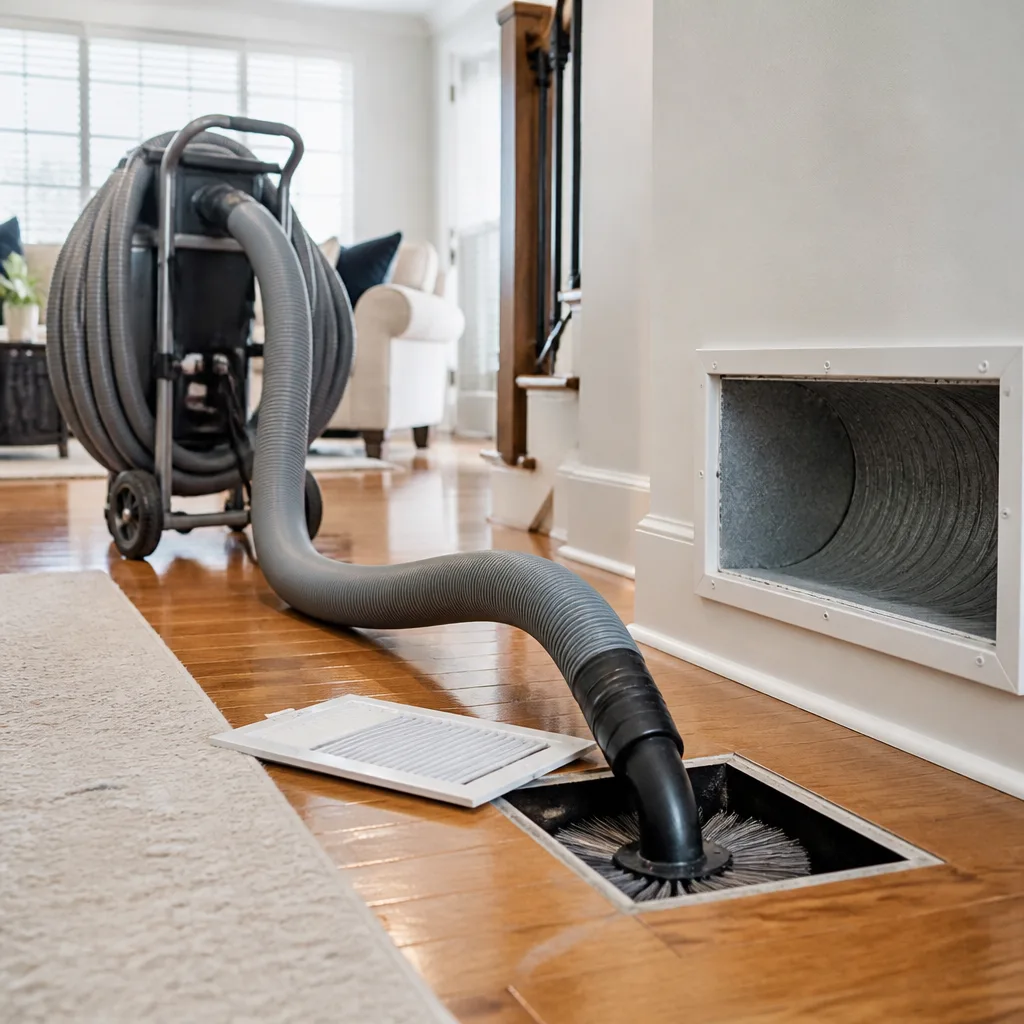 Whole-home duct cleaning
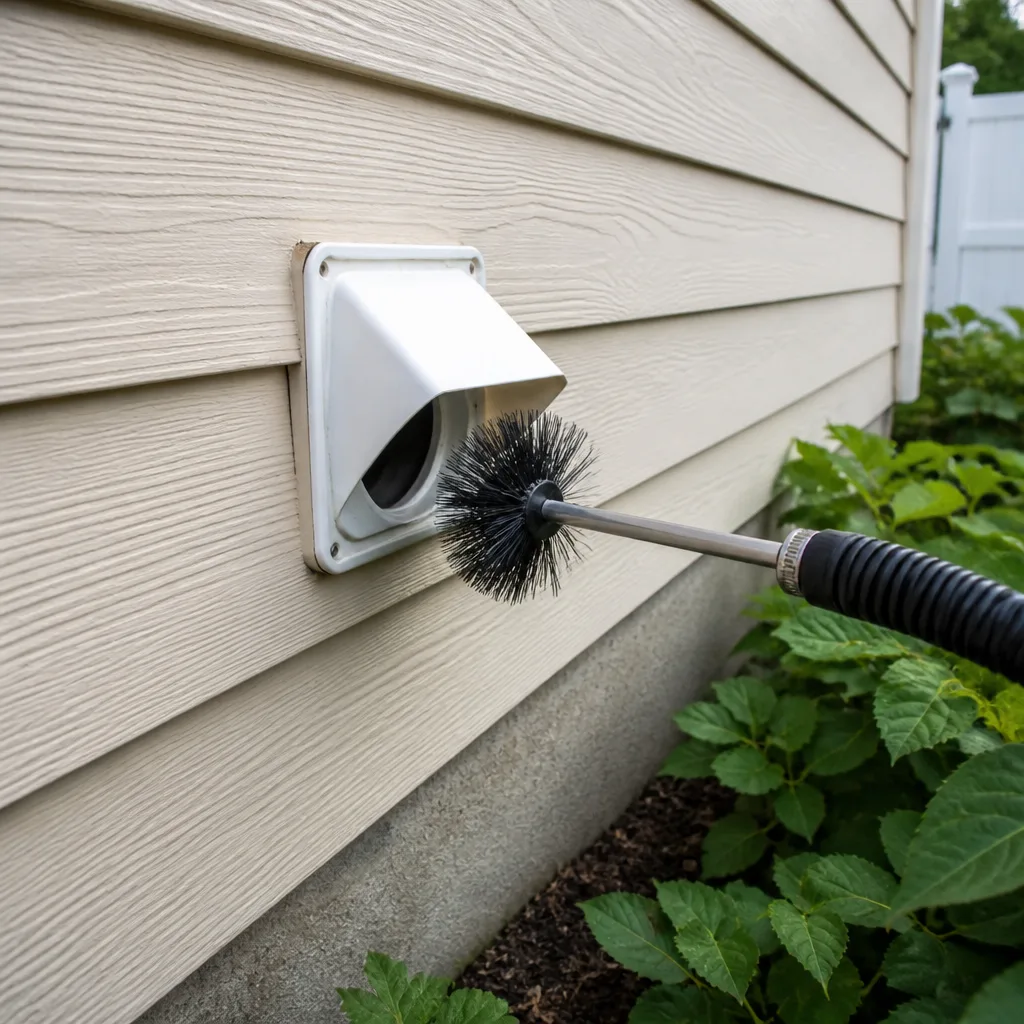 Dryer vent cleaning
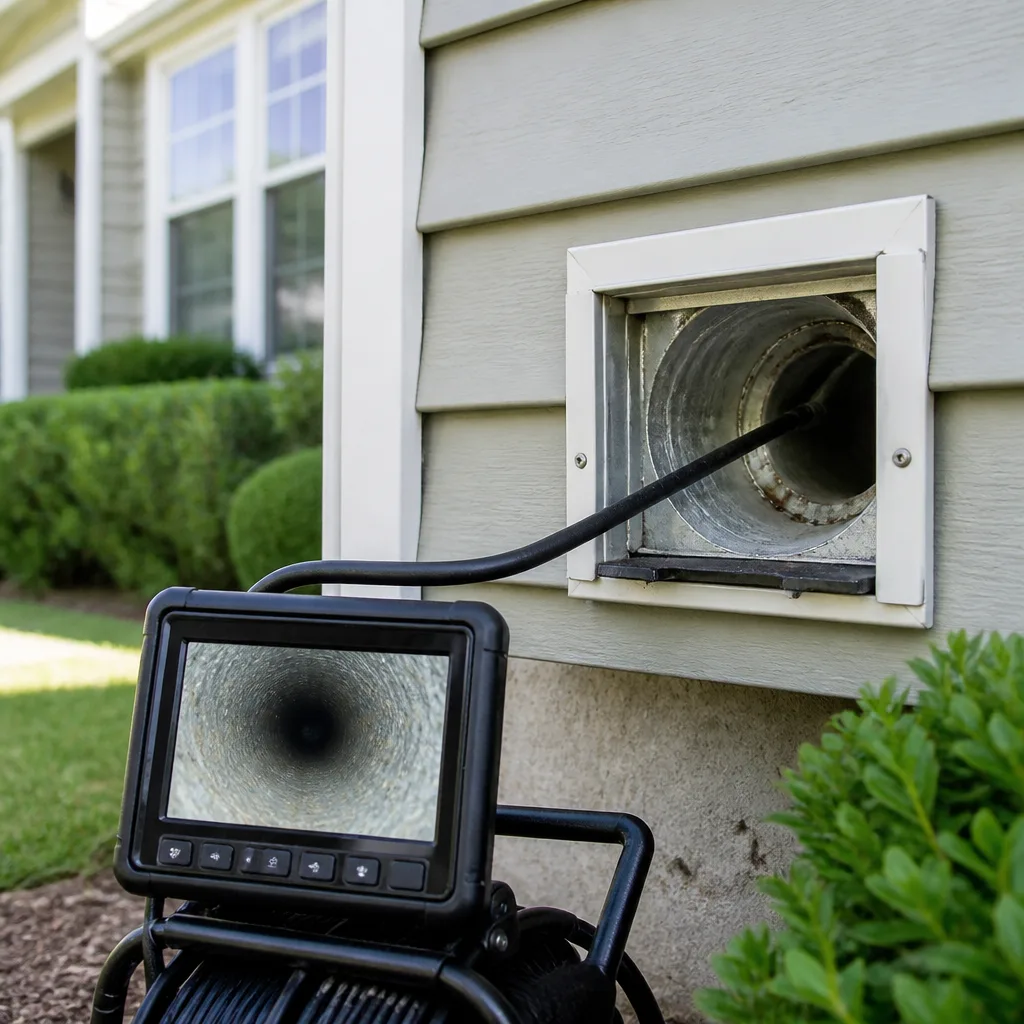 Camera inspection
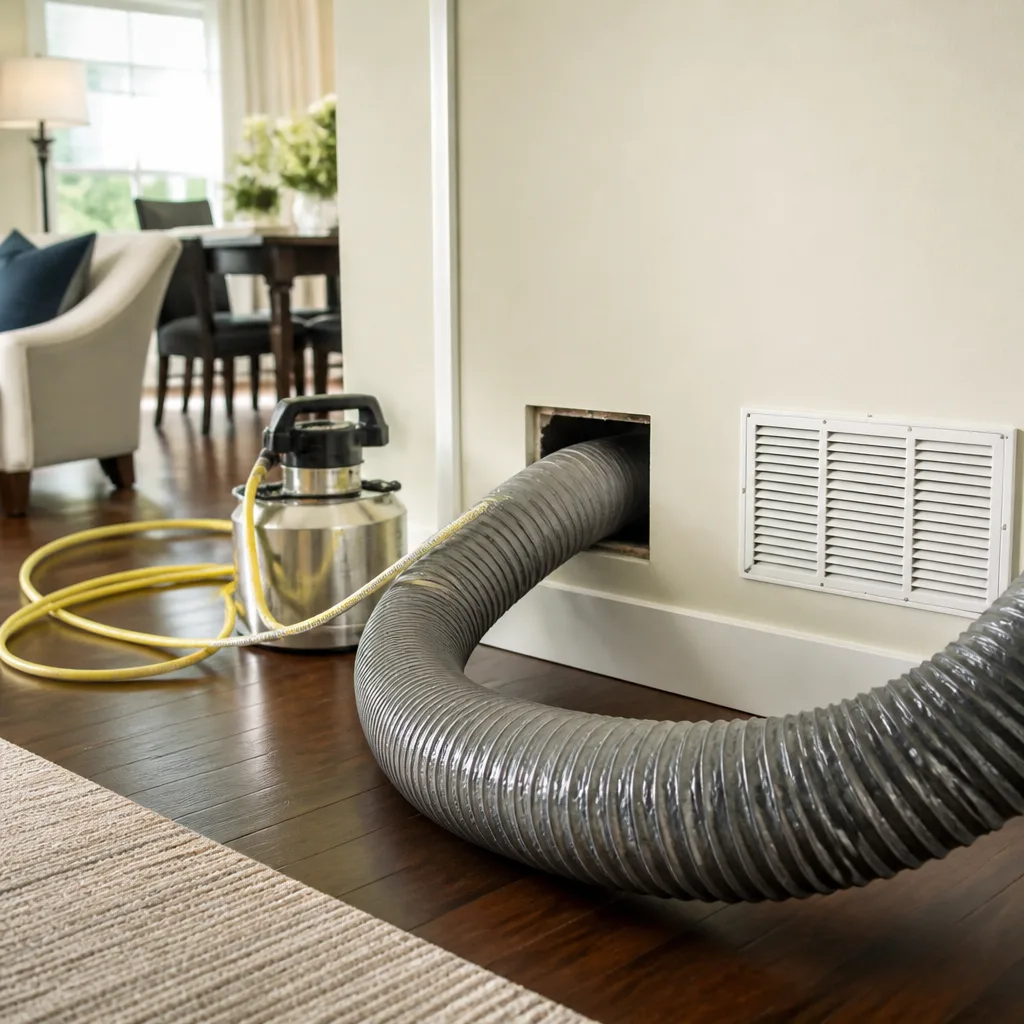 Sanitizing & deodorizing
Whole-system duct and dryer vent check with before-and-after photos - you see exactly what came out of your vents
That "$99 whole-house special" is a bait ad - the real number appears once they are in your hallway, or the "clean" is a shop-vac at the register. We photograph the inside of your ducts before and after instead.
Air Duct Cleaning Maintenance Checklist for Cary Homeowners
A MERV-8 filter left in place for 90 days in a Cary home during peak pollen season can restrict airflow enough to strain your blower motor. That’s the part most homeowners get backwards. The filter is supposed to protect the duct system, not choke it. And a choked system pulls dust past every seal it can find, so the ductwork that looked clean in March is coated again by June. Professional cleaning resets the system. What you do between visits decides how long that reset lasts. This checklist covers the tasks that actually protect duct cleanliness in a Piedmont home, from filter intervals tuned to our pollen calendar to the condensate drain connection almost every maintenance list skips.
Quick Answer
Air duct maintenance in Cary comes down to four habits: change filters on a schedule calibrated to the spring pollen load rather than the calendar on the box, inspect registers monthly for dust patterns that signal airflow imbalance, keep the HVAC condensate drain clear so moisture never backs up toward the ducts, and log every filter change and service date. Do those four things and you’ll typically stretch the safe interval between professional cleanings. Skip them and a clean system starts rebuilding debris within a season.
Styles & brands we work with
- Whole-home duct cleaning
- Dryer vent cleaning
- Camera inspection
- Sanitizing & deodorizing
Table of Contents
- Filter Selection and Change Intervals for Cary’s Pollen Calendar
- Register and Grille Inspection: What Dust Patterns Tell You
- The Flashlight-and-Mirror Spot Check on Accessible Duct Sections
- Condensate Drain Maintenance and Duct Mold Risk
- Keeping a Duct System Log
- A Seasonal Walk-Through for a Piedmont Year
- What You Can Do Yourself and What You Can’t
- The Dryer Vent Line Most Checklists Leave Out
Filter Selection and Change Intervals for Cary’s Pollen Calendar
Most residential systems in Cary run best on a MERV-8 to MERV-11 filter. That range captures pollen, mold spores, and the fine dust that settles in ductwork without adding the static pressure penalty that comes with MERV-13 and higher in a standard residential air handler. If someone in the house has significant allergies or asthma, MERV-11 is usually the sensible ceiling unless an HVAC contractor has confirmed the blower can handle the pressure drop.
The trap is the “3-month filter” printed on the cardboard frame. That interval is a national average, and central North Carolina doesn’t have an average spring. The Piedmont pollen calendar here runs hard from late February through May, with pine leading into oak and then grass. A filter that’s fine for three months in a mild climate can load solid in six weeks here. September brings a second wave from ragweed and the leaf drop that follows.
Here’s how we’d calibrate it:
- March through May: check the filter every 3 to 4 weeks. Replace when you can’t see light through it held up to a lamp, or when the surface is visibly matted with yellow-green pine dust.
- June through August: check monthly. Air conditioning runs constantly, so the filter sees far more air volume than it does in winter.
- September through November: check every 4 weeks through the ragweed season, then again after the leaves come down if your returns sit near floor level.
- December through February: the easiest stretch. A 6 to 8 week interval is usually fine if the filter started clean.
A clogged filter doesn’t just reduce airflow. It raises the pressure differential across the system, which is exactly when unfiltered air starts finding its way in through gaps at joints and poorly sealed boots. Filters do the front-line work between professional visits, which is why we lead with them on every service call. If you want the full sequence of what a professional cleaning involves, see our page on air duct cleaning.
Register and Grille Inspection: What Dust Patterns Tell You
Your supply registers and return grilles are diagnostic tools if you know how to read them. A monthly walk-through with a flashlight takes five minutes and catches airflow problems months before they show up on an energy bill.
Look at where the dust accumulates, not just how much of it there is:
- Streaking around the edges of a supply register: air is escaping past the boot seal and pulling dust from the wall cavity. That’s a duct leakage point, and it’s pushing unfiltered air into the room.
- Heavy soiling on one return while others stay clean: the system is pulling disproportionate air through that return. Usually a sign of a closed damper or a crushed flex run somewhere upstream.
- Black or gray staining on the grille face: often a filter that’s gone past its load capacity, letting fine particulate through to land on the grille first.
- Dark rings around ceiling registers in carpeted rooms: the classic airflow-impingement pattern. The register is delivering too much air for the room’s size.
- Uneven dust across a single grille face: the air is moving through only part of the register, which can mean a duct fitting behind it is misaligned.
Cary homes built through the 1990s and 2000s often have flex duct in the attic running to ceiling registers, and those runs are where this shows up first. A register that dusts heavily while its neighbor stays clean almost always traces back to the duct, not the room. Note what you find and where. If two or more registers show the same pattern, or the dust comes back within days of wiping, it’s worth having the duct runs themselves inspected. Drywall dust from any recent renovation will also coat grilles in a way that looks like a duct problem but clears once the construction dust settles and the filter is changed.
The Flashlight-and-Mirror Spot Check on Accessible Duct Sections
You can look inside your ducts without disturbing what’s in them, and you should. The goal of this check is observation, not removal: you’re documenting what’s there so you know whether the system is stable or degrading. Never reach into a duct with a brush or a wet cloth, and never run a shop vacuum nozzle into a trunk line. Stirring up settled debris makes it airborne, and some of it ends up in your air handler.
Here’s the method:
- Find the accessible points. Take off a supply register in a room, or a return grille if the boot is short. On some systems the air handler cabinet has a service panel the duct connects to. Don’t open the air handler itself.
- Get light in without moving air. If a register is near an outlet, a small flexible light helps. Otherwise a flashlight and a hand mirror let you see around a bend. Angle the light along the duct surface rather than straight down it; side-light reveals coating that direct light hides.
- Look for the four things that matter. Loose dust that’s still brown or gray and light is normal buildup. Dark or black patches suggest moisture. Visible debris like drywall chunks or insulation fibers means something upstream is failing. Any mold-like growth, fuzzy or spreading, needs a professional look.
- Check the seams and connections. Where the register boot meets the run, and where the run meets the trunk, look for gaps in the mastic or tape. Dust streaking at a joint is a leak.
- Back out and put the register back. Don’t reach in, don’t wipe, don’t vac. Log the date, the location, and what you saw.
Do this once in spring before pollen season and once in fall. If the inside of a duct looks the same in both checks, no coating, no growth, no loose debris, the system is handling itself. If you find something in either check, that’s the point where it’s time to have the ducts cleaned with professional equipment rather than a consumer vacuum.
Condensate Drain Maintenance and Duct Mold Risk
Here’s the connection most checklists miss. Every air conditioning system in Cary produces condensate, and in our summer humidity that’s a lot of water. The drain carries it away from the evaporator coil, which sits right next to the supply plenum. If the drain clogs, the pan overflows, and the water goes wherever gravity and the cabinet take it, often into the insulation and the ducts themselves. Wet duct liner is a mold substrate, and once it’s wet and warm, mold doesn’t need an invitation.
The condensate line needs attention in the same spring window as the filter. The task itself is simple. Find the drain line where it exits the air handler, usually a PVC line running to a floor drain, a condensate pump, or the outside. Check the pan under the coil is dry when the system isn’t running, and that the pan itself isn’t holding standing water. During the cooling season, confirm the line is actually moving water. A float switch, if your system has one, should be tested per the manufacturer’s instructions, and it’s worth knowing what model it is so you can find the test procedure.
In this climate, condensate issues run from June through early October. A drain that’s clogged at the start of the season can back up for weeks before the drain pan overflows. That’s plenty of time for the moisture to reach a duct boot and set up the conditions for mold. It’s also why a professional cleaning isn’t just about the ducts: a full inspection should note anything wet or otherwise compromised before the work starts.
The equipment matters here. We use Abatement Technologies air filtration during service because the work of removing contaminants is the work of not spreading them, and a HEPA capture setup on-site keeps the air in the house stable while the ducts are being cleaned. If you suspect moisture has reached the ducts, that’s the kind of situation where a proper inspection should happen first. You can read more about how we approach the full scope on our Duct Cleaning Cary page, and our technicians have up to 12 years of experience identifying moisture issues in duct systems.
Keeping a Duct System Log
A simple log is one of the most underrated maintenance tools. Future contractors will use it, and so will a home inspector. Buyers in Cary tend to ask about HVAC history during the inspection, and a documented record of filter changes, service dates, and humidity readings is a credibility signal no one can argue with.
You don’t need special software. A notebook or a note in your phone works fine if it’s consistent. Here’s what to record:
- Filter changes: date, filter MERV rating, and a note on how loaded it was when you pulled it. “Very loaded” or “lightly soiled” is enough.
- Service dates: when the ducts were professionally cleaned, when the HVAC system was serviced, and who did the work.
- Humidity readings: an inexpensive indoor hygrometer, used in the same spot in the house, recorded a few times a month through summer. Anything consistently above 55% indoor relative humidity is worth a conversation with an HVAC professional.
- Spot-check findings: the date and location of each flashlight-and-mirror check, and what you saw.
- Register notes: which registers dust most heavily and how often you wipe them.
Review the log once a year, ideally in late winter before the cooling season. Patterns will show up that you can’t see day to day. If you notice three filter changes in a spring where you used to do two, or humidity climbing over a stretch of summers, that’s information a contractor can act on. It’s also why we ask what filters have been used and how often they’ve been changed; it saves guessing and helps us plan the work.
A Seasonal Walk-Through for a Piedmont Year
The tasks above fit into a rhythm, and here’s what that rhythm looks like across a full year in Cary:
- Late February, before the pine opens up: change the filter and set your reminder for 3 to 4 weeks. Run the flashlight-and-mirror spot check. Test the condensate drain before the cooling season. Note anything that looks off.
- April through May, peak pollen: change filters at 3 to 4 week intervals. Wipe register grilles and look for streaks that suggest a leak. Watch indoor humidity as cooling season begins.
- June through August, heavy cooling: change filters monthly. Confirm the condensate line is moving water. Keep an eye out for moisture or mustiness in the rooms nearest the air handler.
- September through October, ragweed and leaf drop: change filters through the period, then again after leaf drop if your returns are near floor level. Repeat the spot check.
- November through February, the easiest stretch: filter every 6 to 8 weeks. Review the log. Schedule any professional work for the mild season, when the system is under less stress.
The Piedmont climate is the underlying reason this rhythm works. Humid summers push moisture into every part of the system, and the pollen load in spring peaks hard and fast. Neither of those is unusual for North Carolina, but both mean an average filter schedule won’t hold. If you’re new to Cary, plan on a tighter filter interval than whatever the previous home used.
If you’ve got a system that’s been running on carpeted floors, has pets, or has had recent renovation work, compress every interval above by roughly a third. Drywall dust and pet hair load a filter much faster than normal household dust.
What You Can Do Yourself and What You Can’t
Between visits, you can do more than you might think. Here’s the honest split:
Safe to do yourself: changing filters, wiping register grille faces, visual inspection with a flashlight, checking the drain line for flow, logging service dates, testing float switches per their manual, and wiping down any surfaces near supply registers that collect dust.
Not safe to do yourself: opening the air handler cabinet, disconnecting duct sections, reaching into any duct with a brush or vacuum nozzle, or doing anything at the electrical panel or the gas line serving the system. Those carry real risk and belong to a trained professional.
The reason is industry-specific. Consumer shop vacuums don’t capture fine particulate, so a homeowner vacuuming a duct line can redistribute dust through the house rather than remove it. That’s part of why we work with Rotobrush rotary cleaning systems rather than a shop vac and a brush; the equipment is built to agitate and capture in a single operation. On top of that, we deploy Abatement Technologies air filtration on-site during service, the same negative-air and HEPA equipment used in indoor air quality remediation, so fine dust that gets loosened gets captured rather than left floating in the room. We’d rather you ask what equipment we’re bringing than guess; we’ll tell you exactly.
One more limit: everything you can do yourself between visits assumes the ducts are clean to start with. If they haven’t been cleaned and the system has been running for years in a home near mature trees, the filter changes buy time but don’t undo the buildup. Our team works with Honeywell and Aprilaire air quality systems and can recommend the right setup for your home. For a full cleaning in Cary, the details are worth reviewing before you book.
The Dryer Vent Line Most Checklists Leave Out
Air duct cleaning gets the attention, but the dryer vent is its own hazard and its own maintenance line. Lint accumulation in a dryer vent is a leading cause of residential fires, and the failure mode is quiet: the vent restricts gradually, the dryer runs hotter, and nothing looks wrong until it does. In Cary homes where the dryer sits against an exterior wall with a short vent run, the interval between cleanings can be longer. In homes where the dryer is in a central closet and the vent runs up through the attic to a roof cap, lint collects faster and the run is longer.
Check the outside vent flap once a month. It should open fully when the dryer runs and close when it stops. If it barely moves, the vent is restricted. Look at the lint trap after every cycle; a trap that fills quickly means the vent behind it is likely carrying excess. Watch for a dryer that takes two cycles to get a load dry, or that cycles off on its thermal limit. Those are vent symptoms, not appliance symptoms.
Clearing a dryer vent is a standalone service, and it doesn’t come bundled with duct cleaning. We’d rather it be treated as the safety work it is than as an add-on. If you haven’t had the dryer vent cleared since you moved into your home, it’s worth doing. You can read more about that service on our dryer vent cleaning page.
Common Mistakes to Avoid
- Treating a MERV-13 filter as automatically better. In a standard residential system, high-MERV filters can raise static pressure enough to strain the blower. MERV-8 to MERV-11 is usually the right range in Cary homes unless an HVAC contractor confirms otherwise.
- Following the 3-month filter interval on the packaging. Piedmont pollen loads a filter far faster than the national average between March and May. Check monthly, replace when loaded.
- Vacuuming ducts with a shop vac. Consumer vacuums don’t capture fine particulate, so the effort redistributes dust through the house. It also stirs up settled debris that the equipment can’t handle.
- Ignoring the condensate drain until it overflows. A wet air handler pan during a humid Cary summer can put moisture into ducts and duct liner, and that’s a mold problem waiting to happen.
- Wiping register grilles as a substitute for inspecting the ducts. Grilles dust because of what’s happening upstream. Clean grilles tell you nothing about the duct interior.
- Forgetting the dryer vent entirely. Lint accumulation in the vent is a fire risk and doesn’t get cleared as part of duct cleaning. Have it serviced separately.
- Skipping the log. Without a record, you can’t tell whether the system is stable or degrading. Contractors and inspectors will ask, and a written history answers better than memory.
See the difference
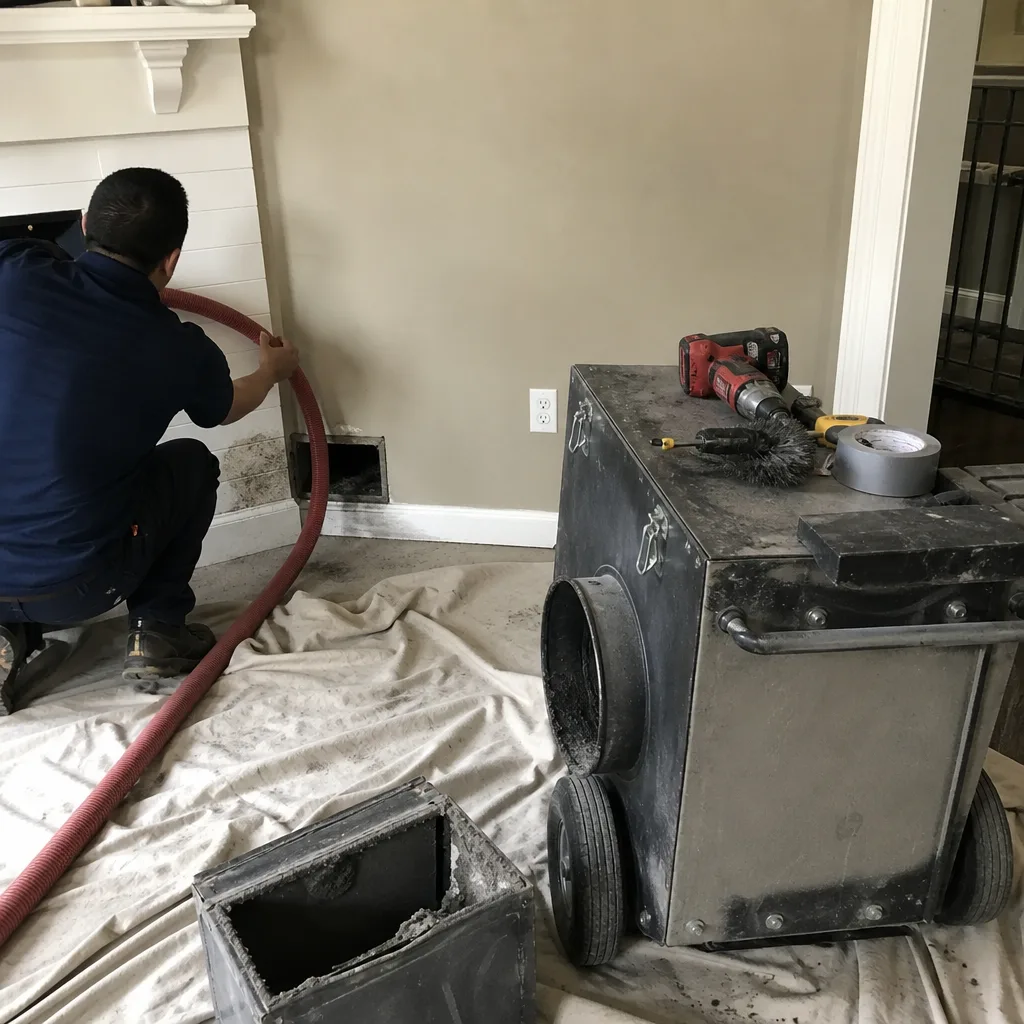 Before
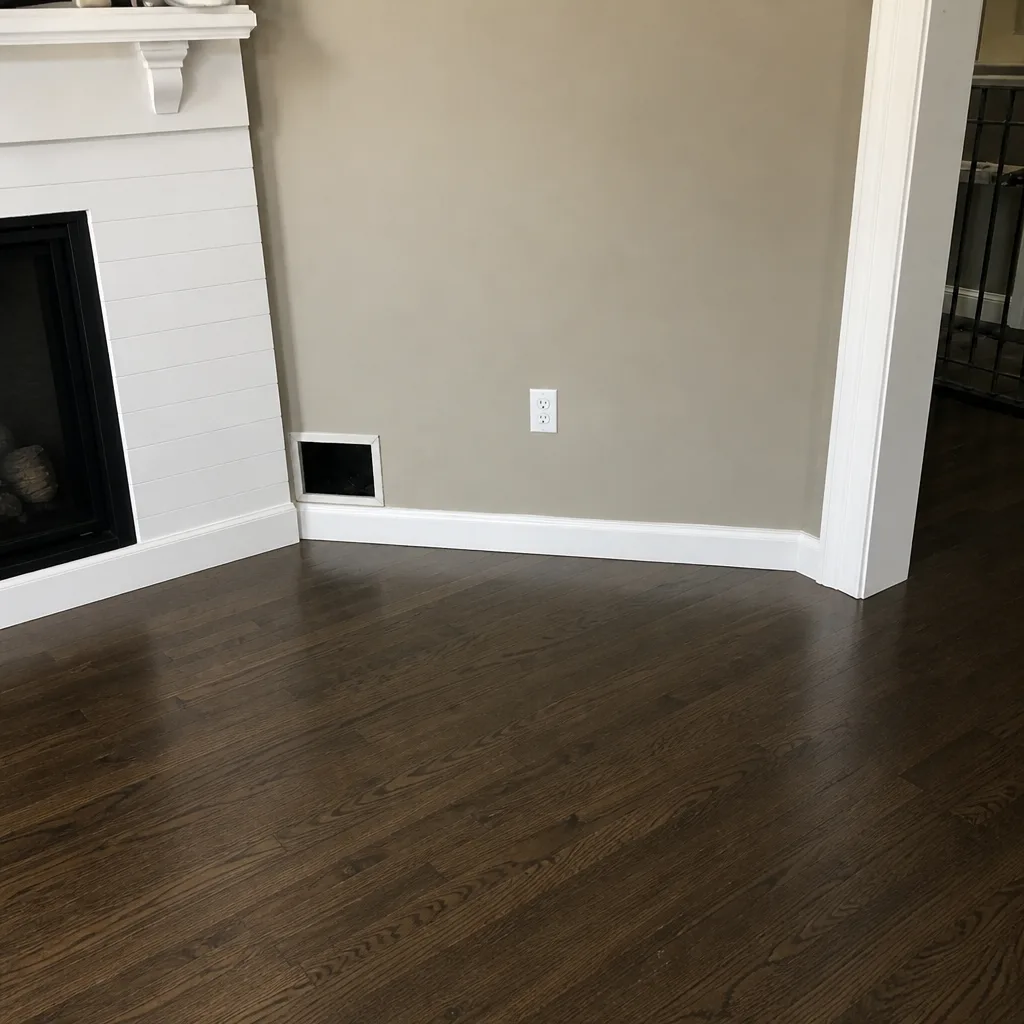 After
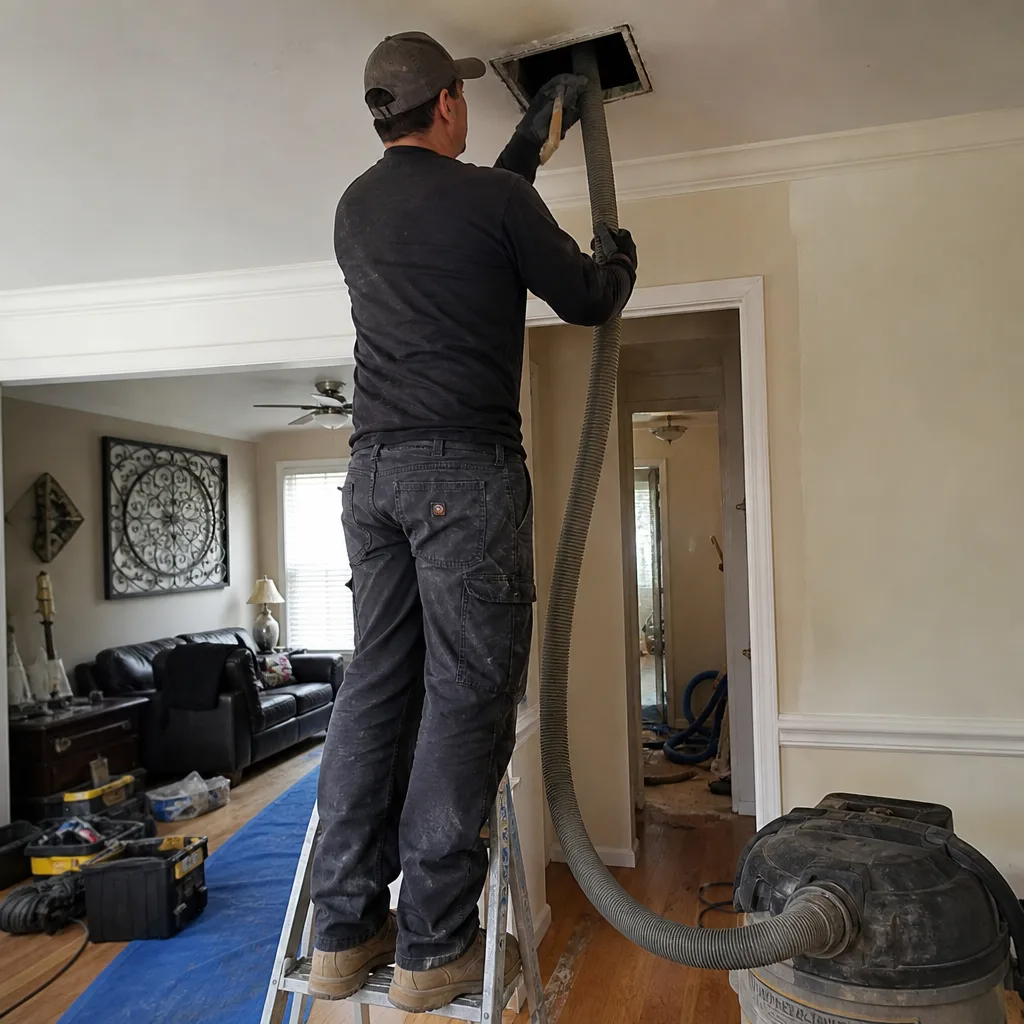 Before
 After
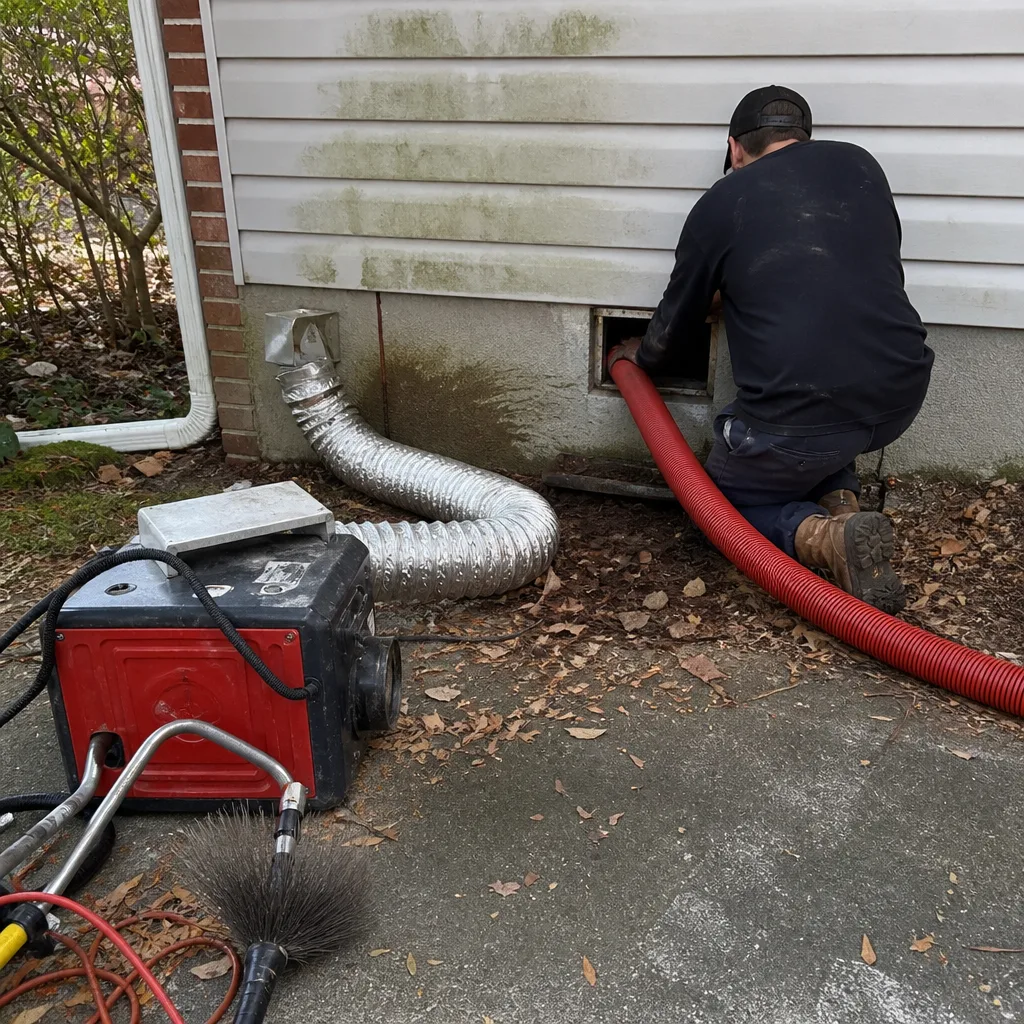 Before
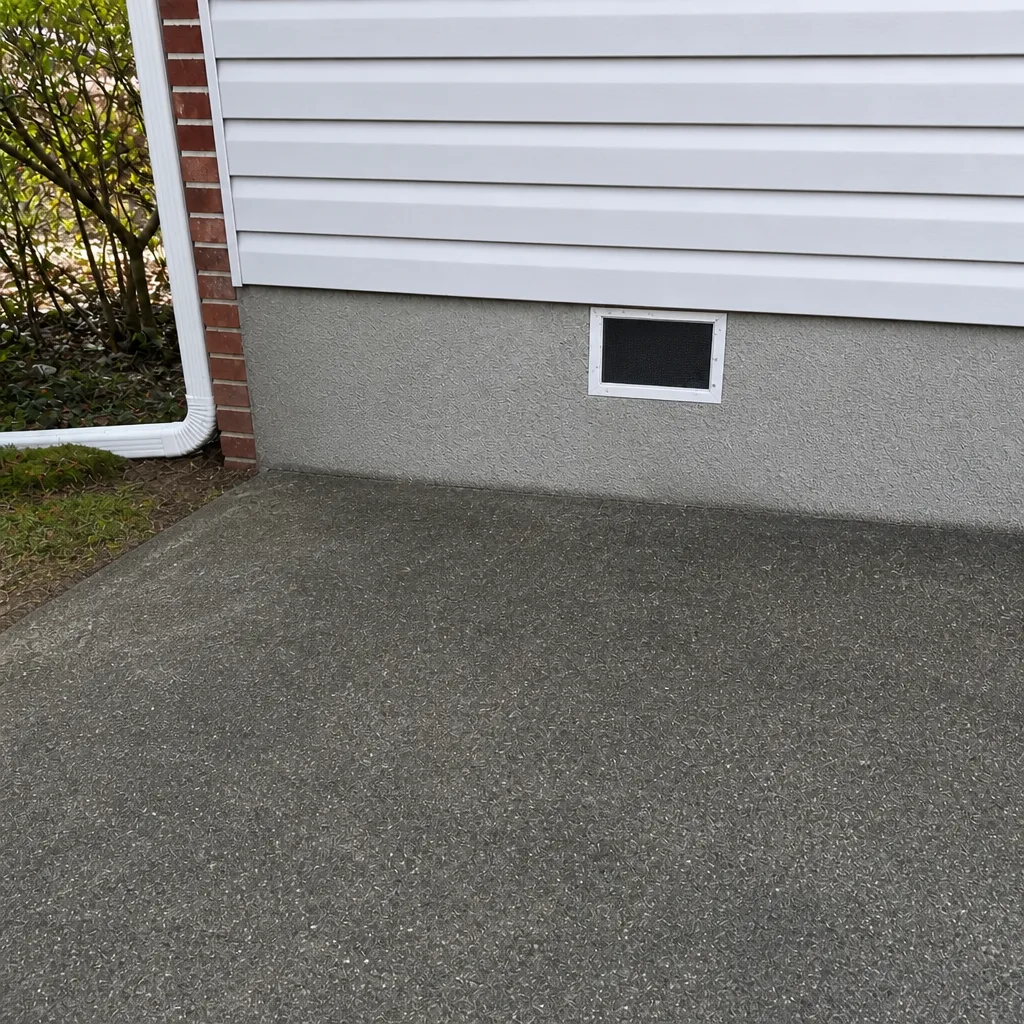 After
When to Call a Professional
Some situations are above the DIY line. Call a professional if you see dark or fuzzy growth in a duct, if a register dusts heavily within days of cleaning, if the condensate pan has overflowed into the insulation near the ducts, or if the system has never been cleaned and there’s been recent renovation work in the house. If the dryer takes two cycles to dry a load or the outside vent flap barely moves, that’s a dryer vent call, not a homeowner fix.
Duct Cleaning Cary offers free estimates in Cary, and we’ll tell you what equipment we’re bringing before we start. Call (833) 608-1198. We answer 24/7. Fast dispatch from 7am to 7pm, Sunday through Friday.
Frequently Asked Questions
Most Cary homes do well with a professional cleaning every 3 to 5 years, provided filters are changed on schedule and the ducts haven’t been compromised by moisture, renovation dust, or pets. Homes with allergy concerns, pets, or recent renovation work tend to fall closer to the 3-year mark. If you’re keeping a log and filters are loading faster than usual, that’s a signal to shorten the interval.
MERV-8 to MERV-11 is the right range for most residential systems in Cary. That captures pollen, mold spores, and fine dust without the static pressure penalty of MERV-13 and higher. If someone in the house has allergies or asthma, MERV-11 is usually the highest rating to consider unless an HVAC contractor has verified the blower can handle the pressure drop.
Yes, in spring and early summer. The Piedmont pollen calendar runs from late February through May, with pine leading into oak and grass, and a filter loads much faster in that window. Check the filter every 3 to 4 weeks from March through May and again through ragweed season in September and October. Call (833) 608-1198 for an exact quote on professional cleaning if the filters are loading much faster than usual.
No, they’re separate services. The dryer vent is a wholly separate line, and it should be serviced on its own schedule because of the lint fire risk. Duct cleaning addresses the HVAC system; dryer vent cleaning addresses the line running from the dryer to the outside. Both matter, but booking one doesn’t cover the other.
No. Consumer vacuums don’t capture fine particulate, so a homeowner vacuuming a duct line redistributes dust through the house instead of removing it. It can also stir up settled debris that then ends up in the air handler. Professional cleaning uses equipment built to agitate and capture in one operation, with HEPA filtration on-site to protect the air in the house during the work.
Date and MERV rating of every filter change, dates of professional duct and HVAC service, indoor humidity readings through summer, and the findings of any flashlight-and-mirror spot checks. Add notes on which registers dust most heavily. A simple note in your phone is enough if you keep it consistent. Review it once a year in late winter, before the cooling season.
The Bottom Line
Duct cleaning resets the system, and maintenance between cleanings decides how long that reset holds. In Cary, the four habits that do the most work are filter changes tuned to the local pollen calendar rather than the packaging label, monthly register inspection for dust patterns and leak streaks, a clear condensate drain through the humid months, and a written log that shows the system’s history to any future contractor or buyer. Add the dryer vent to the list and check it separately. That combination keeps the system stable, stretches the interval between professional cleanings, and gives you a record to show for it. When it’s time for the professional work, call (833) 608-1198 for a free estimate with Duct Cleaning Cary.
Written by the team at Duct Cleaning Cary.