
Last updated November 16, 2026
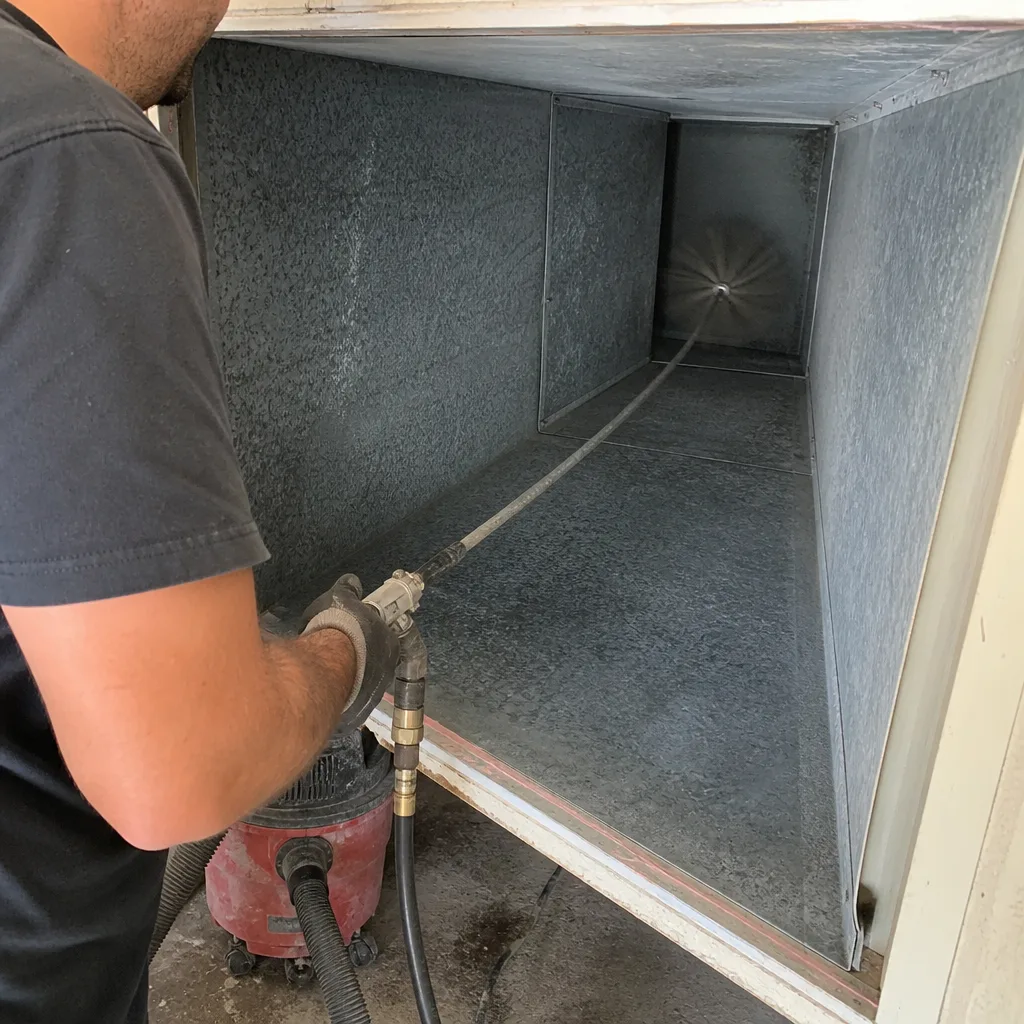
 Whole-home duct cleaning
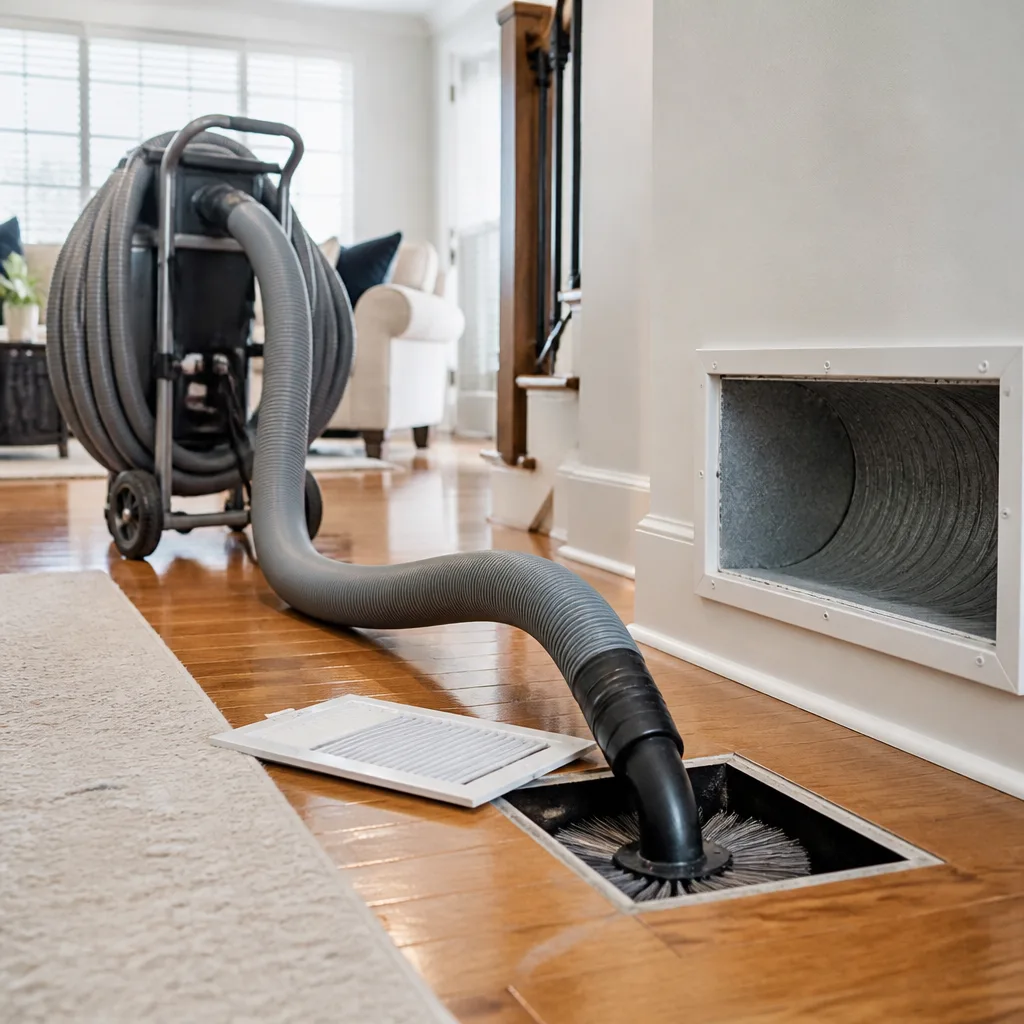
 Dryer vent cleaning
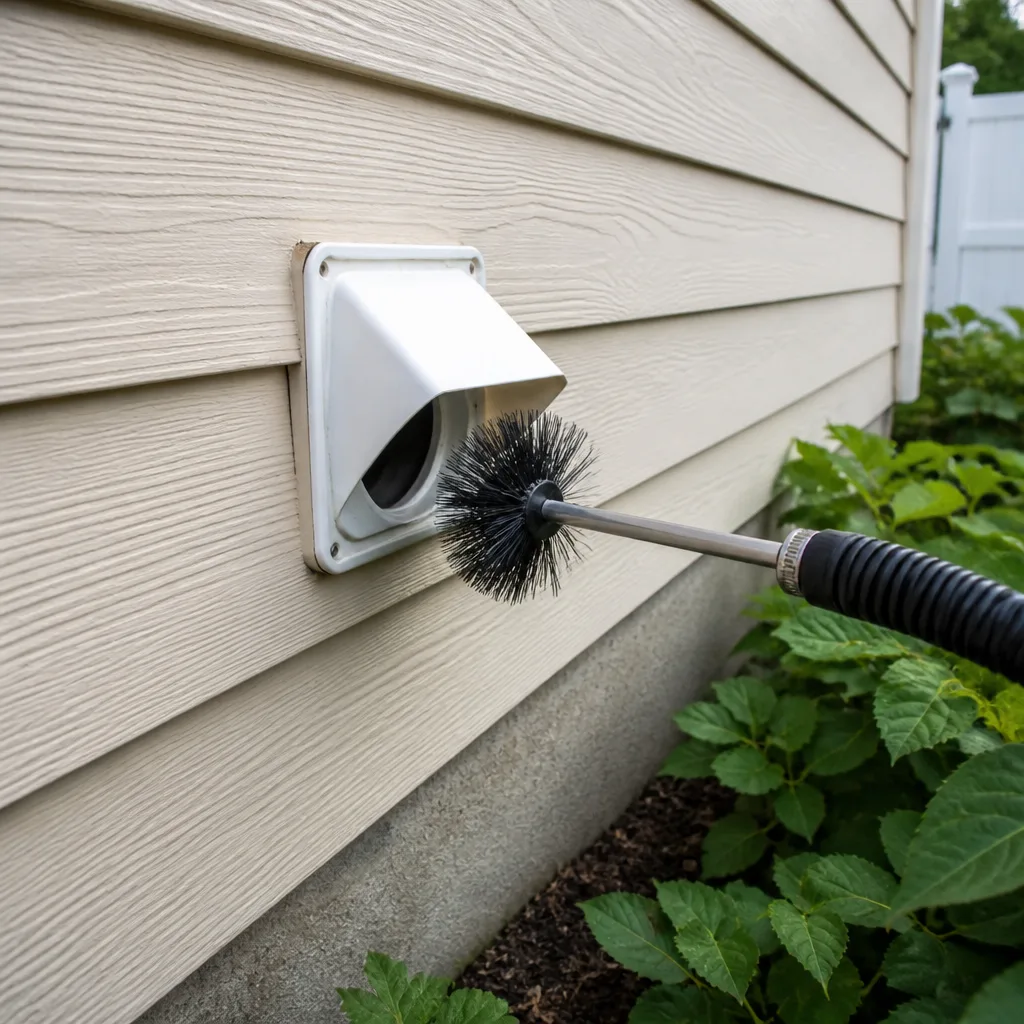
 Camera inspection
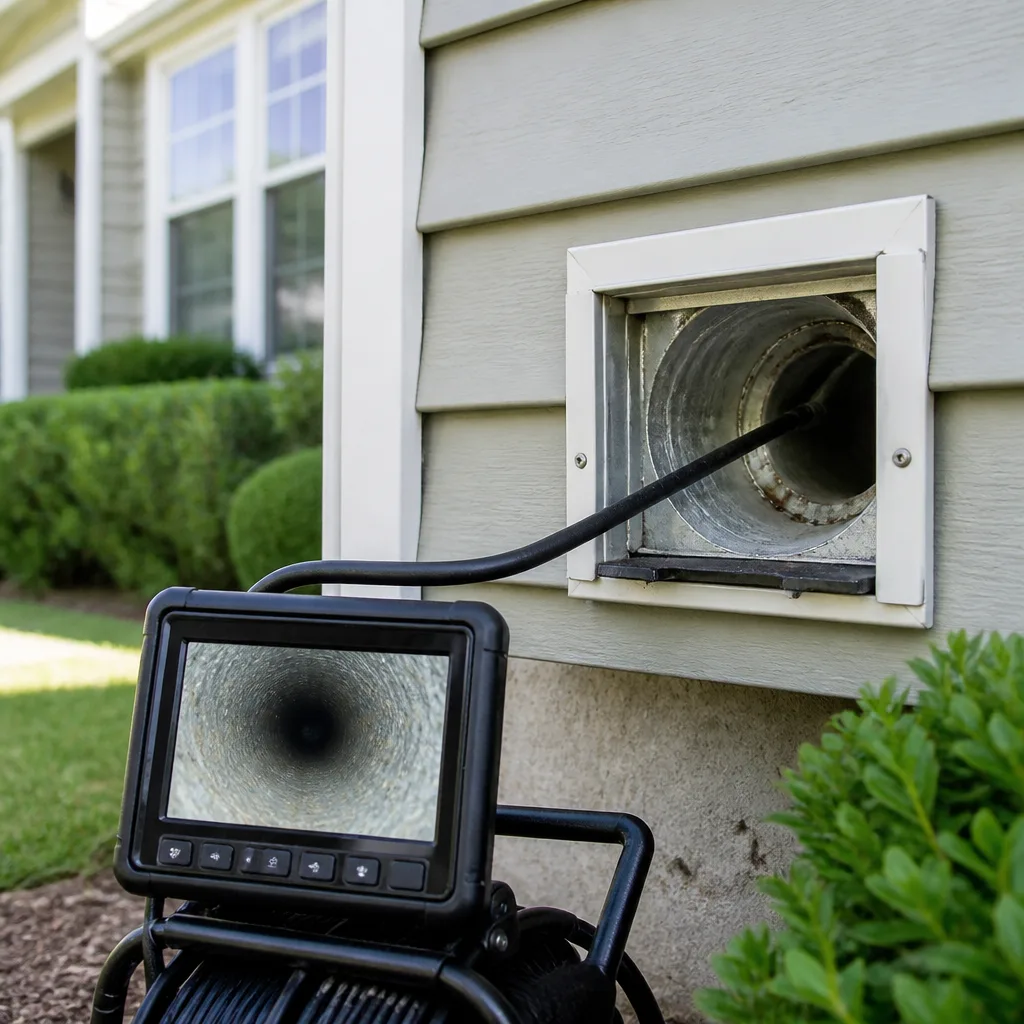
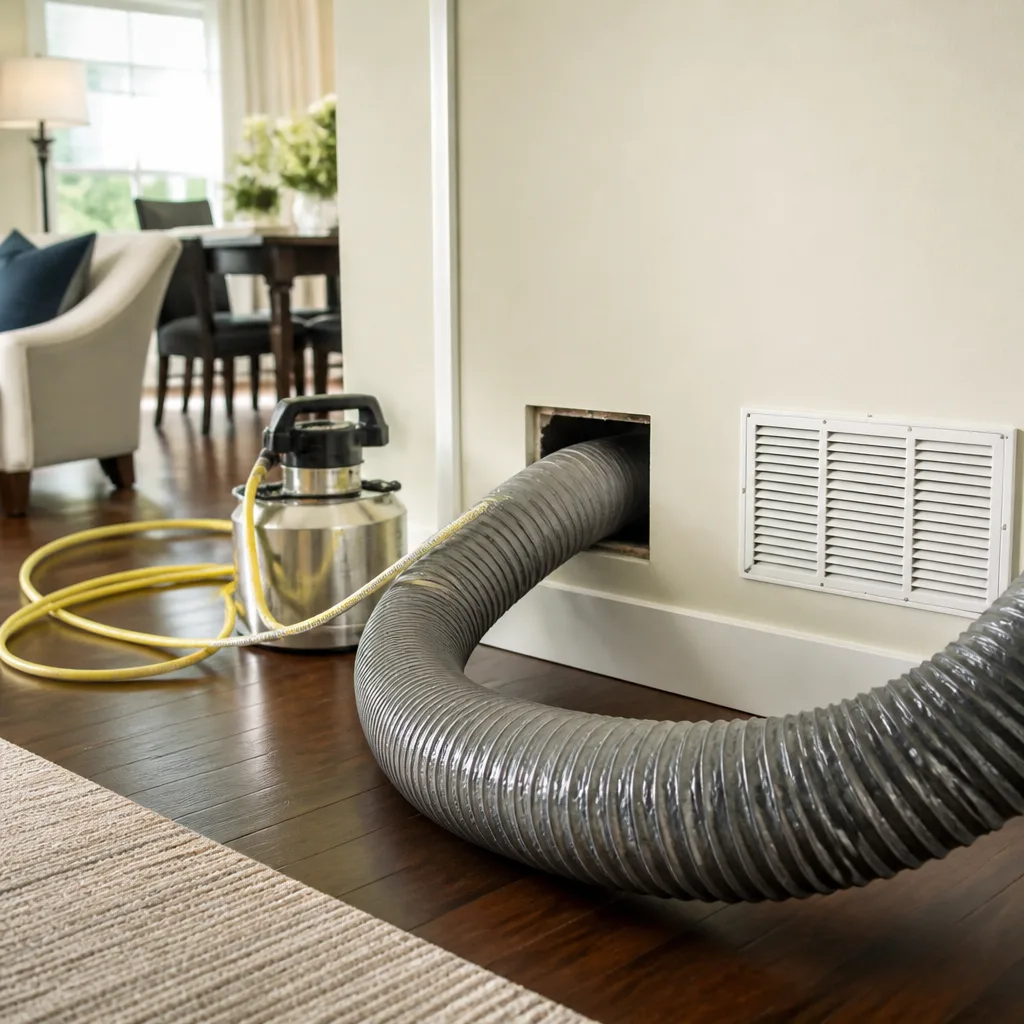 Sanitizing & deodorizing
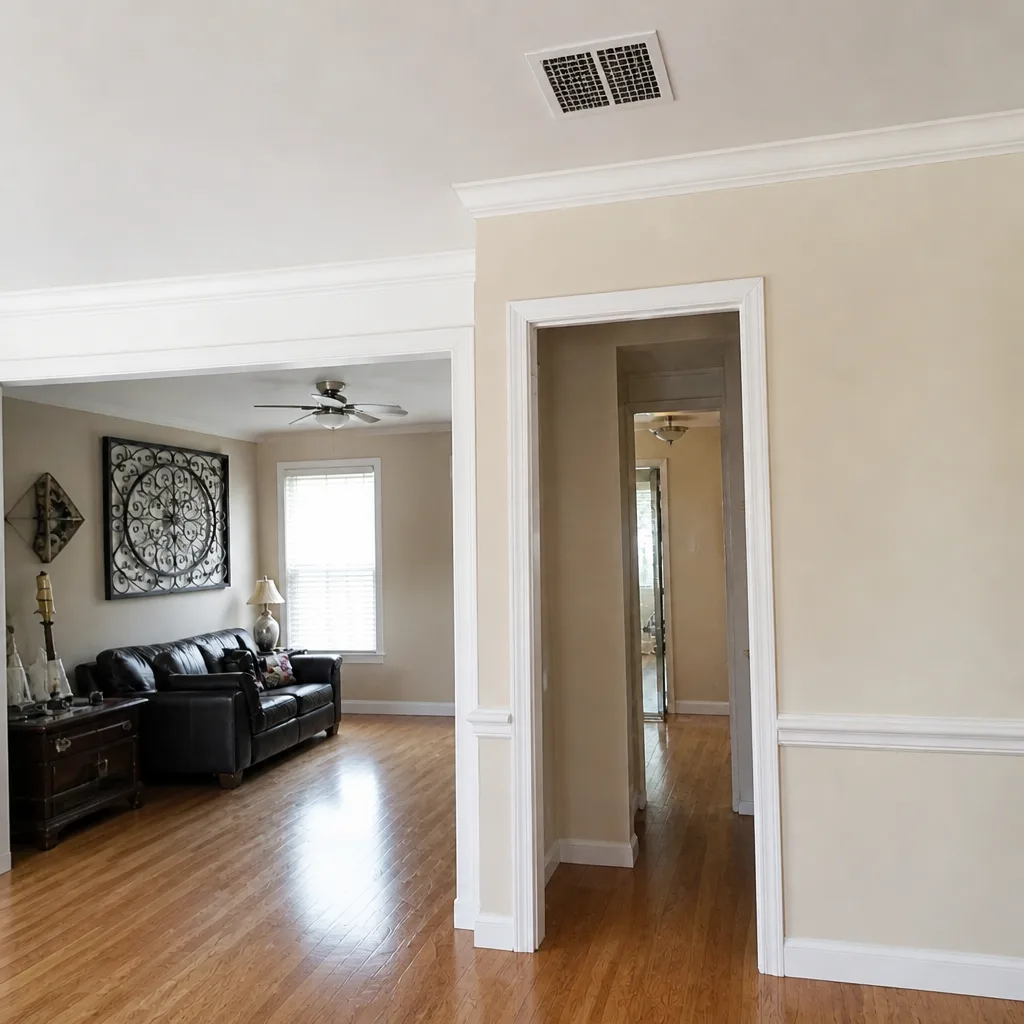
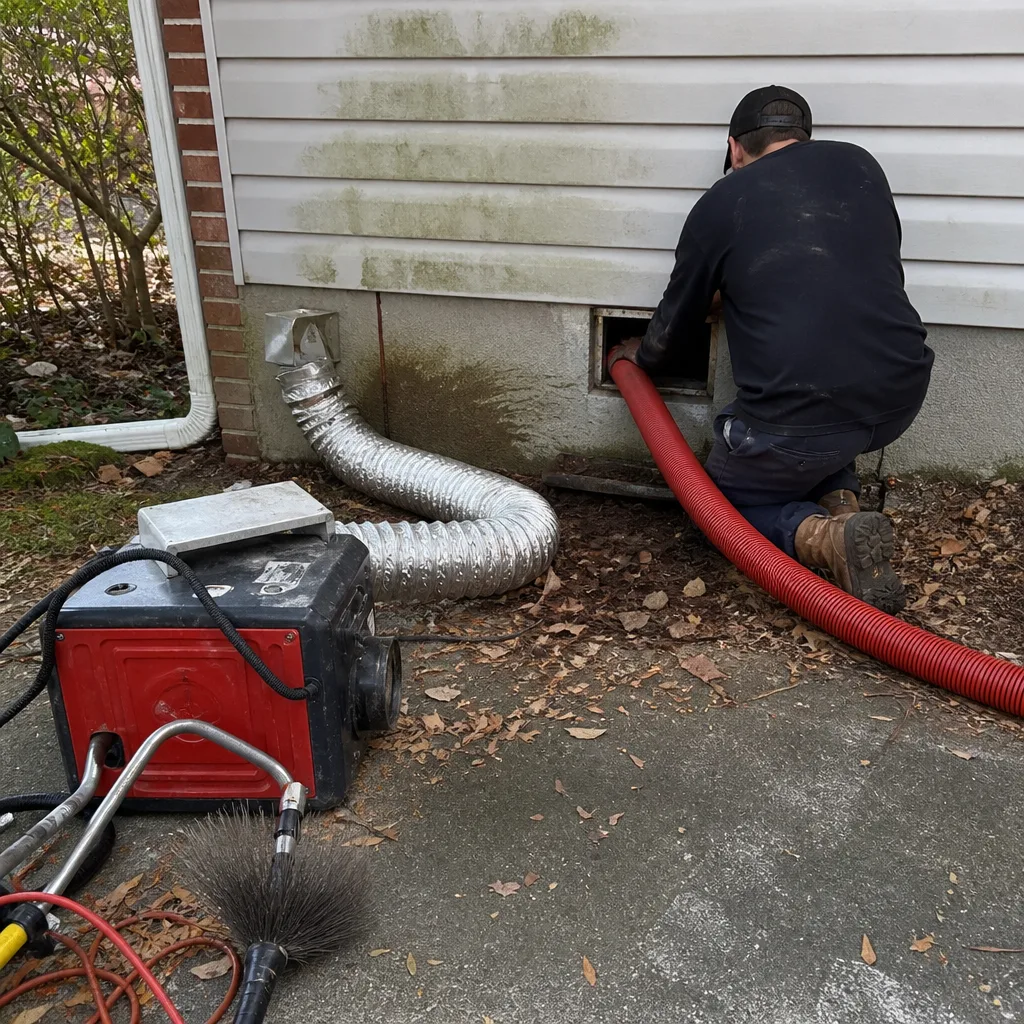
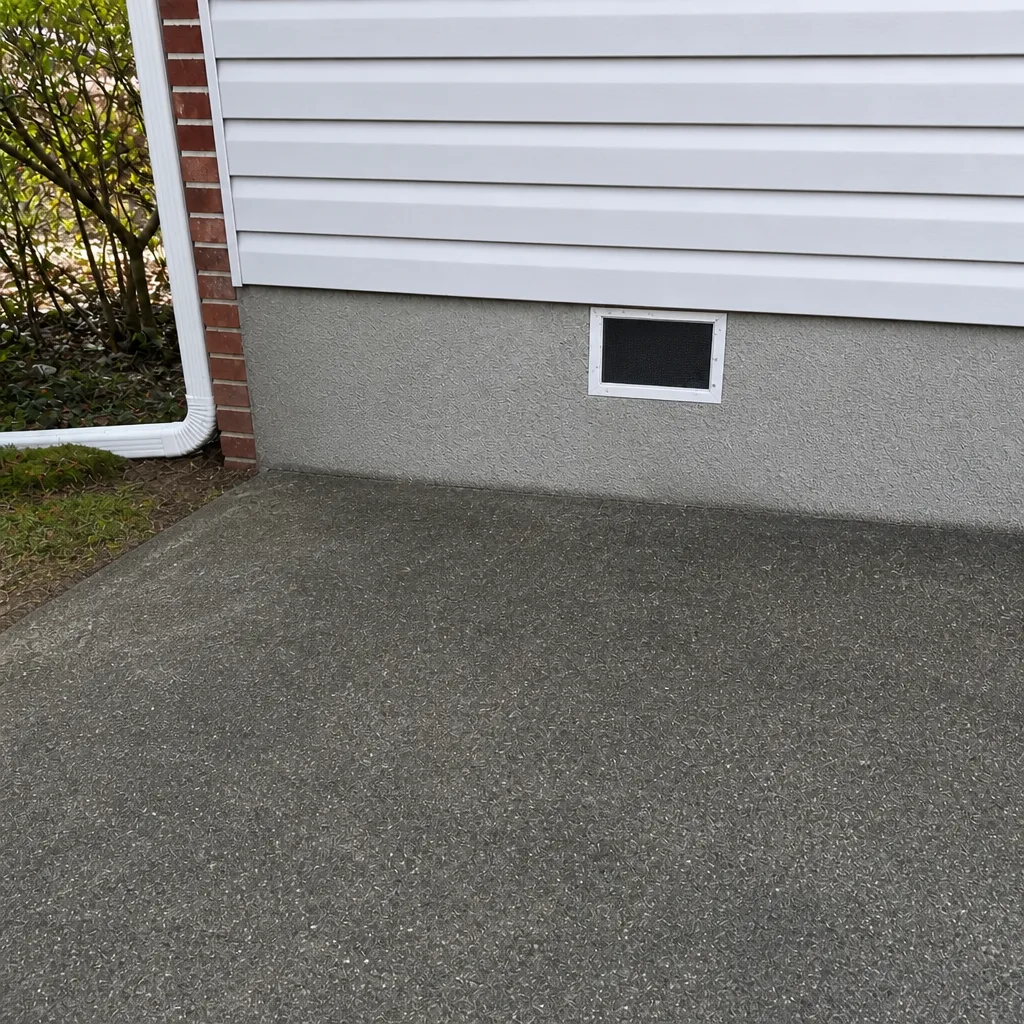
Whole-system duct and dryer vent check with before-and-after photos - you see exactly what came out of your vents
That "$99 whole-house special" is a bait ad - the real number appears once they are in your hallway, or the "clean" is a shop-vac at the register. We photograph the inside of your ducts before and after instead.
Air Duct Cleaning Emergency Preparedness Guide for Cary Homes
Most Cary homeowners don’t think about their duct system until after a disaster. A house fire, a flood, a sewage backup: by the time the event is over, the ductwork has already pulled contaminated air or smoke odor into every room. The system that quietly moved conditioned air all winter becomes the thing spreading the damage. This guide covers two things. The pre-event steps that protect your ducts and speed up an insurance claim, and the exact post-event sequence that decides whether a system can be salvaged or has to be replaced. It’s written for people who want a plan before they need one.
Quick Answer
After a fire, flood, or sewage event in a Cary home, the duct system should be treated as contaminated until proven otherwise. Shut the HVAC off immediately after a fire or smoke event, document the system with photos and a written inspection report, and have the ductwork cleaned or repaired by a contractor using HEPA filtration and negative-air equipment before the system is run again. Pre-event preparation – a duct map, equipment serial numbers, and your last service date – makes both the cleanup and the insurance claim dramatically faster.
Styles & brands we work with
- Whole-home duct cleaning
- Dryer vent cleaning
- Camera inspection
- Sanitizing & deodorizing
Table of Contents
- Why the Duct System Is the Hidden Victim of Any Emergency
- After a Fire or Smoke Event: The First Hour Matters
- After a Flood or Sewage Backup: Cary’s 48-72 Hour Mold Window
- Documenting the System for an Insurance Claim
- Why Post-Disaster Duct Work Uses Different Equipment
- Pre-Disaster Prep: The One-Page System File
- Salvage or Replace? How the Decision Actually Gets Made
- Protecting the HVAC System That Survives
Why the Duct System Is the Hidden Victim of Any Emergency
Smoke and soot particles as small as 0.1 microns penetrate a duct system within minutes of a structure fire. That number matters because it’s smaller than a standard filter’s capture rating. If the HVAC was running during the event, every inch of the distribution system is compromised, not just the rooms near the source. The blower doesn’t know the difference between clean return air and smoke. It pulls what’s there and pushes it through the whole house.
The same logic applies to water events. Standing water in a crawlspace or a flooded return plenum sends moisture into ductwork that may hold dust, pet hair, and dust-mite residue. That material is food for mold. Once it’s wet, the clock starts. In Cary, where basements are rare and many systems run through unconditioned crawlspaces and attics, that moisture load can linger longer than homeowners expect in a humid Southern spring.
So the duct system fails in two directions. It transmits the contaminant through the house. Then it absorbs the contaminant and holds it, often in flexible duct runs and interior insulation that can’t simply be wiped clean. A room can get repainted and refloored while the ductwork above it still smells of fire or harbors spores.
This is why duct cleaning after emergency events in Cary is a different job from routine maintenance. The goal isn’t fresher air for allergy season. The goal is verifying whether the system can be returned to safe service at all. For homeowners who stay on top of routine duct maintenance, duct cleaning in Cary produces a clean baseline that makes it easy to show what condition the system was in before the event. That record is genuinely useful afterward.
After a Fire or Smoke Event: The First Hour Matters
The single most important action after a fire or smoke event is to shut the HVAC system off. Not setback. Off at the thermostat, and ideally off at the breaker if you can reach it safely. Running the system after a fire is what turns a localized smoke problem into a whole-house contamination event. Every cycle of the blower pushes soot deeper into the return trunk, the supply runs, and the interior surfaces you can’t see or reach.
Here is the sequence we recommend to Cary homeowners after any fire event, from a contained kitchen fire to a full structure fire:
- Shut the HVAC off at the thermostat and the breaker. Do not turn it back on to “clear the air.” That makes it worse.
- Open windows and ventilate once the fire department has cleared the home for re-entry. Get the bulk of the airborne smoke out before it settles.
- Don’t run fans pointed at soot. Box fans and ceiling fans stir settled soot particles back into the air and into ducts that were otherwise spared.
- Photograph everything before cleanup begins: duct registers, the return grille, the air handler, the furnace, and the thermostat. Insurance adjusters want the “before.”
- Call your insurer and open the claim before any remediation work starts. Get an adjuster assigned.
- Have the system inspected by a contractor who can document soot intrusion inside the ductwork, not just in the rooms that burned.
One detail that catches people: the smell of smoke in a home can persist for months after walls and floors are restored if the ductwork was never addressed. That’s not a cleaning failure in the rooms. It’s residual contamination in the system. Smoke residue that settles inside ductwork keeps off-gassing each time the system runs, which is why a duct inspection belongs in the restoration scope, not after it. If you’re managing a smoke-odor complaint after a fire, air duct cleaning done with rotary mechanical agitation and HEPA capture is what actually removes it.
After a Flood or Sewage Backup: Cary’s 48-72 Hour Mold Window
Water events create a different problem from fire, and in Cary’s climate it moves fast. Once ductwork or a return plenum has been wet, mold can begin colonizing the dust and insulation inside the system within 48 to 72 hours. That window is why flood remediation protocols are stricter than standard cleaning protocols. In the remediation world, that timeframe is what pushes a job across the line from “clean and dry” into a mold remediation classification.
The two categories are treated very differently for insurance purposes and for the work itself:
- Water damage (Category 1): clean water, such as a supply-line break or a storm-driven intrusion. If captured and dried fast, ductwork may be salvaged with cleaning and confirmed drying.
- Gray or black water (Category 2 and 3): sewage backups, sump overflow, groundwater intrusion through a crawlspace. Contaminants are present, and porous duct materials often cannot be saved. Insulation lining, flex duct, and filter media typically get removed and replaced.
Two local factors make this harder in Cary than a generic guide would suggest. First, the clay-heavy soil around many neighborhoods drains slowly, so water that enters doesn’t leave the way it would on sandy ground. Second, the high water table in parts of the area means crawlspace moisture lingers, and a duct system in a wet crawlspace stays humid even after the visible standing water is gone. Call a professional duct inspector as soon as the water is down and the structure is safe to enter. If your system isn’t contaminated and professional cleaning is scheduled, dryer vent cleaning is a sensible add-on while the crew is already out; a wet event is also a good moment to make sure that vent line is clear.
Documenting the System for an Insurance Claim
A duct-related insurance claim succeeds or fails on documentation. Adjusters have to establish two things: that the duct system was contaminated by the covered event, and that the cost of cleaning or replacing it is reasonable. Photos alone don’t get you there. What most adjusters won’t accept is a photograph of a grille and a written estimate. What does work is a documented inspection from a credible contractor that ties the duct condition directly to the event.
Here’s what belongs in a claim package, in order of how much each item helps:
- Dated photographs of every register and return grille before any cleaning begins. Note soot, water staining, or debris visible at each opening.
- A written inspection report describing the duct type, layout, access points, and observed contamination, with the inspector’s findings tied to the event’s date and nature.
- Interior photos from accessible duct runs, taken during inspection. This is the piece most homeowners never think to ask for, and it’s often the one that resolves a disputed claim.
- Equipment serial numbers and model information for the furnace and air handler, to support any component that was also damaged.
- A side-by-side before-and-after record of the cleaning or remediation, showing what was removed and what the system looked like after.
- A clear written estimate for the work authorized, itemized by scope.
Contractors who do this work professionally will provide before-and-after photos of your own ducts as standard practice, not as a special request. Ask for it up front when you call. We’re glad to send the equipment documentation along with the report. For more guidance on how the overall cleanup is sequenced, our Cary service pages outline each phase of the job.
Why Post-Disaster Duct Work Uses Different Equipment
Standard duct cleaning and post-disaster duct work are not the same protocol, even when the target is the same physical ductwork. Routine cleaning removes accumulated dust and debris. Remediation work requires protecting the indoor air during the cleaning itself, because the contaminants you’re removing are the ones you don’t want released into the rooms you live in. That’s why serious remediation contractors use negative-air machines, HEPA filtration units, containment barriers, and dehumidification equipment alongside the duct cleaning tools.
Abatement Technologies equipment, for example, is the same class of negative-air and HEPA equipment used in indoor air quality remediation work. During cleanup, that equipment keeps airborne contaminants contained at the source rather than blowing them back through the home. On the mechanical side, the cleaning itself is typically done with rotary agitation systems like the Rotobrush, which breaks debris loose from duct walls and insulation, paired with HEPA capture and negative pressure to pull it out of the system. A single shop vac and a brush cannot achieve the same result, and on a post-disaster job, “close enough” is not a standard anyone should accept.
One more consideration for Cary homeowners: post-disaster duct work that involves confirmed mold growth falls into the licensed mold remediation category in North Carolina, and a reputable duct contractor will tell you when that’s the case. If the inspector finds active mold colonization inside the ductwork, the job often needs a licensed mold remediation contractor involved, with the duct cleaning happening as part of that scope. We work with those requirements rather than around them. It’s also why the inspection step comes first. You can’t decide the protocol until you know what’s actually inside the ducts.
Pre-Disaster Prep: The One-Page System File
The single easiest way to make your emergency-response insurance claim faster is to have a one-page duct and HVAC system file ready before you ever need it. Fire departments recommend a home inventory for the same reason. Most homeowners never build the duct portion. Here’s what to put together, and it takes about an hour with a phone camera and a notepad:
- A simple duct map. Hand-sketch where the returns are, where the supply registers are, and where the air handler sits. Include the rough location of flex duct runs if you know them. Don’t worry about precision. A rough sketch is enough for a contractor to walk in and understand your system at a glance.
- Equipment serial numbers and model numbers. Photograph the equipment nameplates on the furnace and air handler. These numbers are what your insurer uses to identify and value damaged equipment, and they’re almost impossible to recover after a fire.
- Your last service date and provider. A recent cleaning or service record establishes a clean baseline that makes contamination claims far simpler.
- Photos of the registers and returns in their normal state. A “before” photo taken in calm conditions is the evidence that shows the damage was caused by the event.
- Your HVAC filter type and last replacement date. This helps the contractor assess the filter’s performance during the event and its contribution to system contamination.
- Your warranty documentation. Many equipment warranties specifically address fire, water, or flood damage. Know yours before you file.
Store the file digitally, not just on paper, and update the service date every time your system is serviced. The one-page file takes an hour to build and can shorten a claim by weeks. It also makes it dramatically easier for any contractor to understand your system quickly, whether that’s for an emergency inspection or a routine job.
Salvage or Replace? How the Decision Actually Gets Made
Post-event, the salvage-or-replace decision comes down to a handful of factors a trained inspector can assess in a single visit. Homeowners are often surprised by the criteria. The age of the ductwork barely matters. What matters is contamination type, material, and whether the contamination can be removed rather than coated over.
Here’s the decision framework contractors actually use:
- Contaminant type. Smoke and soot are generally treatable. Category 2 and 3 water intrusion, sewage, and confirmed mold growth in porous duct materials usually push toward replacement of the affected runs.
- Duct material. Sheet metal and rigid duct can often be cleaned. Flex duct with contamination soiling the interior liner, and fiberglass duct board with absorbed water, frequently cannot. The rule across the industry is that porous material that’s been contaminated doesn’t come back.
- Extent of involvement. A single compromised branch run can be replaced. If the main trunk and multiple feeds are affected, the cost math often favors full replacement.
- Coating vs. cleaning. Some duct lining systems can be encapsulated with a coating, but this is not a shortcut and isn’t appropriate if active mold or moisture is present. It’s an option an inspector evaluates, not a preference a homeowner requests.
- Insurance coverage. The scope your policy covers influences the decision, but it shouldn’t drive it. If the contamination is significant, document it and let the adjuster approve the correct scope.
We always recommend asking for the inspector’s written reasoning behind a salvage-or-replace recommendation. A credible contractor will explain the specific findings, with photos, that led to the recommendation. That record is also what an insurance adjuster reviews when the claim covers the work.
Protecting the HVAC System That Survives
Ductwork isn’t the only component at risk after an emergency. The furnace and air handler often survive a fire or flood event, which is why keeping them functional matters. Smoke drawn through the blower, airflow, and internal coils leaves soot on components that are difficult to clean properly. A wet air handler with its control board, blower motor, or electrical connections exposed to moisture needs to be inspected and dried before it’s energized.
A few steps to protect the HVAC equipment itself after an event:
- Change the filter immediately once the event is over and the system is off. A filter loaded with soot or wet debris stresses the blower on restart.
- Never power up a wet air handler without an electrical inspection. Moisture in the control board or blower motor is a hazard, not a nuisance.
- Have the coils and blower inspected if smoke was drawn through the system. Soot on the evaporator coils impedes heat transfer and shortens equipment life.
- Confirm duct cleaning or remediation is complete before restarting the system. Restarting too early recontaminates the ducts you just cleaned.
If your home uses a smart thermostat or an air quality monitor from a brand like Aprilaire, the device log may also help establish when the system was running during the event. That’s useful supporting evidence for the claim, and it’s a small detail that’s easy to overlook. It’s also why we ask homeowners about their IAQ setup when we walk a post-event system.
Common Mistakes to Avoid
- Turning the HVAC back on after a fire to “air out” the house. This is the single most damaging mistake we see. It distributes soot and smoke particles through the entire distribution system within minutes, often turning a salvageable system into a replacement job.
- Cleaning ducts before the adjuster sees the damage. Removing the evidence makes a claim far harder to support. Photograph everything first, then get an inspection report, then clean.
- Waiting more than 48 to 72 hours to address wet ductwork. Mold colonization in Cary’s humid climate moves fast, and a Category 1 water loss can turn into a remediation-scope job in that window. Dry fast or call for help fast.
- Treating a post-disaster cleanup like routine maintenance. Standard brushing and vacuuming isn’t sufficient after a contamination event. The equipment protocol is different, and so is the standard of verification.
- Skipping the crawlspace after flood intrusion. In Cary, wet crawlspaces dry slowly thanks to clay soil and the water table. Ductwork running through a damp crawlspace absorbs humidity long after the visible water is gone.
- Restarting the system before confirming the cleaning and any mold remediation is complete. The new contamination is often worse than the original because it lands on a freshly cleaned surface.
- Hiring a duct cleaner for a post-disaster job based on price alone. The equipment, containment, and documentation are the deliverable. A low quote with no documentation is a claim problem waiting to happen.
See the difference
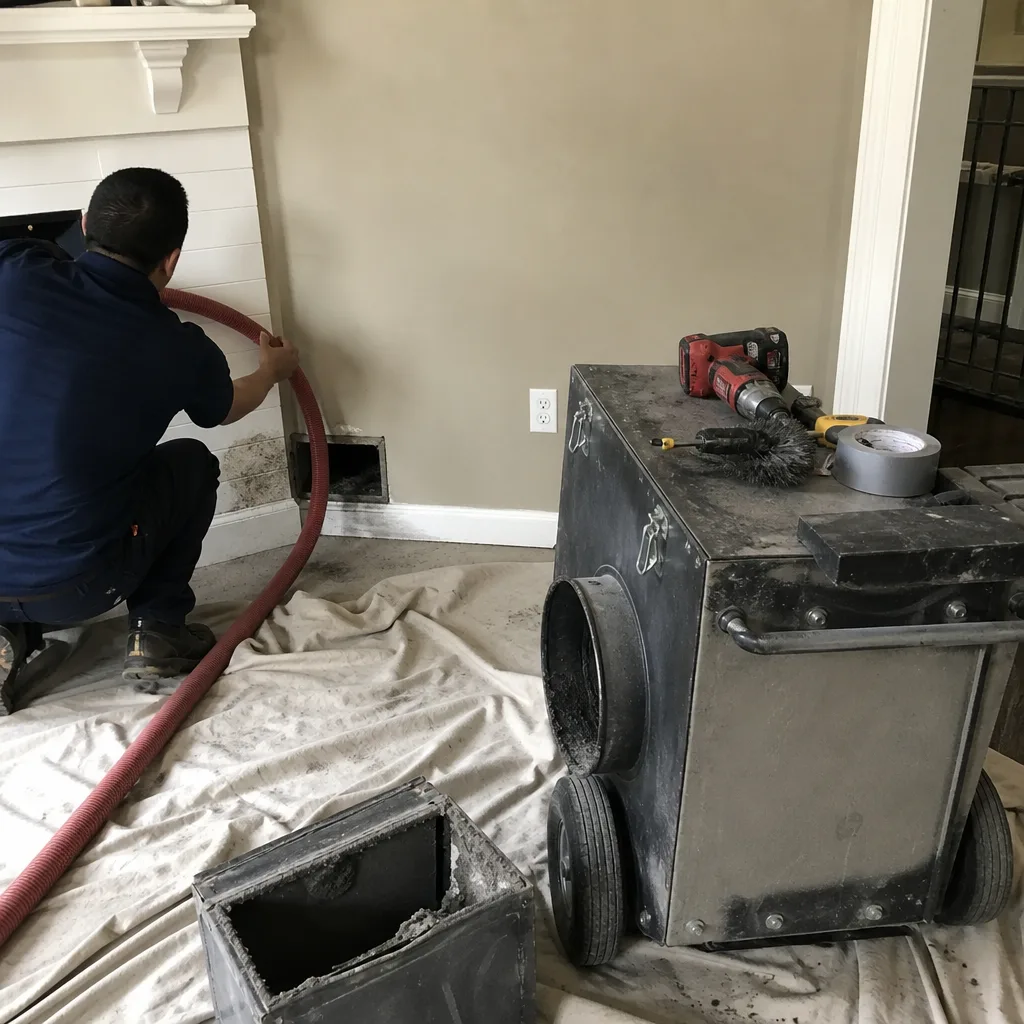 Before
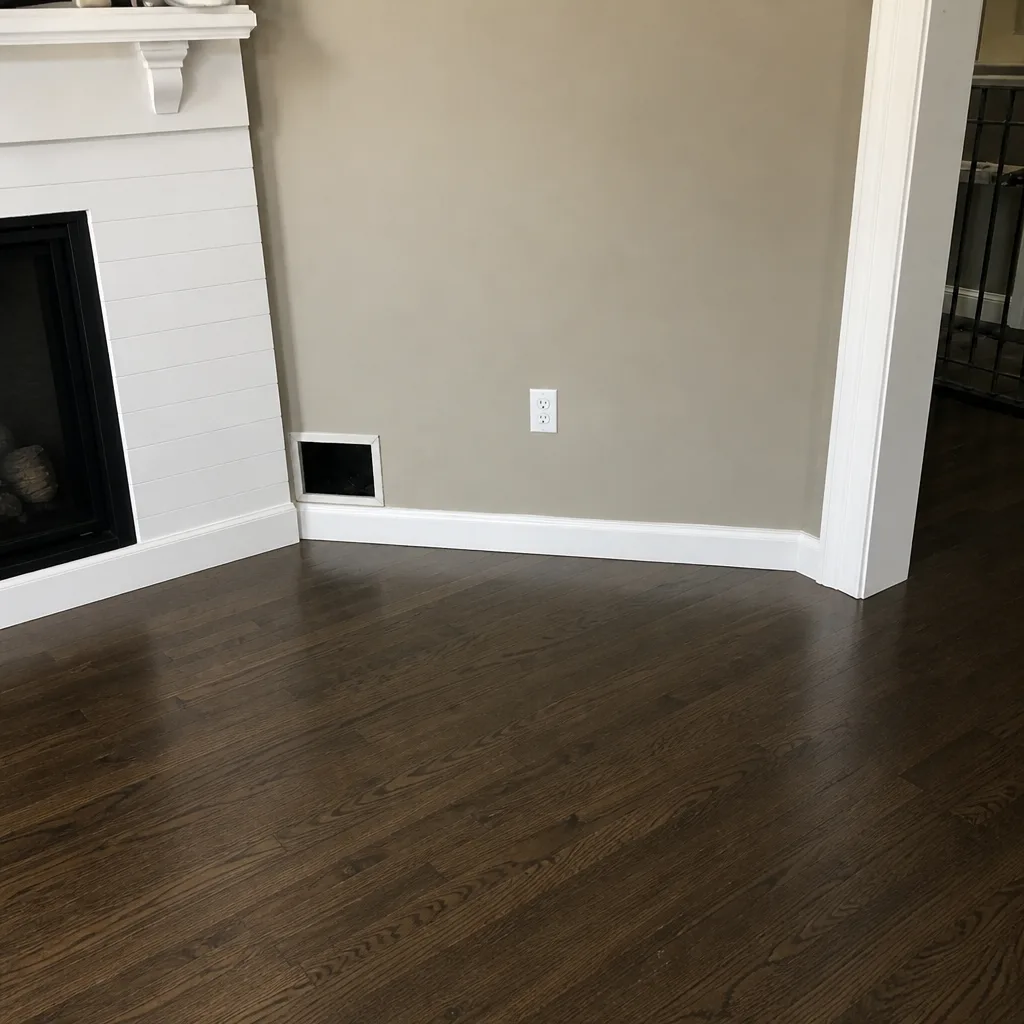 After
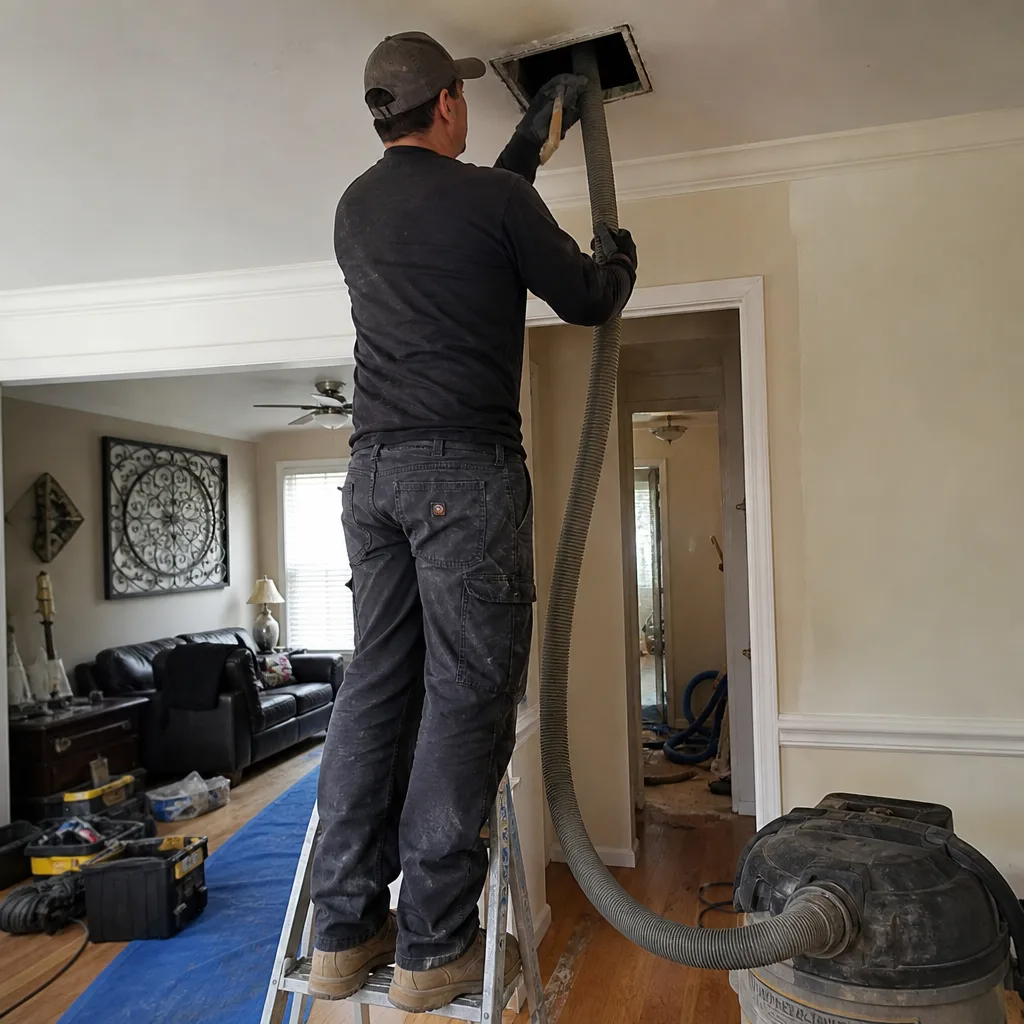 Before
 After
 Before
 After
When to Call a Professional
Call us after any structure fire, even a contained one, if smoke entered the HVAC return. Call after any water intrusion that reached the air handler, return plenum, or ductwork, and especially after a sewage backup of any kind. Call if you notice smoke odor returning each time the system runs, visible soot at registers, water staining inside duct runs, or musty smells developing within the first week of a flood event. Call if the system sat wet for more than two days before you could address it. In short, call whenever the duct system itself was involved in the event, not just the rooms.
Duct Cleaning Cary offers free estimates in Cary – call (833) 608-1198 for an inspection and a written assessment. We answer 24/7. Fast dispatch from 7am to 7pm, Sunday through Friday.
Frequently Asked Questions
Yes, in almost every case. Even a contained fire pushes smoke and fine soot particles into the return air path and through the supply side of the system if the blower was running. A full inspection should confirm the extent of contamination before any cleaning is authorized. Call (833) 608-1198 to schedule an inspection; estimates are free.
As soon as the structure is safe to enter and the standing water is down. The 48 to 72 hour mold window is real in Cary’s humid climate, so an inspection within the first day of safe access is ideal. Earlier is better than later, but any inspection is better than none. Call (833) 608-1198 to book one; estimates are free.
Coverage depends on your policy and on the cause of loss, and we can’t determine that for you. What we can do is provide a written inspection report with interior photographs that gives your adjuster a documented basis to evaluate the claim. Ask your insurer about coverage before authorizing the work. Call (833) 608-1198 for the inspection; estimates are free.
Often yes, if the ductwork is rigid metal or duct board and the contamination is smoke or soot rather than water or mold. Cleaning with rotary mechanical agitation and HEPA capture removes smoke residue inside the runs; the interior surfaces are then verified by inspection. Systems with absorbed moisture or confirmed mold in porous materials usually need the affected runs replaced. Call (833) 608-1198 to have yours evaluated.
Post-disaster work uses containment and negative-air HEPA equipment to prevent the release of the contaminants being removed, while standard cleaning primarily targets accumulated dust and debris. The documentation, verification steps, and possible involvement of a licensed mold contractor also differ. We can walk you through which protocol your home needs. Call (833) 608-1198; estimates are free.
A duct map, equipment serial numbers, your last service date, and photos of the registers in normal condition. Anyone can build this file in under an hour with a phone. It speeds up both the inspection and the claim substantially. Call (833) 608-1198 if you’d like help with the documentation side.
The Bottom Line
Duct systems are the quiet victim in almost every home emergency. Fire and smoke travel through them within minutes; water and moisture linger in them for days. Cary homeowners who prepare before an event – a simple one-page system file, a shut-off plan for the HVAC, and a known contractor to call for inspection – cut their cleaning time, their claim complications, and their replacement risk substantially. After an event, shut the HVAC off, document everything, and call for a proper inspection before any cleaning begins. The system that just moved soot and water through your home can usually be recovered. The decision belongs to an inspector, not to a guess.
Written by the team at Duct Cleaning Cary.
Have you had an emergency event, or do you want to build that documentation file now, before you need it? Duct Cleaning Cary offers free estimates in Cary. Call (833) 608-1198. We answer 24/7. Fast dispatch from 7am to 7pm, Sunday through Friday. Our technicians have up to 12 years of experience, and we use professional-grade equipment – the same Rotobrush, Nikro, and Abatement Technologies systems used in commercial remediation work – to clean, clear, and repair the full duct picture in your home.